![[HOME]](/netaicon/homeicon.gif)
![[SEARCH]](/netaicon/srchpage.gif)

![[CURR_LIST]](/netaicon/curlist.gif)


![[BOTTOM]](/netaicon/bottom.gif)
![[HELP]](/netaicon/help.gif)
Seattle City Council Bills and Ordinances
Information modified on May 24, 2005; retrieved on April 29, 2026 9:48 PM
Ordinance 121782
Introduced as Council Bill 115226
Title | |
|---|---|
| AN ORDINANCE relating to land use and zoning, amending Sections 23.30.010, 23.32.016, 23.34.126, 23.34.128, 23.41.004, 23.41.012, 23.42.106, 23.42.126, 23.42.128, 23.47.004, 23.47.012, 23.48.002, 23.48.008, 23.48.010, 23.48.012, 23.48.014, 23.48.016, 23.48.018, 23.48.020, 23.48.024, 23.48.031, 23.48.032, 23.48.034, 23.53.010, 23.53.015, 23.53.030, 23.54.015, 23.54.020, 23.54.030, 23.55.030, 23.84.048, 25.05.675; adding a new Section 23.48.019; and amending the Official Land Use Map to rezone areas within and abutting the South Lake Union Urban Center from Commercial (C) and Neighborhood Commercial (NC) zones to the Seattle Mixed zone. | |
Description and Background | |
|---|---|
| Current Status: | Passed |
| Fiscal Note: | Fiscal Note to Council Bill No. 115226 |
| Index Terms: | LAND-USE-PLANNING, DESIGN-REVIEW, URBAN-DESIGN, SOUTH-LAKE-UNION, NEIGHBORHOOD-PLANS, APARTMENT-BUILDINGS, COMMERCIAL-AREAS, COMMERCIAL-BUILDINGS, REZONES |
Legislative History | |
|---|---|
| Sponsor: | STEINBRUECK |
| Date Introduced: | April 11, 2005 |
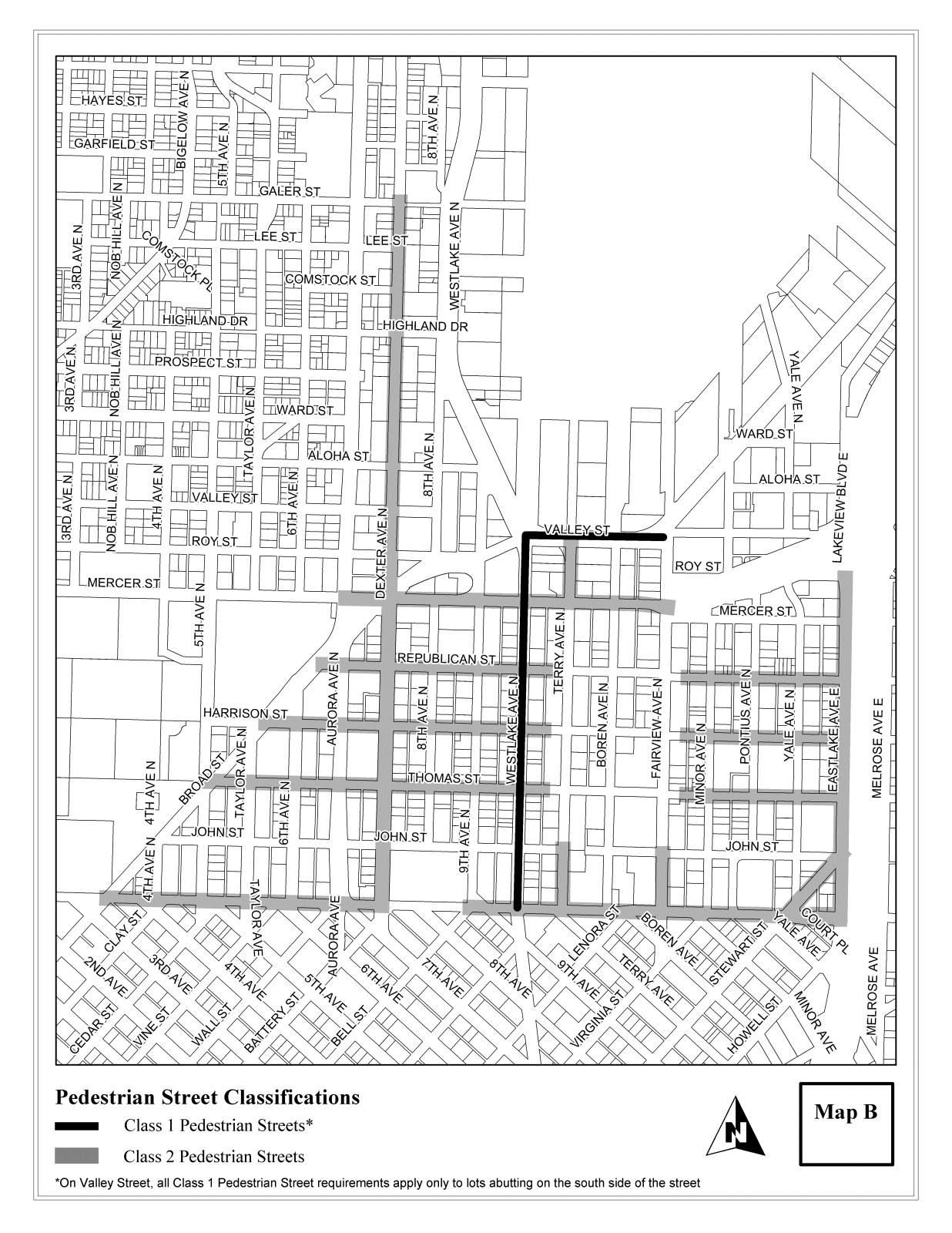
| Committee Referral: | Urban Development & Planning |
| City Council Action Date: | April 18, 2005 |
| City Council Action: | Passed |
| City Council Vote: | 8-0 (Excused: Rasmussen) |
| Date Delivered to Mayor: | April 19, 2005 |
|
Date Signed by Mayor: (About the signature date) | April 26, 2005 |
| Date Filed with Clerk: | April 26, 2005 |
| Signed Copy: | PDF scan of Ordinance No. 121782 |
Text | |
|---|---|
|
ORDINANCE _________________ AN ORDINANCE relating to land use and zoning, amending Sections 23.30.010, 23.32.016, 23.34.126, 23.34.128, 23.41.004, 23.41.012, 23.42.106, 23.42.126, 23.42.128, 23.47.004, 23.47.012, 23.48.002, 23.48.008, 23.48.010, 23.48.012, 23.48.014, 23.48.016, 23.48.018, 23.48.020, 23.48.024, 23.48.031, 23.48.032, 23.48.034, 23.53.010, 23.53.015, 23.53.030, 23.54.015, 23.54.020, 23.54.030, 23.55.030, 23.84.048, 25.05.675; adding a new Section 23.48.019; and amending the Official Land Use Map to rezone areas within and abutting the South Lake Union Urban Center from Commercial (C) and Neighborhood Commercial (NC) zones to the Seattle Mixed zone. BE IT ORDAINED BY THE CITY OF SEATTLE AS FOLLOWS: Section 1. Section 23.30.010 of the Seattle Municipal Code, which section was last amended by Ordinance 118302, is amended as follows: 23.30.010 Classifications for the purpose of this subtitle. All land within the City shall be classified as being within one (1) of the following land use zones and regulated accordingly: Zones Abbreviated Residential, Single-family 9,600 SF 9600 Residential, Single-family 7,200 SF 7200 Residential, Single-family 5,000 SF 5000 Residential Small Lot RSL Residential, Multifamily, Lowrise Duplex/Triplex LDT Residential, Multifamily, Lowrise 1 L1 Residential, Multifamily, Lowrise 2 L2 Residential, Multifamily, Lowrise 3 L3 Residential, Multifamily, Lowrise 4 L4 Residential, Multifamily, Midrise MR Residential, Multifamily, Highrise HR Residential-Commercial RC Neighborhood Commercial 1 NC1 Neighborhood Commercial 2 NC2 Neighborhood Commercial 3 NC3
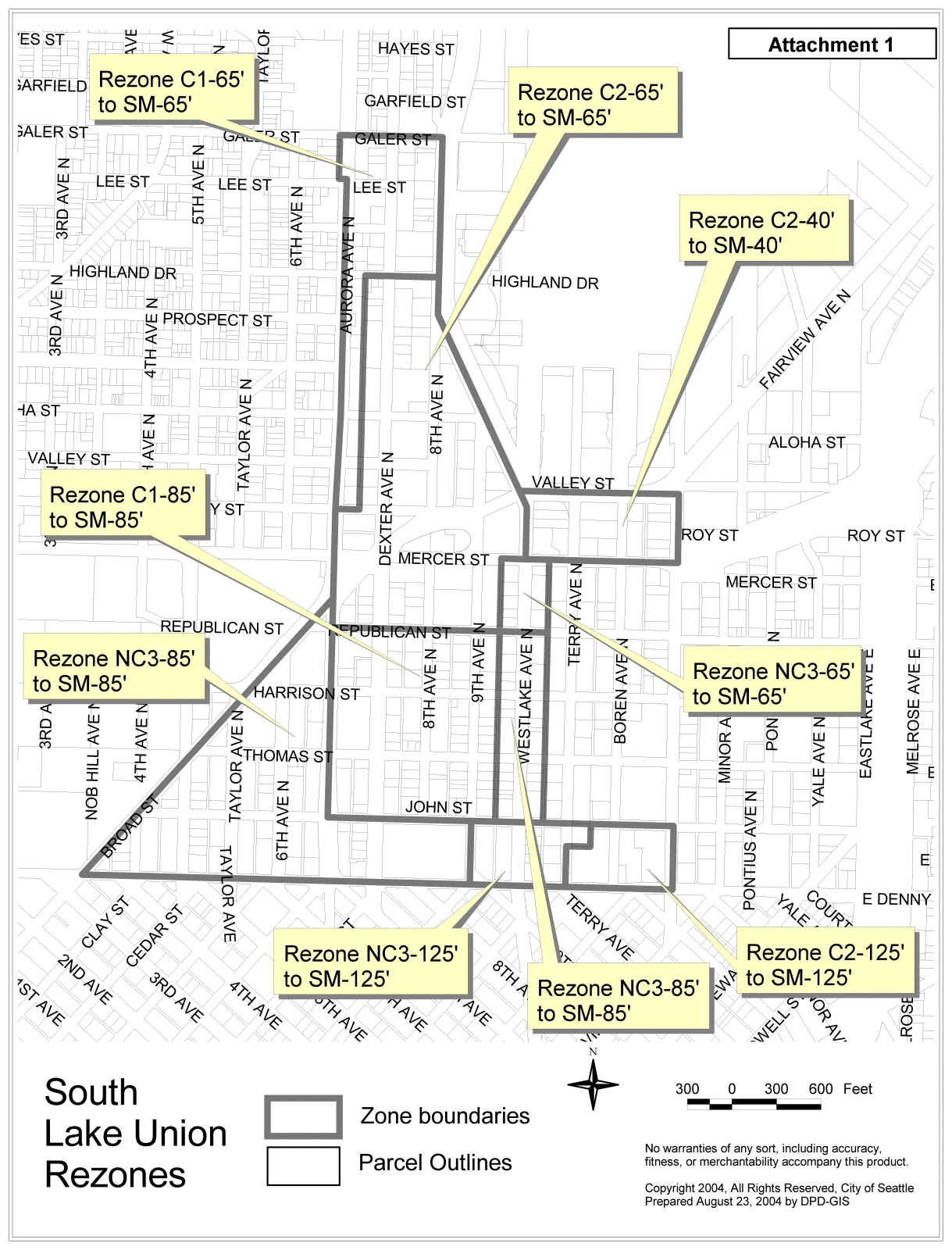
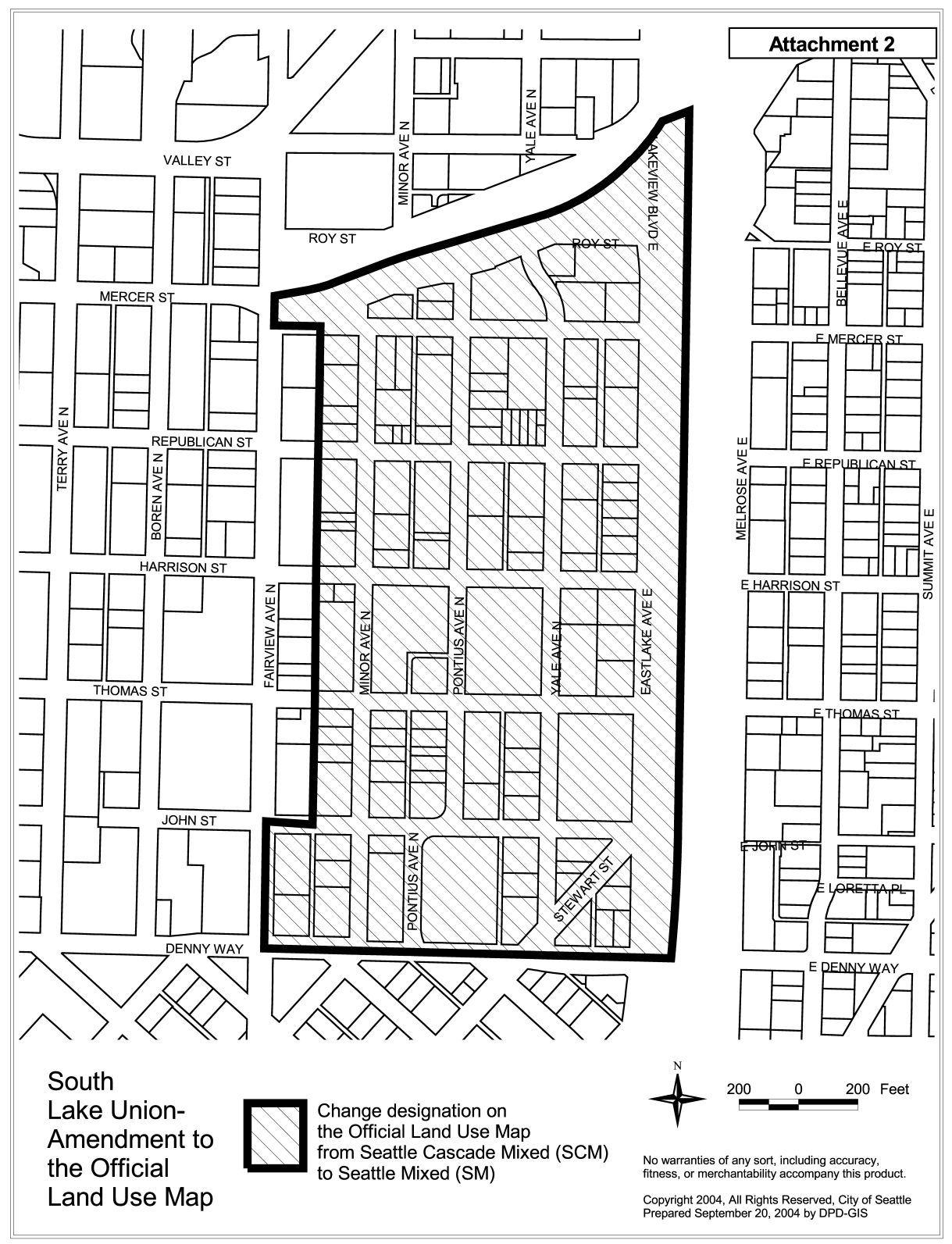
Commercial 2 C2 Downtown Office Core 1 DOC1 Downtown Office Core 2 DOC2 Downtown Retail Core DRC Downtown Mixed Commercial DMC Downtown Mixed Residential DMR Pioneer Square Mixed PSM International District Mixed IDM International District Residential IDR Downtown Harborfront 1 DH1 Downtown Harborfront 2 DH2 Pike Market Mixed PMM General Industrial 1 IG1 General Industrial 2 IG2 Industrial Buffer IB Industrial Commercial IC Section 2. Attached to this ordinance is a zoning map, identified as Attachment 1 and incorporated herein by this reference. The Official Land Use Map, Section 23.32.016, Plats 35E and 36W, Pages 101 and 102, is hereby amended to change the designated areas from Neighborhood Commercial (NC) or Commercial (C) to Seattle Mixed (SM) as shown on Attachment 1. Section 3. Attached to this ordinance is a map depicting amendments to Exhibit A of Section 23.32.016 of the Seattle Municipal Code, the Official Land Use Map, identified as Attachment 2 and incorporated herein by reference. The designation of the area specified on this map is changed from Seattle Cascade Mixed (SCM) to Seattle Mixed (SM). Section 4. Section 23.34.126 of the Seattle Municipal Code, which section was adopted by Ordinance 118302, is amended as follows:
23.34.126 Designation of the
The Section 5. Section 23.34.128 of the Seattle Municipal Code, which section was adopted by Ordinance 118302, is amended as follows:
23.34.128
A. Function. An area that provides for a wide range of uses to encourage
B. Transportation and Infrastructure Capacity. An area that is wellserved by transit and vehicular systems and where utility infrastructure is adequate, or where such systems and infrastructure can be
C. Relationship to Surrounding Activity. An area
D. Mix of Use. An area within the
E. Height. Section 6. Section 23.41.004 of the Seattle Municipal Code, which section was last amended by Ordinance 121278, is amended as follows: 23.41.004 Applicability. A. Design Review Required. 1. Design review is required for any new multifamily or commercial structure that exceeds SEPA thresholds if the structure: a. Is located in one (1) of the following zones: i. Lowrise (L3, L4), ii. Midrise (MR), iii. Highrise (HR),
iv. Neighborhood Commercial (NC1, 2, 3),
v.
vi. Industrial Commercial (IC) zone within the South Lake Union Urban Center b. Is located in a Commercial (C1 or C2) zone, and: i. The proposed structure is located within an urban village area identified in the Seattle Comprehensive Plan, or ii. The site of the proposed structure abuts or is directly across a street or alley from any lot zoned single-family, or iii. The proposed structure is located in the area bounded by NE 95th Street on the south, NE 145th Street on the north, 15th Ave NE on the west, and Lake Washington on the east. 2. Design review is required for all new Major Institution structures that exceed SEPA thresholds in the zones listed in subsection A1 of this section, unless the structure is located within a Major Institution Overlay (MIO) district. 3. Downtown design review is required for all new multifamily and commercial structures greater than or equal to the following thresholds: DOC 1 and DOC 2 Zones Use Threshold Nonresidential 50,000 square feet of gross floor area Residential 20 dwelling units DRC, DMC, DMR, DH1, DH2 Use Threshold Nonresidential 20,000 square feet of gross floor area Residential 20 dwelling units 4. Design review is required for all new structures exceeding one hundred and twenty (120) feet in width on any single street frontage in the Stadium Transition Area Overlay District as shown in Exhibit 23.41.006 A. 5. Administrative Design Review to Protect Trees. As provided in Sections 25.11.070 and 25.11.080, administrative design review (Section 23.41.016) is required for new multifamily and commercial structures in Lowrise, Midrise, and commercial zones when an exceptional tree, as defined in Section 25.11.020, is located on the site, if design review would not otherwise be required by this subsection A. 6. New multifamily or commercial structures in the zones listed in subsection A1 of this section, that are subject to SEPA solely as a result of the provisions of Section 25.05.908, Environmentally Critical Areas, are exempt from design review. *** Section 7. Section 23.41.012 of the Seattle Municipal Code, which section was last amended by Ordinance 121359, is amended as follows: 23.41.012 Development standard departures. *** B. Departures may be granted from the following requirements: 1. Structure width and depth limits; 2. Setback requirements; 3. Modulation requirements;
4. 5. Design, location on the lot and access to parking requirements; 6. Open space, residential amenity area or common recreation area requirements; 7. Lot coverage limits; 8. Rooftop coverage limits that apply within the South Lake Union Hub Urban Village; 9. Screening and landscaping requirements; 10. Standards for the location and design of nonresidential uses in mixed use buildings; 11. Within Urban Centers, in L3 zones only, the pitched roof of a structure, as provided in Section 23.45.009 C, may incorporate additional height of up to twenty (20) percent of the maximum height permitted, as provided in Section 23.45.009 A, subject to the following limitations: a. A pitched roof may not incorporate the additional height if the structure is on a lot abutting or across a street or alley from a single-family residential zone, b. The proposed structure must be compatible with the general development potential anticipated within the zone, c. The additional height must not substantially interfere with views from up-slope properties, and d. No more than one (1) project on one (1) site within each Urban Center may incorporate additional height in the pitched roofs of its structures pursuant to this subsection unless development regulations enacted pursuant to a neighborhood planning process allow other projects to incorporate such additional height; 12. Building height within the Roosevelt Commercial Core (up to an additional three (3) feet) for properties zoned NC3-65', (Exhibit 23.41.012 A, Roosevelt Commercial Core); 13. Building height within the Ballard Municipal Center master plan area, for properties zoned NC3-65', (Exhibit 23.41.012 B, Ballard Municipal Center Master Plan Area). The additional height may not exceed nine (9) feet, and may be granted only for townhouses that front a mid-block pedestrian connection or a park identified in the Ballard Municipal Center Master Plan; 14. Reduction in required parking for ground level retail uses that abut established mid-block pedestrian connections through private property as identified in the "Ballard Municipal Center Master Plan Design Guidelines, 2000." The parking requirement must be no less than the required parking for Pedestrian 1 designated areas shown in Section 23.47.044 Chart E; 15. Downtown or Stadium Transition Overlay District street facade requirements; 16. Downtown upper-level development standards; 17. Downtown coverage and floor size limits; 18. Downtown maximum wall dimensions; 19. Downtown street level use requirements; 20. Combined coverage of all rooftop features in downtown zones subject to the limitations in Section 23.49.008 C2; and 21. Certain conditions to allowance of additional height in DOC 1 and DOC 2 zones pursuant to subsection 23.49.008 A 2, as follows: a. Limits on gross floor area of stories under subsection 23.49.008 A2a(2); and b. Percentages of lot area that must be occupied by open space or by structures no greater than thirty-five (35) or sixty-five (65) feet in height, under subsection 23.49.008 A2b(1). 22. Building height in Lowrise zones, and parking standards of Section 23.54.015 in Midrise and Commercial zones, in order to protect existing trees as provided in Chapter 25.11; 23. Downtown view corridor and Downtown Green Street requirements to allow open railings on upper level roof decks or rooftop open space to project into the required view corridor or Green Street setback, provided such railings are determined to have a minimal impact on views and meet the requirements of the Building Code; and 24. Minor communication utility height limits in downtown zones set forth in SMC Section 23.57.013 B, and telecommunication facilities development standards set forth in Section 23.57.016. Section 8. Subsection D of Section 23.42.106 of the Seattle Municipal Code, which section was last amended by Ordinance 121276, is amended as follows: 23.42.106 Expansion of nonconforming uses. *** D. A nonconforming nonresidential use shall not be expanded or extended, except as follows: 1. A structure occupied by a nonconforming nonresidential use may be maintained, repaired, renovated or structurally altered but shall not be expanded or extended except as otherwise required by law, as necessary to improve access for the elderly or disabled or as specifically permitted elsewhere in this Code.
2. In the *** Section 9. Section 23.42.126 of the Seattle Municipal Code, which section was adopted by Ordinance 120293, is amended as follows: 23.42.126 Outdoor storage areas nonconformity. A. An outdoor storage area nonconforming as to screening and landscaping shall be required to be screened and landscaped at the time of any structural alteration or expansion of the outdoor storage area or the structure with which it is associated according to the provisions of: 1. Subsection D5 of Section 23.47.016, if located in a commercial zone;
2. Section 23.48.024, if located in the 3. Subsection C of Section 23.50.016, if located on an industrial street designated for landscaping; 4. Section 23.50.036, if located in an Industrial Buffer zone; and/or 5. Section 23.50.038, if located in an Industrial Commercial zone.
B. A business establishment in an NC1, NC2, NC3, or
C. A nonconforming use with a nonconforming outdoor storage area may be structurally altered, but not expanded, if the outdoor storage area is not expanded and if it is screened and landscaped according to the standards of subsection D5a of Section
23.47.016 or Section 23.48.024 if the nonconforming use with the nonconforming outdoor storage area is in the Section 10. Subsection D of Section 23.42.128 of the Seattle Municipal Code, which section was adopted by Ordinance 120293, is amended as follows: 23.42.128 Parking nonconformity. ***
D. In commercial zones, surface parking areas that are nonconforming due to lack of required landscaping and are proposed to be expanded by ten (10) percent or more in number of parking spaces or in area are required to be screened and landscaped
according to the standards of Section 23.47.016, or in the *** Section 11. Subsections E and J of Section 23.47.004 of the Seattle Municipal Code, which section was last amended by Ordinance 121196, are amended to repeal Map E, reserving the "Map E" designation for future use, and to read as follows: 23.47.004 Permitted and Prohibited Uses. *** E. Residential Uses. 1. Residential Use in Single-purpose Residential Structures. The term "single-purpose residential structure" may include a structure with both residential and nonresidential uses, but does not include an assisted living facility or any structure that is part of a mixed-use development meeting the standards in Section 23.47.008. Residential use in single-purpose residential structures is permitted as an administrative conditional use, unless:
a. The structure is located within an area in which the use is either permitted outright or prohibited, as shown on the Maps 23.47.004 A, B, C, D, b. The structure is located in a pedestrian-designated zone, in which case residential use is prohibited at street level along the designated principal pedestrian street as provided in Section 23.47.042; c. The structure is located within a zone that has a height limit of eighty-five (85) feet or higher, in which case single-purpose residential structures are prohibited; d. The residential use is a nursing home, in which case it is permitted outright unless prohibited as provided in subsection E1b; e. The structure is located within the Station Area Overlay District, in which case the provisions of Chapter 23.61 apply; f. The structure is in a part of the International Special Review District east of the Interstate 5 Freeway, in which case residential use is permitted outright as provided in Section 23.66.330; or g. The structure, in any commercial zone, is for a low-income housing project and: (1) An application for a reservation of tax credit for 1988 and 1989 under the low-income tax credit program administered by the Washington State Housing Finance Commission was filed on or before March 15, 1988; or (2) A nonprofit corporation purchased sites, signed options or entered into a real estate purchase agreement prior to March 15, 1988, in either of which cases the residential use is permitted outright. 2. Residential Use in Mixed-use Development. Residential use in mixeduse development is permitted outright in NC1, NC2, NC2/R, NC3, NC3/R and C1 zones; provided that, for assisted living facilities, which are considered mixed-use development, private living units and parking accessory to those units are prohibited at street level. 3. For purposes of this subsection E, live-work units shall be deemed a nonresidential use. *** J. Live-work Units. 1. Live-work units are permitted outright in all commercial zones subject to the provisions of this title.
2. Live-work units at street level are prohibited where single-purpose residential structures are prohibited, as shown on Map 23.47.004 A, Wallingford Urban Center; 3. Live-work units located at street level where permitted are subject to the development standards in Section 23.47.036. * * * Section 12. Subsection C of Section 23.47.012 of the Seattle Municipal Code, which section was last amended by Ordinance 121359, is repealed and subsequent subsections are relettered accordingly. Section 13. Subsection A of Section 23.48.002 of the Seattle Municipal Code, which section was last amended by Ordinance 120928, is amended as follows: 23.48.002 Scope of provisions.
A. This chapter identifies uses that are or may be permitted in the *** Section 14. Subsection B of Section 23.48.008 of the Seattle Municipal Code, which section was last amended by Ordinance 121145, is amended as follows 23.48.008 Conditional uses. *** B. The following uses may be permitted by the Director as administrative conditional uses when the provisions of this subsection and subsection A are met: 1. Mini-warehouses and Warehouses. The Director may authorize miniwarehouses or warehouses if:
a. The street level portion of a mini-warehouse or warehouse b. Vehicular entrances, including those for loading operations, will not disrupt traffic or transit routes; and
c. The traffic generated will not disrupt the pedestrian character of an area by significantly increasing the potential for pedestrianvehicle conflicts. *** Section 15. A new subsection C is added, subsequent subsections are relettered accordingly, and Subsections A and B of Section 23.48.010 of the Seattle Municipal Code, which section was last amended by Ordinance 121359, are amended as follows: 23.48.010 General structure height. A. Maximum Height. Maximum structure height shall be forty (40) feet, fifty-five (55) feet, sixty-five (65) feet, seventyfive (75) feet, eighty-five (85) feet or one hundred twenty-five (125) feet as designated on the Official Land Use Map, Chapter 23.32, except as provided in subsection B of this Section.
B. Within the South Lake Union Urban Center, 1. A minimum of two (2) floors in the structure have a floor to floor height of at least fourteen (14) feet; and 2. The additional height is used to accommodate mechanical equipment; and 3. The additional height permitted does not allow more than six (6) floors in zones with a sixty-five (65) foot height limit, or more than seven (7) floors in zones with a seventy-five (75) foot or eighty-five (85) foot height limit; and 4. The height limit provisions of 23.48.016 A1b, Standards applicable to specific areas, are satisfied.
C. Additional Height Permitted. Within the area bounded by Valley and Mercer Streets and Westlake and Fairview Avenues North, maximum structure height may be increased from forty (40) feet to sixty-five (65) feet as a special exception pursuant
to Chapter 23.76, Procedures for Master Use Permits and Council Land Use Decisions. In order to grant the special exception, the Director must find:
1. The lot is not located within the shoreline district. However, if a lot is located partially within the shoreline district, those portions of that lot which are not in the shoreline district may be eligible for the special exception.
2. In order to reduce potential height, bulk and scale and view impacts, enhance pedestrian connections across Valley and Mercer Streets, and provide greater opportunities for public open space:
a. A minimum of twenty (20) percent of the total development area must be provided as useable open space at street level. The useable open space must be directly accessible to the public during the hours of operation of South Lake Union Park, and no
occupied portion of the structure may extend into the required useable open space.
(1) If the Director determines that greater public benefit will result, a portion of the required useable open space may be located above street level, provided:
i. A minimum of twenty-five (25) percent of the total development area is provided as useable open space;
ii. The useable open space is directly accessible to the public during the hours of operation of South Lake Union Park, and no occupied portion of the structure may extend into the required useable open space;
iii. The useable open space enhances visual and physical pedestrian connection(s) between South Lake Union Park and the development area; and
iv. The required useable open space is provided at heights less than forty (40) feet, measured from existing or finished grade, whichever is lower.
(2) If the Director determines that greater public benefit will result, a portion of the required useable open space may be located below street level, provided:
i. A minimum of twenty-five (25) percent of the total development area is provided as useable open space;
ii. The useable open space is directly accessible to the public during the hours of operation of South Lake Union Park, and no occupied portion of the structure may extend into the required useable open space;
iii. The useable open space enhances the pedestrian connection(s) between South Lake Union Park and the development area;
iv. The useable open space provides visual and physical connections from street level to the useable open space. Required useable open space allows for ease of access to pedestrians from street level and may include streetscape elements such as
semitransparent fencing and low-level vegetation;and
v. The design and siting of the required useable open space provides adequate light and air exposure and encourages lively pedestrian activity.
vi. When useable open space is provided below street level, the height of facades that abut the open space shall be measured from existing grade.
b. All portions of a structure that exceed forty (40) feet in height are limited to a maximum lot coverage of sixty-four (64) percent. In addition, portions of a structure above forty (40) feet in height must be located at least fifteen (15) feet from
the street property line along Valley Street and Westlake, Terry, Boren, and Fairview Avenues North.
c. Departures from development standards may be granted pursuant to Chapter 23.41, Part I, Design Review, except for open space quantity or upper level lot coverage requirements in this section.
3. For buildings constructed under permits applied for after February 21, 2001, all uses at street level, except for parking, must have a minimum floor to floor height of thirteen (13) feet. Along Terry Avenue North between Valley and Mercer Streets and
along Valley Street between Westlake and Boren Avenues North, the following apply:
a. A minimum of eighty (80) percent of a structure's street front facade at street level must be occupied by uses other than parking. For purposes of calculating the eighty (80) percent, twenty-two (22) feet for the width of a driveway to access parking
may be subtracted from the length of the street front facade if the Director determines that access to parking from Valley Street or Terry Avenue North is the best opportunity to avoid traffic problems or pedestrian conflicts.
b. A minimum depth of thirty (30) feet from the street front facade of the structure must be occupied by uses other than parking. The minimum required depth may be averaged, with no depth less than fifteen (15) feet.
c. If the street front facade and depth requirements result in a space greater than fifty (50) percent of the structure's footprint, the Director may modify the street front facade and depth requirements to reduce the space to fifty (50) percent of the
structure's footprint.
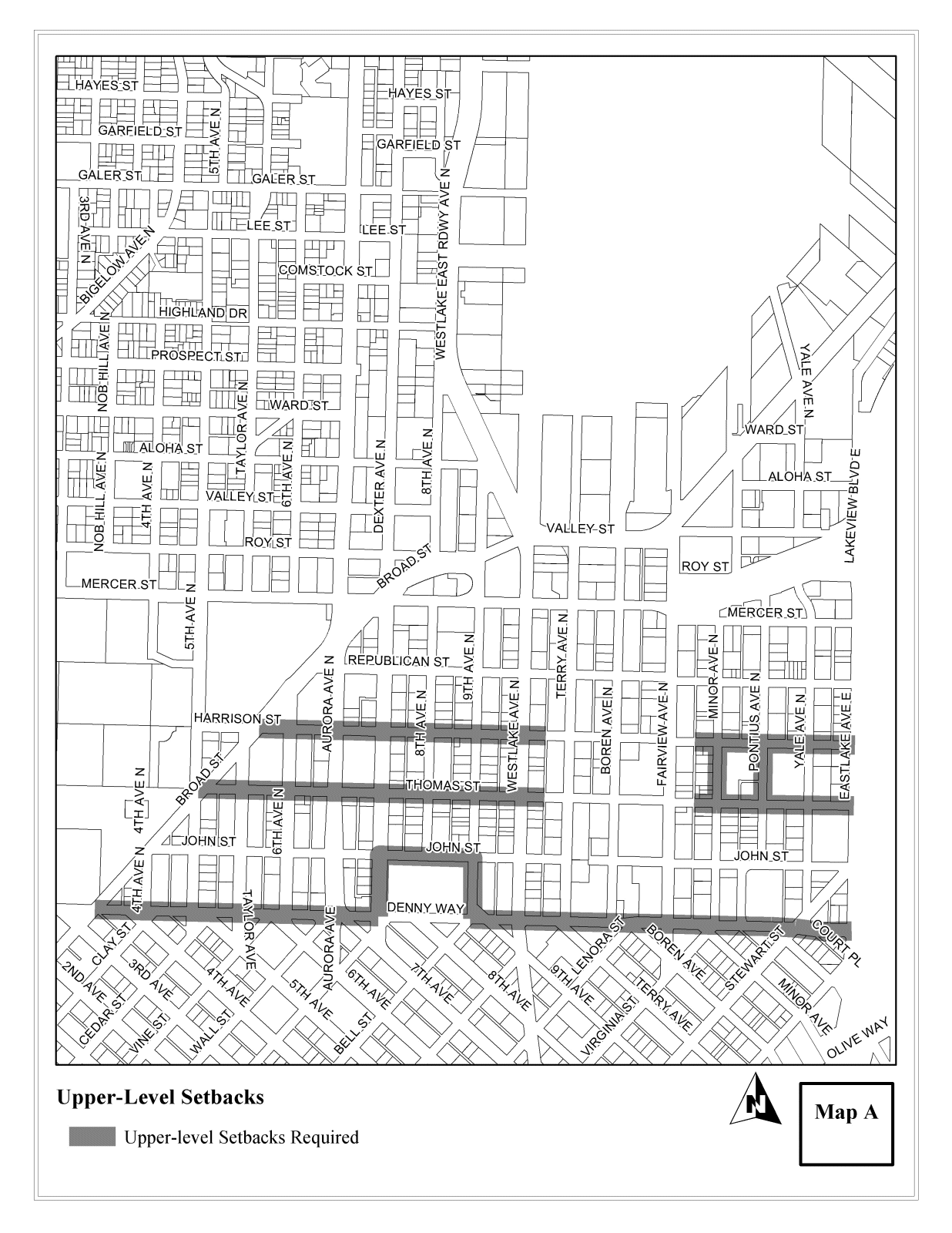
Section 16. Section 23.48.012 of the Seattle Municipal Code, which section was adopted by Ordinance 118302, is amended to repeal existing Maps A, Cascade Neighborhood, and C, Upper-Level Setbacks, and adopt a new Map A, Upper-Level Setbacks. In addition, subsection A of Section 23.48.012 is amended as follows: 23.48.012 Upper-level setback requirements. A. Upper-level Setbacks are required where shown on Map A, Upperlevel setbacks, and as required in this Section.
1. Structures on lots in the SM/65', SM/75' and SM/85' zones must provide an upper-level setback for the facade facing applicable streets or parks, for any portion of the structure greater than fortyfive (45) feet in height.
3. Structures on lots *** Section 17. Section 23.48.014 of the Seattle Municipal Code, which section was last amended by Ordinance 120117, is amended to repeal existing Map B, Pedestrian Street Classification, and replace it with a new Map B, Pedestrian Street Classifications, to be codified at the end of this Chapter. In addition, subsections B, C and D of Section 23.48.014 are amended as follows: 23.48.014 General facade requirements. *** B. Minimum Facade Height. Minimum facade heights shall not apply when all portions of the structure are lower than the elevation of the required minimum facade height listed below.
1. On Class
2. On
3. On
C. All facades on Class * * *
D. Street-level Setback. 1. The setback area shall be landscaped according to the provisions of Section 23.48.024. 2. Additional setbacks shall be permitted for up to thirty (30) percent of the length of the set-back street wall, provided that the additional setback is located a distance of twenty (20) feet or greater from any street corner. * * * Section 18. Section 23.48.016 of the Seattle Municipal Code, which section was last amended by Ordinance 121196, is amended as follows: 23.48.016 Standards applicable to specific areas.
A. Seattle 1. Height Limit. a. New single purpose nonresidential structures shall have a height limit of fifty-five (55) feet. b. Single purpose residential structures and mixed-use structures with sixty (60) percent or more of the structure's gross floor area in residential use are permitted to a height of seventy-five (75) feet. 2. Scale of Development. a. Single purpose, nonresidential development, except hotels with one hundred (100) rooms/suites or fewer, is limited to a lot area of twenty-one thousand six hundred (21,600) square feet or less. b. Development on lots with areas greater than twenty-one thousand six hundred (21,600) square feet must include residential use in an amount of gross floor area equal to sixty (60) percent or more of the gross floor area in nonresidential use, except schools, elementary and secondary, and hotels with one hundred (100) rooms/suites or fewer. c. Two (2) lots of up to twenty-one thousand six hundred (21,600) square feet each, separated by an alley and connected above grade by a skybridge or other similar means shall be considered two (2) separate lots for the purposes of this subsection A2. Such a connection above grade, across the alley may be allowed pursuant to the Council's approval of an aerial alley vacation or temporary use permit process. d. Single purpose nonresidential structures on adjacent lots not separated by an alley, subject to this subsection, may not be internally connected.
3. Nonresidential uses existing prior to 4. Single purpose nonresidential exception. A single purpose, nonresidential structure may be permitted where a single purpose residential or mixed use structure would otherwise be required, subject to the following:
a. The proposal is comprised of two (2) or more lots within the same b. The amount of gross floor area in residential use in the structures on both lots is equal to at least sixty (60) percent of the total gross floor area of the total combined development on the lots included in the proposal; and
c. The nonresidential structure d. The proposal meets one or more of the following: (1) The project includes the rehabilitation of a landmark structure or incorporates structures or elements of structures of architectural or historical significance as identified in an adopted neighborhood plan or design guidelines, or (2) The project includes personal household retail sales and service uses, eating and drinking establishments, customer service offices, entertainment uses, or human service uses or child care centers at the street level in an amount equal to fifty (50) percent of the structure's footprint, or
(3) The lot accommodating the required residential use
B.
1.
2. In SM/125 zones, a FAR of five (5) is the maximum gross floor area permitted for all nonresidential uses in structures greater than seventy-five (75) feet in height.
a. All gross floor area below grade; b. All gross floor area used for accessory parking located above grade.
5. Within the South Lake Union Urban Center, gross floor area occupied by mechanical equipment, up to a maximum of fifteen (15) percent, is exempt from FAR calculations. The allowance is calculated on the gross floor area of the structure
after all exempt space permitted under subsections B3a and B3b has been deducted. Subsection B4 shall not apply. Mechanical equipment located on the roof of a structure is not calculated as part of the total gross floor area of a structure.
Section 19. Section 23.48.018 of the Seattle Municipal Code, which section was adopted by Ordinance 118302, is amended as follows: 23.48.018 Transparency and blank facade requirements. Facade transparency and blank facade requirements shall apply to the area of the facade between two (2) feet and eight (8) feet above the sidewalk (Exhibit 23.48.018 A).
A. Facade Transparency Requirements. Transparency requirements apply to all * * * 1. Transparency shall be required as follows:
a.
b.
c. When the slope of the street frontage of the facade exceeds seven and one-half (7 1/2) percent, the required amount of transparency shall be reduced to forty-five (45) percent of the width of the street-level facade on 2. Only clear or lightly tinted glass in windows, doors, and display windows shall be considered transparent. Transparent areas shall allow views into the structure or into display windows from the outside. B. Blank Facade Limits. 1. Any portion of the facade which is not transparent shall be considered to be a blank facade.
2. Blank Facade Limits for a. Blank facades shall be limited to segments fifteen (15) feet wide, except for garage doors which may be wider than fifteen (15) feet. Blank facade width may be increased to thirty (30) feet if the Director determines that the facade is enhanced by architectural detailing, artwork, landscaping, or other similar features that have visual interest. The width of garage doors shall be limited to the width of the driveway plus five (5) feet. b. Any blank segments of the facade shall be separated by transparent areas at least two (2) feet wide. c. The total of all blank facade segments, including garage doors, shall not exceed forty (40) percent of the street facade of the structure on each street frontage; or fifty-five (55) percent if the slope of the street frontage of the facade exceeds seven and one-half (7 1/2) percent.
3. Blank Facade Limits for a. Blank facades shall be limited to segments thirty (30) feet wide, except for garage doors which may be wider than thirty (30) feet. Blank facade width may be increased to sixty (60) feet if the Director determines that the facade is enhanced by architectural detailing, artwork, landscaping, or other similar features that have visual interest. The width of garage doors shall be limited to the width of the driveway plus five (5) feet.
b. Any blank segments of the facade shall be separated by transparent areas at c. The total of all blank facade segments, including garage doors, shall not exceed seventy (70) percent of the street facade of the structure on each street frontage; or seventy-eight (78) percent if the slope of the street frontage of the facade exceeds seven and onehalf (7 1/2) percent. 4. Blank facade limits shall not apply to portions of structures in residential use. Section 20. Section 23.48.020 of the Seattle Municipal Code, which section was adopted by Ordinance 118302, is amended as follows:
23.48.020
A. Quantity of
B. Standards for
1.
2. The
3. A maximum of fifty percent (50%) of the
4. The minimum horizontal dimension for required
5. The exterior portion of required
6. Parking areas, driveways and pedestrian access, except for pedestrian access meeting the Washington State Rules and Regulations for Barrier Free Design, shall not be counted as Section 21. A new Section 23.48.019 of the Seattle Municipal Code, is adopted to read as follows: 23.48.019 Street level uses. One or more of the uses listed in subsection A are required at street level on all lots abutting streets designated as Class 1 Pedestrian Streets shown on Map B, located at the end of this Chapter. Required street-level uses shall meet the standards of this Section. A. The following uses qualify as required street level uses: 1. Personal and household retail sales and service uses; 2. Eating and drinking establishments; 3. Customer service offices; 4. Entertainment uses; 5. Pet grooming services; 6. Public library; and 7. Public park. B. A minimum of seventy-five (75) percent of each street frontage at street level where street level uses are required must be occupied by uses listed in subsection A. The remaining twenty-five (25) percent of the street frontage at street level may contain other permitted uses and/or pedestrian or vehicular entrances. The frontage of any exterior outdoor common recreation area required for residential uses, shall not be counted in street frontage. C. The space occupied by required street level uses must have a minimum floor to floor height of thirteen (13) feet and extend at least thirty (30) feet in depth at street level from the street front facade. D. Required street level uses must be located within ten (10) feet of the street property line or abut an open space permitted in subsection B. E. Pedestrian access to required street-level uses shall be provided directly from the street or permitted open space. Pedestrian entrances must be located no more than three (3) feet above or below sidewalk grade or at the same elevation as the abutting permitted open space. Section 22. Section 23.48.024 of the Seattle Municipal Code, which section was adopted by Ordinance 118302, is amended as follows: 23.48.024 Screening and landscaping standards. A. The following types of screening and landscaping apply where screening or landscaping is required. 1. Three (3) foot High Screening on Street Property Lines. Three (3) foot high screening may be either: a. A fence or wall at least three (3) feet in height; or b. A hedge or landscaped berm at least three (3) feet in height. 2. Landscaping for Setback Areas and Berms. Each setback area or berm required shall be planted with trees, shrubs, and grass or evergreen groundcover. Features such as pedestrian access meeting the Washington State Rules and Regulations for Barrier-Free Design, decorative pavers, sculptures or fountains may cover a maximum of thirty (30) percent of each required landscaped area or berm. Landscaping shall be provided according to standards promulgated by the Director. Landscaping designed to provide treatment for storm water runoff qualifies as required landscaping. B. Screening for Specific Uses. 1. Gas stations shall provide three (3) foot high screening along lot lines abutting all streets, except within required sight triangles. 2. Surface Parking Areas. a. Surface Parking Areas Abutting Streets. Surface parking areas shall provide three (3) foot high screening along the lot lines abutting all streets, except within required sight triangles. b. Surface Parking Areas Abutting Alleys. Surface parking areas shall provide three (3) foot high screening along the lot lines abutting an alley. The Director may reduce or waive the screening requirement for part or all of the lot line abutting the alley when required parking is provided at the rear lot line and the alley is necessary to provide aisle space. 3. Parking in Structures. Parking located at or above street-level in a garage shall be screened according to the following requirements.
a. On
b. On c. The perimeter of each floor of parking garages above street level shall have an opaque screen at least three and one-half (3 1/2) feet high. *** Section 23. Subsection A of Section 23.48.031 of the Seattle Municipal Code, which section was last amended by Ordinance 120117, is amended as follows: 23.48.031 Solid waste and recyclable materials storage space.
A. Storage space for solid waste and recyclable materials containers shall be provided for all new structures permitted in the *** Section 24. Subsections D and E of Section 23.48.032 of the Seattle Municipal Code, which subsection was last amended by Ordinance 121476, is amended as follows: 23.48.032 Required parking and loading. * * * D. Reduction in the Amount of Parking Required.
1. Reductions to required parking shall be permitted according to the provisions of Section 23.54.020, Parking quantity exceptions. Further reductions or exceptions are permitted per business establishment for
street-level uses Uses Class 1 Pedestrian Class 2 Pedestrian Streets Streets Retail sales and No parking required for No parking required service uses, except the first 25,000 square for the first 7,500 eating and drinking feet square feet establishments; customer service offices; and entertainment uses, except motion picture theaters. Motion picture No parking required for No parking required theaters the first 150 seats for the first 150 seats Eating and drinking No parking required for No parking required establishments. the first 7,500 square for the first 7,500 feet square feet Human Service and No parking required No parking required child care uses.
2. No parking shall be required for the first one hundred fifty (150) seats in a motion picture theater.
3. No parking shall be required for any gross floor area in human service or child care use.
E. Payment in Lieu. In lieu of providing all or a portion of the required parking,
1. An in-lieu-of payment shall equal the
2. Funds received in-lieu-of providing parking shall be applied to acquisition or development of a new public parking garage(s) in the 3. Limitations. Parking stalls within a shared parking garage(s), satisfying the requirements of this section for any project, shall not be used to satisfy the parking requirement for any other project. Section 25. Subsection C of Section 23.48.034 of the Seattle Municipal Code, which subsection was adopted by Ordinance 118302, is amended as follows: 23.48.034 Parking and loading location, access and curbcuts. ***
C. Parking and Loading Access. When a lot abuts more than one (1) right-of-way, the location of access for parking and loading shall be determined by the Director, depending on the classification of rightsof-way, as 1. Access to parking and loading shall be from the alley when the lot abuts an alley improved to the standards of Section 23.53.030 C and use of the alley for parking and loading access would not create a significant safety hazard as determined by the Director.
2. If the lot fronts on an alley and an east/west oriented
3. If the lot does not abut an improved alley
Section 26. Chart A of Section 23.53.010 of the Seattle Municipal Code, which Section was last amended by Ordinance 118409, is amended as follows: *** Chart A for Section 23.53.010 Zone Category Required Right-of-Way Width 1. SF, LDT, L1, NC1 50' 2. L2, L3, L4, NC2 56'
3. MR, HR, NC3, C1, C2, 4. IG1, IG2 66' *** Section 27. Chart A of Section 23.53.015 of the Seattle Municipal Code, which section was last amended by Ordinance 121276, is amended as follows: *** Chart A for Section 23.53.015 Minimum Right-of-Way Widths for Existing Nonarterial Streets Zone Category Required Right-of-Way Width 1. SF, LDT, L1, L2 and NC1 zones; and NC2 zones with a maximum height limit of forty feet (40') or less 40 feet 2. L3, L4, MR, HR, NC2 zones with height limits of more than forty feet (40'), NC3,
C1, C2 and *** Section 28. Charts A, B and C of Section 23.53.030 of the Seattle Municipal Code, which section was last amended by Ordinance 121196, are amended as follows: *** Chart A for Section 23.53.030 Width of New Alley Rights-of-Way Zone Category Right-of-Way Width 1. SF, LDT, L1, NC1 12' 2. L2, L3, L4, NC2 16'
3. MR, HR, NC3, C1, C2, and all Industrial and Downtown zones 20' *** Chart B for Section 23.53.030 Right-of-Way Width for Alleys Considered to be Improved Zone Category Right-of-Way Width 1. SF, LDT, L1, L2, L3, NC1 10' 2. L4, MR, HR, NC2 12'
3. NC3, C1, C2 and *** Chart C for Section 23.50.030 Required Minimum Right-of-Way Widths for Existing Alleys Zone Category Right-of-Way Width 1. SF and LDT No minimum width 2. L1, L2, NC1 12' 3. L3, L4, MR, HR, NC2 16'
4. NC3, C1, C2, 5. All industrial zones 20' *** Section 29. If Council Bill 115173 becomes law before this ordinance becomes law, Subsection "Multifamily uses, when within the Seattle Cascade Mixed zone, or the Pike/Pine Overlay District" of Chart A of Section 23.54.015 of the Seattle Municipal Code, is amended as follows: Chart A for Section 23.54.015 PARKING Use Parking Requirements * * * Multifamily uses, when within 1 space for each dwelling unit the ((Seattle Cascade Mixed)) Seattle Mixed zone13 * * * Section 30. If this ordinance becomes law before Council Bill 115173 becomes law, Subsection "Multifamily uses, when within the Seattle Cascade Mixed zone or the Pike/Pine Overlay District" of Chart A of Section 23.54.015, of the Seattle Municipal Code, is amended as follows: Chart A for Section 23.54.015 PARKING Use Parking Requirements * * * Multifamily uses, when within 1 space for each dwelling unit the ((Seattle Cascade Mixed)) Seattle Mixed zone, or the Pike/Pine Overlay District13 Section 31. Subsection I of Section 23.54.015 of the Seattle Municipal Code, which section was last amended by Ordinance 121477, is amended as follows: 23.54.015 Required parking. * * * I. Bicycle Parking.
1. In L2, L3, L4, MR and HR zones, and the Number of Units Number of Bicycle Spaces Required 5 - 10 1 11 - 20 2 More than 20 1 for every 10 units 2. Bicycle parking spaces shall be provided by all institutions in multifamily zones. The number of required bicycle parking spaces shall be five (5) percent of the number of required vehicle spaces. All bicycle spaces should be sheltered from the weather, visible from the institution, and conveniently located.
3. Bicycle parking facilities, either off-street or in the street right-of-way, shall be provided in NC1, NC2, NC3, C1 zones, and the a. The number of required bicycle parking spaces shall be ten (10) percent of the number of required off-street auto parking spaces. b. When any covered automobile parking is provided, all bicycle parking shall be covered. 4. Bicycle parking facilities accessory to nonresidential uses or live-work units shall be located on the lot or within eight hundred (800) feet of the lot. Bicycle parking accessory to residential uses shall be located on-site. Bicycle parking facilities shared by more than one (1) use are encouraged. When located off-street, bicycle and automobile parking areas shall be separated by a barrier or painted lines. Section 32. Subsections D, E, F and H of Section 23.54.020 of the Seattle Municipal Code, which Section was last amended by Ordinance 120691, are amended as follows: 23.54.020 Parking quantity exceptions. ***
D. Expansion of Existing Nonresidential Uses in Commercial Zones and in the
E. Reductions to required parking in pedestrian-designated commercial zones shall be permitted according to the provisions of Section 23.47.044. Further reductions to required parking for nonresidential use in the F. Reductions to Minimum Parking Requirements for Nonresidential Uses. 1. Reductions to minimum parking requirements permitted by this subsection shall be calculated from the minimum parking requirements in Section 23.54.015. Total reductions to required parking as provided in this subsection shall not exceed forty (40) percent. 2. Transit Reduction.
a. In commercial zones, except pedestrian-designated zones, and in the b. In industrial zones, the minimum parking requirement for a nonresidential use may be reduced by fifteen (15) percent when the use is located within eight hundred (800) feet of a street with peak transit service headways of fifteen (15) minutes or less in each direction. This distance shall be the walking distance measured from the nearest bus stop to the property line of the lot containing the use. 3. Substitution of Alternative Transportation. For new or expanding administrative offices or manufacturing uses which require forty (40) or more parking spaces, the minimum parking requirement may be reduced up to a maximum of forty (40) percent by the substitution of alternative transportation programs, according to the following provisions: a. For every certified carpool space accompanied by a cash fee, performance bond or alternative guarantee acceptable to the Director, the total parking requirement shall be reduced by one and nine-tenths (1 9/10) spaces, up to a maximum of forty (40) percent of the parking requirement. The Director shall consult with the Seattle Rideshare Office in certifying carpool spaces and the location of carpool parking. b. For every certified vanpool purchased or leased by the applicant for employee use, or equivalent cash fee for purchase of a van by the public ridesharing agency, the total parking requirement shall be reduced by six (6) spaces, up to a maximum of twenty (20) percent of the parking requirement. Before a certificate of occupancy may be issued, details of the vanpool program shall be spelled out in a Memorandum of Agreement executed between the proponent, the Director, and the Seattle Rideshare Office. c. If transit or transportation passes are provided with a fifty (50) percent or greater cost reduction to all employees in a proposed structure for the duration of the business establishment(s) within it, or five (5) years, whichever is less, and if transit service is located within eight hundred (800) feet, the parking requirement shall be reduced by ten (10) percent. With a twenty-five (25) percent to forty-nine (49) percent cost reduction, and if transit service is located within eight hundred (800) feet, the parking requirement shall be reduced by five (5) percent. d. For every four (4) covered bicycle parking spaces provided, the total parking requirement shall be reduced by one (1) space, up to a maximum of five (5) percent of the parking requirement, provided that there is access to an arterial over improved streets. *** H. Cooperative Parking. 1. Cooperative parking shall be permitted between two (2) or more business establishments which are commercial uses according to the provisions of this subsection. 2. Up to a twenty (20) percent reduction in the total number of required parking spaces for four (4) or more separate business establishments, fifteen (15) percent reduction for three (3) business establishments, and ten (10) percent reduction for two (2) commercial uses may be authorized by the Director under the following conditions: a. No reductions to the parking requirement shall be made if the proposed business establishments have already received a reduction through the provisions for shared parking, subsection G of this section.
b. The business establishments for which the application is being made for cooperative parking shall be located within eight hundred (800) feet of the parking, and the parking shall be located in a commercial or residential-commercial zone or the
c. The reductions to parking permitted through cooperative parking shall be determined as a percentage of the minimum parking requirement as modified by the reductions permitted in subsections A through F of this section. d. An agreement providing for the cooperative use of parking shall be filed with the Director when the facility or area is established as cooperative parking. Cooperative parking privileges shall continue in effect only as long as the agreement to use the cooperative parking remains in force. If the agreement is no longer in force, then parking shall be provided as otherwise required by this chapter. New business establishments seeking to meet parking requirements by becoming part of an existing cooperative arrangement shall provide the Director with an amendment to the agreement stating their inclusion in the cooperative parking facility or area. *** Section 33. Subsection F of Section 23.54.030 of the Seattle Municipal Code, which Section was last amended by Ordinance 121196, is amended as follows: 23.54.030 Parking space standards. *** F. Curbcuts. Curbcut requirements shall be determined by whether the parking served by the curbcut is for residential or nonresidential use, and by the zone in which the use is located. When a curbcut is used for more than one (1) use or for one (1) or more live-work units, the requirements for the use with the largest curbcut requirements shall apply. 1. Residential Uses in Single-family and Multi-family Zones and Single purpose Residential Uses in All Other Zones. a. For lots not located on a principal arterial as designated on Exhibit 23.53.015 A, the number of curbcuts permitted shall be according to the following chart: Street or Easement Frontage of the Lot Number of Curbcuts Permitted 0 - 80 feet 1 81 - 160 feet 2 161 - 240 feet 3 241 - 320 feet 4 For lots with frontage in excess of three hundred twenty (320) feet, the pattern established in the chart shall be continued. b. Curbcuts shall not exceed a maximum width of ten (10) feet except that: (1) One (1) curbcut greater than ten (10) feet but in no case greater than twenty (20) feet in width may be substituted for each two (2) curbcuts permitted by subsection F1a; and (2) A greater width may be specifically permitted by the development standards in a zone; and (3) When subsection D of Section 23.54.030 requires a driveway greater than ten (10) feet in width, the curbcut may be as wide as the required width of the driveway. c. For lots on principal arterials designated on Exhibit 23.53.015 A, curbcuts of a maximum width of twenty-three (23) feet shall be permitted according to the following chart. Street Frontage of the Lot Number of Curbcuts Permitted 0 - 160 feet 1 161 - 320 feet 2 321 - 480 feet 3 For lots with street frontage in excess of four hundred eighty (480) feet, the pattern established in the chart shall be continued. d. There shall be at least thirty (30) feet between any two (2) curbcuts located on a lot. e. A curbcut may be less than the maximum width permitted but shall be at least as wide as the minimum required width of the driveway it serves. f. Where two (2) adjoining lots share a common driveway according to the provisions of Section 23.54.030 D1, the combined frontage of the two (2) lots shall be considered one (1) in determining the maximum number of permitted curbcuts. 2. Nonresidential Uses in Single-family and Multifamily Zones, and All Uses, Except Single-purpose Residential Uses, in All Other Zones Except Industrial Zones. a. Number of Curbcuts. (1) In RC, NC1, NC2 and NC3 zones and within Major Institution Overlay Districts, the number of two-way curbcuts permitted shall be according to the following chart: Street Frontage of the Lot Number of Curbcuts Permitted 0 - 80 feet 1 81 - 240 feet 2 241 - 360 feet 3 361 - 480 feet 4 For lots with frontage in excess of four hundred eighty (480) feet the pattern established in the chart shall be continued. The Director may allow two (2) one-way curbcuts to be substituted for one (1) two-way curbcut, after determining that there would not be a significant conflict with pedestrian traffic.
(2) In C1 and C2 zones and the (3) In downtown zones, a maximum of two (2) curbcuts for one (1) way traffic at least forty (40) feet apart, or one (1) curbcut for two (2) way traffic, shall be permitted on each street front where access is permitted by Section 23.49.018. No curbcut shall be located within forty (40) feet of an intersection. These standards may be modified by the Director on lots with steep slopes or other special conditions, the minimum necessary to provide vehicular and pedestrian safety and facilitate a smooth flow of traffic. (4) For public schools, the minimum number of curbcuts determined necessary by the Director shall be permitted. b. Curbcut Widths. (1) For one (1) way traffic, the minimum width of curbcuts shall be twelve (12) feet, and the maximum width shall be fifteen (15) feet. (2) For two (2) way traffic, the minimum width of curbcuts shall be twenty-two (22) feet, and the maximum width shall be twenty-five (25) feet, except that the maximum width may be increased to thirty (30) feet when truck and auto access are combined. (3) For public schools, the maximum width of curbcuts shall be twentyfive (25) feet. Development standards departure may be granted or required pursuant to the procedures and criteria set forth in Chapter 23.79. (4) When one (1) of the following conditions applies, the Director may require a curbcut of up to thirty (30) feet in width, if it is found that a wider curbcut is necessary for safe access: i. The abutting street has a single lane on the side that abuts the lot; or ii. The curb lane abutting the lot is less than eleven (11) feet wide; or iii. The proposed development is located on an arterial with an average daily traffic volume of over seven thousand (7,000) vehicles; or iv. Off-street loading space is required according to subsection H of Section 23.54.015. c. The entrances to all garages accessory to nonresidential uses or live-work units and the entrances to all principal use parking garages shall be at least six (6) feet nine (9) inches high. 3. All Uses in Industrial Zones. a. Number and Location of Curbcuts. The number and location of curbcuts shall be determined by the Director. b. Curbcut Width. Curbcut width in Industrial zones shall be provided as follows: (1) When the curbcut provides access to a parking area or structure it shall be a minimum of fifteen (15) feet wide and a maximum of thirty (30) feet wide. (2) When the curbcut provides access to a loading berth, the maximum width of thirty (30) feet set in subsection F3b(1) may be increased to fifty (50) feet. (3) Within the minimum and maximum widths established by this subsection, the Director shall determine the size of the curbcuts. 4. Curbcuts for Access Easements. a. When a lot is crossed by an access easement serving other lots, the curbcut serving the easement may be as wide as the easement roadway. b. The curbcut serving an access easement shall not be counted against the number or amount of curbcut permitted to a lot if the lot is not itself served by the easement. 5. Curbcut Flare. A flare with a maximum width of two and one-half (2 1/2) feet shall be permitted on either side of curbcuts in any zone. 6. Replacement of Unused Curbcuts. When a curbcut is no longer needed to provide access to a lot, the curb and any planting strip shall be replaced. *** Section 34. Subsection D and E of Section 23.55.030 of the Seattle Municipal Code, which subsections were last amended by Ordinance 120466, are amended as follows:
23.55.030 Signs in NC3, C1 *** D. On-Premises Signs. 1. The following signs shall be permitted in addition to the signs permitted by subsections D2 and D3 of this section: a. Electric, externally illuminated or nonilluminated signs bearing the name of the occupant of a dwelling unit, not exceeding sixty-four (64) square inches in area; b. Memorial signs or tablets, and the names of buildings and dates of building erection when cut into a masonry surface or constructed of bronze or other noncombustible materials; c. Signs for public facilities indicating danger and/or providing service or safety information; d. Properly displayed national, state and institutional flags; e. One (1) under-marquee sign which does not exceed ten (10) square feet in area; f. One (1) electric, externally illuminated or nonilluminated sign bearing the name of a home occupation, not to exceed sixty-four (64) square inches in area. 2. Number and Type of Permitted Signs for Business Establishments. a. Each business establishment may have one (1) ground, roof, projecting or combination sign (Type A sign) for each three hundred (300) lineal feet, or portion thereof, of frontage on public rightsof-way, except alleys. b. In addition to the signs permitted by subsection D2a of this section, each business establishment may have one (1) wall, awning, canopy, marquee or undermarquee sign (Type B sign) for each thirty (30) lineal feet, or portion thereof, of frontage on public rights-ofway, except alleys. c. In addition to the signs permitted by subsections D2a and D2b of this section, each multiple business center and drive-in business may have one (1) pole sign for each three hundred (300) lineal feet, or portion thereof, of frontage on public rights-of-way, except alleys. Such pole signs may be for a drive-in business or for an individual business establishment located in a multiple business center, or may identify a multiple business center. d. Individual businesses which are not drive-in businesses and which are not located in multiple business centers may have one (1) pole sign in lieu of another Type A sign permitted by subsection D2a of this section for each three hundred (300) lineal feet, or portion thereof, of frontage on public rights-of-way, except alleys. e. Where the principal use or activity on the lot is outdoor retail sales, banners and strings of pennants maintained in good condition shall be permitted in addition to the signs permitted by subsections D2a, D2b and D2c of this section. 3. Maximum Area.
a. NC3 Zones and the (1) The maximum area of each face of a pole, ground, roof, projecting or combination signs shall be seventy-two (72) square feet plus two (2) square feet for each foot of frontage over thirty-six (36) feet on public rights-of-way, except alleys, to a maximum area of three hundred (300) square feet, provided that: i. The maximum area for signs for multiple business centers, and signs for business establishments located within one hundred (100) feet of a state route right-of-way which is not designated in Section 23.55.042 as a landscaped or scenic view section, shall be six hundred (600) square feet; and ii. The maximum area for pole signs for gas stations which identify the price of motor fuel being offered by numerals of equal size shall be ninety-six (96) square feet. (2) There shall be no maximum area limit for wall, awning, canopy, marquee or under-marquee signs. b. C1 and C2 Zones. There shall be no maximum area limits for onpremises signs for business establishments in C1 and C2 zones. 4. Identification Signs for Multifamily Structures. a. One (1) identification sign shall be permitted on each street or alley frontage of a multi-family structure. b. Identification signs may be wall, ground, awning, canopy, marquee, under-marquee, or projecting signs. c. The maximum area of each sign shall be seventy-two (72) square feet. 5. Sign Height. a. The maximum height for any portion of a projecting or combination sign shall be sixty-five (65) feet above existing grade, or the maximum height limit of the zone, whichever is less. b. The maximum height limit for any portion of a pole sign shall be thirty (30) feet; except for pole signs for multiple business centers and for business establishments located within one hundred (100) feet of a state route right-of-way which is not designated in Section 23.55.042 as a landscaped or scenic view section, which shall have a maximum height of forty (40) feet. c. The maximum height for any portion of a wall, marquee, undermarquee or canopy sign shall be twenty (20) feet or the height of the cornice of the structure to which the sign is attached, whichever is greater. d. No portion of a roof sign shall: (1) Extend beyond the height limit of the zone; (2) Exceed a height above the roof in excess of the height of the structure on which the sign is located; or (3) Exceed a height of thirty (30) feet above the roof, measured from a point on the roof line directly below the sign or from the nearest adjacent parapet. E. Off-Premises Signs. 1. Identifying Signs for Business Districts. Each business district may have up to two (2) identifying ground, pole, wall or projecting signs which may list businesses located in the district. The identifying signs shall not be located in a residential zone, and shall meet the standard of Section 23.55.014, Off-premises signs. 2. One (1) residential district identification wall or ground sign per entrance, meeting the standards of Section 23.55.014, shall be permitted. 3. When accessory parking is provided on a lot other than the lot where the principal use is located, off-premises directional signs five (5) square feet or less in area identifying the accessory parking shall be permitted. 4. Off-premises directional signs and advertising signs, in addition to those permitted by subsections E1, E2 and E3 of this section, shall be permitted according to Section 23.55.014, Off-premises signs.
5. Advertising signs are prohibited in Neighborhood Commercial 3 zones and in the 6. Sign kiosks as provided in Section 23.55.015 are permitted. *** Section 35. Section 23.84.048 of the Seattle Municipal Code, which section was last amended by Ordinance 119239, is amended as follows: 23.84.048 Definitions -Z. ***
"Zone, commercial" means the following zones regulated by Title 23: NC1, NC2, NC3, C1, C2 and *** Section 36. If Council Bill 115173 becomes law before this ordinance becomes law, Subsection M of Section 25.05.675 of the Seattle Municipal Code, is amended as follows: 25.05.675 Specific environmental policies. *** M. Parking. 1. Policy Background. a. Increased parking demand associated with development projects may adversely affect the availability of parking in an area. b. Parking regulations to mitigate most parking impacts and to accommodate most of the cumulative effects of future projects on parking are implemented through the City's Land Use Code. However, in some neighborhoods, due to inadequate off-street parking, streets are unable to absorb parking spillover. The City recognizes that the cost of providing additional parking may have an adverse effect on the affordability of housing. 2. Policies. a. It is the City's policy to minimize or prevent adverse parking impacts associated with development projects. b. Subject to the overview and cumulative effects policies set forth in SMC Sections 25.05.665 and 25.05.670, the decisionmaker may condition a project to mitigate the effects of development in an area on parking; provided that: i. No SEPA authority is provided to mitigate the impact of development on parking availability in the downtown zones;
ii. In the Seattle iii. Parking impact mitigation for multifamily development, except in the Alki area, as described in subsection M2c below, may be required only where on-street parking is at capacity, as defined by Seattle Transportation or where the development itself would cause on-street parking to reach capacity as so defined. c. For the Alki area, as identified on Exhibit 2, a higher number of spaces per unit than is required by SMC Section 23.54.015 may be required to mitigate the adverse parking impacts of specific multifamily projects. Projects that generate a greater need for parking and that are located in places where the street cannot absorb that need -for example, because of proximity to the Alki Beach Park -may be required to provide additional parking spaces to meet the building's actual need. In determining that need, the size of the development project, the size of the units and the number of bedrooms in the units shall be considered. d. Parking impact mitigation for projects outside of downtown zones may include but is not limited to: i. Transportation management programs; ii. Parking management and allocation plans; iii. Incentives for the use of alternatives to single-occupancy vehicles, such as transit pass subsidies, parking fees, and provision of bicycle parking space;
iv. Increased parking ratios, except for projects located within the Seattle v. Reduced development densities to the extent that it can be shown that reduced parking spillover is likely to result; provided, that parking impact mitigation for multifamily development may not include reduction in development density. *** Section 37. If this ordinance becomes law before Council Bill 115173 becomes law, Subsection M of Section 25.05.675 is amended as follows: 25.05.675 Specific environmental policies. *** M. Parking. 1. Policy Background. a. Increased parking demand associated with development projects may adversely affect the availability of parking in an area. b. Parking regulations to mitigate most parking impacts and to accommodate most of the cumulative effects of future projects on parking are implemented through the City's Land Use Code. However, in some neighborhoods, due to inadequate off-street parking, streets are unable to absorb parking spillover. The City recognizes that the cost of providing additional parking may have an adverse effect on the affordability of housing. 2. Policies. a. It is the City's policy to minimize or prevent adverse parking impacts associated with development projects. b. Subject to the overview and cumulative effects policies set forth in SMC Sections 25.05.665 and 25.05.670, the decisionmaker may condition a project to mitigate the effects of development in an area on parking; provided that: i. No SEPA authority is provided to mitigate the impact of development on parking availability in the downtown zones;
ii. In the Seattle iii. Parking impact mitigation for multifamily development, except in the Alki area, as described in subsection M2c below, may be required only where on-street parking is at capacity, as defined by Seattle Transportation or where the development itself would cause on-street parking to reach capacity as so defined. c. For the Alki area, as identified on Exhibit 2, a higher number of spaces per unit than is required by SMC Section 23.54.015 may be required to mitigate the adverse parking impacts of specific multifamily projects. Projects that generate a greater need for parking and that are located in places where the street cannot absorb that need -for example, because of proximity to the Alki Beach Park -may be required to provide additional parking spaces to meet the building's actual need. In determining that need, the size of the development project, the size of the units and the number of bedrooms in the units shall be considered. d. Parking impact mitigation for projects outside of downtown zones may include but is not limited to: i. Transportation management programs; ii. Parking management and allocation plans; iii. Incentives for the use of alternatives to single-occupancy vehicles, such as transit pass subsidies, parking fees, and provision of bicycle parking space;
iv. Increased parking ratios, unless the project is located within the Seattle v. Reduced development densities to the extent that it can be shown that reduced parking spillover is likely to result; provided, that parking impact mitigation for multifamily development may not include reduction in development density. *** Section 38. Severability. The several provisions of this ordinance are declared to be separate and severable and the invalidity of any clause, sentence, paragraph, subdivision, section, subsection, or portion of this ordinance, or the invalidity of the application thereof to any person or circumstances shall not affect the validity of the remainder of this ordinance or the validity of its application to other persons or circumstances. Section 39. This ordinance shall take effect and be in force thirty (30) days from and after its approval by the Mayor, but if not approved and returned by the Mayor within ten (10) days after presentation, it shall take effect as provided by Municipal Code Section 1.04.020. Passed by the City Council the ____ day of _________, 2005, and signed by me in open session in authentication of its passage this _____ day of __________, 2005. _________________________________ President __________of the City Council Approved by me this ____ day of _________, 2005. _________________________________ Gregory J. Nickels, Mayor Filed by me this ____ day of _________, 2005. ____________________________________ City Clerk (Seal) Attachment 1: South Lake Union Rezones Attachment 2: South Lake Union Amendments to the Official Land Use Map Rebecca Herzfeld SLU ordinance PS v3.doc March 29, 2005 version 3 1 |
|
Attachments |
|---|
![[TOP]](/netaicon/toppg.gif)