Form revised: August 9, 2010
FISCAL NOTE FOR NON-CAPITAL PROJECTS
|
Department:
|
Contact Person/Phone:
|
CBO Analyst/Phone:
|
|
Seattle City Light
|
Scott Powell (386-4582)
|
|
Legislation Title:
|
A RESOLUTION approving the proposed budget of the Skagit Environmental Endowment Commission for fiscal year 2011.
|
·
Summary of the Legislation: This Resolution describes the planned use of the Skagit
Environmental Endowment Fund between April 1, 2011 and March 31, 2012 and
approves the resulting budget. The Endowment Fund is not part of the City of Seattle’s annual budget, but City Council approval is required by the 1984 High Ross
Treaty. Similar Resolutions have been presented to the Council on an annual
basis since 1985.
·
Background: The Skagit Environmental
Endowment Commission was jointly established by Seattle City Light and BC Hydro
during the period 1985-88, as a result of the 1984 High Ross Treaty.
The Treaty requires Seattle City Light to supplement the
fund by an annual, inflation-adjusted payment based on a fixed amount of power
purchase. In 2010-2011 the payment was $119,758. Seattle City Light’s payments
are anticipated in the 2011 Adopted Budget in the Purchased Power Budget
Control Level.
Please check one of the
following:
_X___ This
legislation does not have any financial implications.
(Stop
here and delete the remainder of this document prior to saving and printing.)
List attachments to the fiscal note below:
BRIEFING PAPER
SKAGIT ENVIRONMENTAL ENDOWMENT COMMISSION
2011 BUDGET
·
The Commission was established by
treaty between the United States and Canada as part of the settlement of the
High Ross Dam controversy in 1984. Half of the Commission members are
appointed by the Mayor of Seattle; the other half by the Premier of British
Columbia.
·
As part of the treaty, an
endowment fund was created to protect the wilderness and wildlife values, and
to enhance recreational opportunities, in the upper Skagit watershed above Ross
Dam.
·
The Treaty stipulated that Seattle and British Columbia would contribute to an endowment fund that the Commission administers.
This was initially accomplished in 1985-89. The Treaty also requires Seattle
City Light and BC Hydro to contribute to the fund, based on the value of
certain power sales, on an annual basis.
·
The endowment fund is not
part of Seattle’s annual budget, but approval of the budget by the Seattle City
Council and the British Columbia Minister of Finance and Corporate Relations
are required. The SEEC fiscal year begins April 1.
·
In August, 2008, the Commission
launched a 5-year work-planning process in collaboration with its public agency
and non-governmental partners. The Commission continues to organize its work
around initiatives for education, ecosystem management, land management, and
recreation.
·
The 2011-12 budget also reflects
these categories with funds for education ($219,839), ecosystem management ($135,343),
recreation ($65,000), and land management ($19,946).
·
The Commission budgets a modest
contingency fund to account for unforeseen needs and opportunities. Also, the
Commission continues to set-aside $1,000,000 in contingent appropriation for
two specific purposes. First is authority to move unprotected areas of the
Upper Skagit Watershed in British Columbia into protected status. The second
is targeted support for grizzly bear recovery in the upper Skagit area, should
opportunities arise.
·
The Commission is mindful of volatility
in the financial markets. The fund is professionally managed and has rebounded
from recent downturns very well. The Commission gauges its expenditure rate
on a multi-year perspective and will continue to monitor the fund for needed
budget adjustments in future years.
ANNUAL
REPORT
Calendar Year 2010
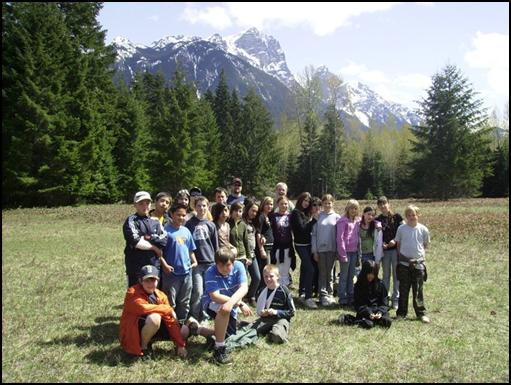
Students from Fraser-Cascade Mountain School explore Chittenden Meadows,
near Hozomeen at
the head of Ross lake
ANNUAL
REPORT
Calendar Year 2010
INTRODUCTION
This Annual
Report summarizes the activities of the Skagit Environmental Endowment Commission
(SEEC) during the calendar year 2010. It is prepared in fulfillment of the
provisions of Article II, Appendix D of the British Columbia–Seattle Agreement
(March 30, 1984) regarding the High Ross Dam. Budget information is based on
the Commission’s fiscal year which begins on April 1.
BACKGROUND
The
Commission was established in 1984 as a result of the Ross Lake/Seven Mile
Reservoir Treaty between Canada and the United States. Within the Treaty, British Columbia and the City of Seattle established the Skagit Environmental Endowment
Fund to be administered by the Commission. Seattle and British Columbia
contributed US $1
million and US $250,000 respectively to the Fund
for each of the first four years after its creation. Per terms of the Treaty,
both Seattle City Light and BC Hydro make ongoing annual supplemental payments
to the Fund, based on annual power purchases.
As of December
31, 2010 the market value of the Endowment Fund was CAN$ 9,448,257 (US$
9,499,552), with the principal held in separate US and Canadian investment portfolios in Canada. The Fund resides and is managed completely outside
of the consolidated revenue of both the BC Provincial and Seattle City governments.
The primary
purposes of the Fund are to:
(A) conserve and protect wilderness
and wildlife habitat;
(B) enhance recreational
opportunities in the Skagit Valley;
(C) acquire mineral or timber
rights consistent with conservation and recreational purposes;
(D) conduct studies of need and
feasibility of projects;
(E) plan for and construct hiking
trails, foot bridges, interpretive displays and the like; and
(F) cause the removal of stumps
and snags in Ross Lake and on the shoreline as deemed appropriate and the
grooming and contouring of the shoreline, consistent with wildlife habitat
protection
Expenditures
of the Fund are limited to projects located in or related to the Skagit River drainage upstream of the Ross Dam in both Washington State and British Columbia.
The intent of the Agreement is that the majority of the expenditures from the
Fund, averaged over an extended period, be made in Canada. Details of the Fund
are outlined in Appendix D of the Treaty (page 38) dated 1984. Annual
expenditure levels are set within established guidelines, including the
investment income of the Fund.
The
Commission created to manage the Fund consists of eight members, four of whom
are appointed by the Mayor of Seattle and four of whom are appointed by the
Premier of British Columbia. Both countries also have four alternate
Commissioners for a total of sixteen individuals that serve the Commission. By
Treaty, SEEC is a non-profit, tax-exempt entity.
2010
COMMISSIONERS AND
STAFF
A complete
roster of the Commission is attached to this annual report (Appendix A). The
Commission mourns the loss of Canadian Commission Alternate Tom Bird to an
untimely demise. Otherwise, membership was stable throughout the year.
 By
terms of the Agreement, Seattle City Light and the BC Ministry of Environment
provide staff and administrative support to the Commission. Chris Tunnoch
served as the Canadian staff with Scott Powell as the US staff member to the Commission.
By
terms of the Agreement, Seattle City Light and the BC Ministry of Environment
provide staff and administrative support to the Commission. Chris Tunnoch
served as the Canadian staff with Scott Powell as the US staff member to the Commission.
2010 ACTIVITIES AND
PARTNERSHIPS
SEEC continues
the implementation of its Five-year Workplan developed at its 2008 annual
retreat. The Commission is working with established partners with a focus on
the following initiatives:
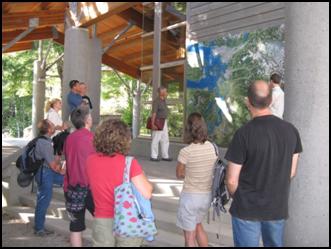
Commissioners
tour NCI Environmental Learning Center during annual retreat.
·
Land Management;
·
Ecosystem
Management;
·
Education and
Interpretation; and
·
Recreation.
The full
Commission met quarterly in January, May, July, and November 2010. The July
meeting was held over two days at Newhalem and Diablo, Washington, where the
Commission reviewed and adjusted the 5-year Work-plan and prepared its draft
budget for the following fiscal year.
As a
critical part of its strategic initiatives, SEEC has developed strong working
relationships with land management agencies and non-profit groups.
VIDEOS
COMMEMORATE GATHERING AT HOZOMEEN
The
Commission followed up on its September 2009 Gathering at Hozomeen event with
two multimedia projects. A committee of Commission and Tribal/First Nations
participants first worked with Bear Image Productions to develop a 40-minute
video interpretation of the event and its lessons. Also, a slide
interpretation was created by Benj Drummond and Sara Steele and is featured on
the SEEC website. Discussion is underway concerning a follow-up gathering
event in the future.
WEB-SITE
UPGRADE FEATURES ON-LINE DOCUMENT ARCHIVE
Working
through its outreach consultant, the Simplify Company, SEEC completed a
thorough upgrade to its web-site. The web-host Groundwire, Inc. was hired to
redesign the site, adding a contemporary look and an improved content
management system framework and controls. Also, nearly one hundred documents
produced in prior SEEC-funded projects were scanned and are available in a
searchable online database. See www.skagiteec.org
TIES
RENEWED WITH INTERNATIONAL JOINT COMMISSION
In the
negotiations leading to the creation of SEEC in 1984, the US-Canada
International Joint Commission (IJC) was involved and helped mediate over
several years. The IJC has recently developed an International Watersheds
Initiative, building on its many successful negotiations across the US-Canada
Border. Though IJC is no longer formally involved in the Skagit, ties between
the two Commissions were renewed in 2010. Correspondence between the staffs
led to a meeting in Vancouver in June. SEEC Canadian Co-chair Peter Kennedy
was then invited and attended an IJC meeting in Ottawa in October.
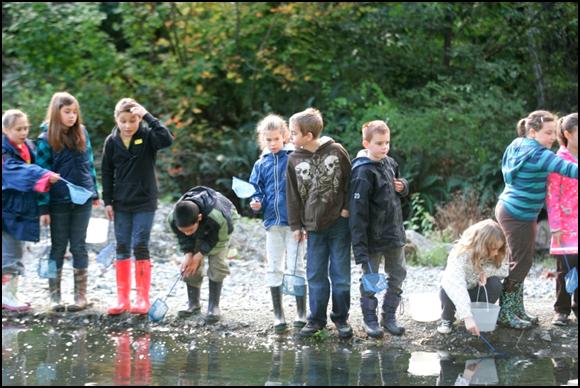

The
Commission continued to build on its commitment to education and outreach in
2010. In addition to the production of video and internet-based communications
tools, major funding support was provided to non-profit groups and parks
agencies in the U.S. and Canada.
SEEC held
its annual retreat this year at the North Cascades Institute’s Environmental Learning Center on Diablo Lake. In addition to its business meetings, the
Commissioners toured and learned about this stunning outdoor learning
facility. NCI continues to receive major SEEC support for its Mountain School program for local youth, which hosted more than 1,500 students and 300
parents in Spring and Fall sessions.
In BC, the
Hope Mountain Centre for Outdoor Learning (HMCOL) also continued its strong
development, more than doubling its offerings of interpretive hikes and
volunteer events. Through HMCOL, SEEC also supported Fraser Cascade Mountain School, which led more than 900 students and 200 parents in hiking, camping,
and backcountry safety programs.
The park
agencies in the US and Canada had a very strong year of educational
programming, supported in part by SEEC funding. North Cascades National Park spearheads programs that engage youth from a variety of organizations in outdoor
stewardship and learning. Also, a BC Parks interpreter leads a joint
international interpretive program at the campgrounds at Hozomeen. These
programs, reaching almost 6,500 visitors this year, included a historical
re-enactment, interpretive talks, and special offerings by HMCOL’s Kelly Pearce
and the NPS’ Jon Reidel.
With
respect to land management, in 2010 the Commission advanced its goal for land
protection in BC. Negotiations were completed for the potential purchase of a
key private in-holding within Skagit Provincial Park. This land would then be
deeded to the BC government for management as a park property. A portion of the
SEEC contingency fund of $1,000,000 to support purchasing or moving unprotected
areas of the Upper Skagit Watershed to protected status would be used to
complete this transaction.
Also,
information was gathered to advance protection against potential mining
impacts, outside of the Park on the US side of the upper Skagit. Commissioners
continue to evaluate options for consultants to study this issue and propose
action steps.
The
Commission was also active with respect to future land management on the US side. SEEC educated itself about the “American Alps” proposal to adjust the boundaries
of the North Cascades National Park Service Complex and Pasayten Wilderness.
The Commission joined with other groups to fund an economic impact analysis of
the American Alps concept. It also reviewed and held discussion with the
National Park leadership concerning their process for renewing the General
Management Plan for the Ross Lake National Recreation Area. An extensive
comment letter was submitted.
Finally,
SEEC supported a follow-up to the water quality study completed in BC in 2009.
Staff from the Hope Mountain Center received training and worked with
volunteers to evaluate existing and new sites. It is expected that this work
will continue each year, so as to maintain the existing water quality/benthic
invertebrate model hosted by Environment Canada and to maintain vigilance
against any future water quality impacts. The Commission will enlist support
from BC Ministry of Environment to review and interpret the data collected.
The Commission
continued to contribute to an ecosystem monitoring program by the North
Cascades National Park Service Complex. SEEC funds allowed for expanded effort
on studies including: Land Birds, Ross Lake fisheries and water quality, High Lakes, and Tributary Streams. This work is part of the National Park Service “Vital
Signs” monitoring program to document and interpret key ecological indicators
and detect impacts from human activities or climate change. The National Park
Service began reporting on its monitoring outcomes through the publication
“2010 Resource Brief Annual”.
The BC
Ministry of Environment continued implementing its SEEC-funded Fish and
Wildlife Management Plan for the Skagit. Mapping of ungulate (moose, deer, and
elk) winter ranges was completed, and the final year of a wolverine monitoring
program was being planned. The Commission learned about ongoing work by the
Ministry to aid in the recovery of both grizzly bears and spotted owls.
Ross Lake and upper Skagit fisheries
issues were also addressed. SEEC participants and agency staff learned more
about the red-side shiner population of small fish in Ross Lake that may be affecting trout population dynamics. In a related effort, SEEC joined with
Seattle City Light to fund a study plan for an angler survey to be conducted in
2011 in the US and Canada. This information will be needed to evaluate current
fishery regulations, in light of changes and uncertainty in the ecology of Ross Lake.
 The
Student Conservation Association, with support from the Commission, runs a
5-week trail and camp maintenance crew in the upper Skagit each year. 2010
showed continued success in this unique international program, with 8 crew
member and 2 crew leads from throughout the U.S. and Canada. The crew spent
the first two weeks in Canada, in Skagit Provincial Park, developing a new tent
site and improving trails at the junction of Nepopekum and Centennial Trails.
The second half of the season was spent in the North Cascades National Park, working in the vicinity of Desolation Peak and Lightning Creek. In 2010, the
crew included students from around the U.S. and Canada.
The
Student Conservation Association, with support from the Commission, runs a
5-week trail and camp maintenance crew in the upper Skagit each year. 2010
showed continued success in this unique international program, with 8 crew
member and 2 crew leads from throughout the U.S. and Canada. The crew spent
the first two weeks in Canada, in Skagit Provincial Park, developing a new tent
site and improving trails at the junction of Nepopekum and Centennial Trails.
The second half of the season was spent in the North Cascades National Park, working in the vicinity of Desolation Peak and Lightning Creek. In 2010, the
crew included students from around the U.S. and Canada.
Other
recreation projects were moved ahead:
- Interim
improvements were made at the BC Hozomeen Group Camp, including enhancement
to the shelter and thinning of vegetation.
- Landscaping
was completed at the Hozomeen Amphitheater at International Point.
- Planning
was completed for enhancement of the “Winnebago Flats” camping area at
Hozomeen. This project will start construction in 2011.
SCA
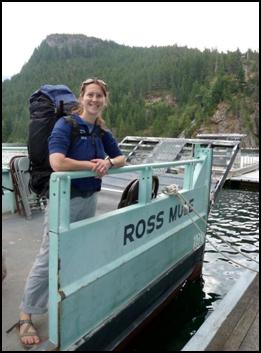
Program Manager Sarah Zablocki-Axling heads up-lake to join the crew
.
FINANCES
Total
expenditures of the Commission, based on projected expenditures for the 2010/11
fiscal year, are approximately US $573,000 of which 85% was direct
disbursement for contracts and partnership projects. Administrative costs were
6.6%, while the balance reflects financial management fees for the Endowment
Fund.
ATTACHMENTS
- Appendix
A 2010 Commission Roster
·
Appendix B SEEC
Budget - Fiscal Year 2010
APPENDIX A
2010
COMMISSION ROSTER
|
NAME OF
MEMBER
|
TERM
EXPIRES
|
TERM
BEGAN
|
APPOINTING
AUTHORITY
|
COMMISSION FIELD; PROFESSION, RELEVANT
COMMUNITY ACTIVITY
|
|
CAN MEMBERS
|
|
|
|
|
|
Lex
Bennett
|
12-10-11
|
8-1-03
|
BC
Premier
|
Business/Financial
Management:
retired finance manager
|
|
Pete
Caverhill
|
3-31-12
|
3-25-03
|
BC
Premier
|
Government: retired fisheries
specialist
|
|
Ken
Farquharson
|
3-31-12
|
3-25-03
|
BC
Premier
|
Environment:
retired
engineer, environmental advocate
|
|
Peter
Kennedy (CAN Co-chair)
|
1-14-12
|
01-01-04
|
BC
Premier
|
Land/Property
Management: Attorney
|
ALTERNATES
|
|
|
|
|
|
Tracey
Herron
|
5-15-13
|
5-15-09
|
BC
Premier
|
Recreation: Search
and Rescue
|
|
Shaun
Hollingsworth
|
8-1-11
|
8-1-07
|
BC
Premier
|
Environment:
BC
Wildlife Federation, BC Conservation Foundation
|
|
Richard
Jessome
|
2-28-13
|
2-28-09
|
BC
Premier
|
Land Management: Environmental & Forest Services Consulting
|
BC
STAFF
|
|
|
|
|
|
Chris
Tunnoch
|
|
12-12-97
|
Minister of
Environment
|
Canadian staff
|
|
US MEMBERS
|
|
|
|
|
|
Tom
Brucker
|
7-1-12
|
7-1-04
|
Mayor
|
Business/Finance: North Cascades
Conservation Council; Sierra Club, Wash. Environmental Council
|
|
Larry
Campbell
|
7-1-13
|
11-4-09
|
Mayor
|
Cultural
Resources: Historic
Preservation Officer, Swinomish Indian Tribe
|
|
Michelle
Connor
|
7-1-12
|
10-1-08
|
Mayor
|
Conservation:
Cascade Land Conservancy,
non-profit organizational development
|
|
Ken
Wilcox
(US
Co-Chair)
|
7-1-12
|
7-1-02
|
Mayor
|
Environment:
North
Cascades Conservation Council, environmental and recreation planner
|
ALTERNATES
|
|
|
|
|
|
Jim Hattori
|
7-1-12
|
10-1-08
|
Mayor
|
Finance: Financial and
non-profit management; outdoor recreation
|
|
Tim
Manns
|
7-1-12
|
10-1-08
|
Mayor
|
Education/Recreation:
retired
from US National Park Service
|
|
Alison
Studley
|
7-1-13
|
7-18-05
|
Mayor
|
|
|
Jennifer
Watkins
|
7-1-12
|
10-1-08
|
Mayor
|
Conservation: Conservation
Northwest
|
US
STAFF
|
|
|
|
|
|
Scott
Powell
|
|
3-1-07
|
Seattle City Light
|
United
States
staff
|
APPENDIX B
SEEC BUDGET PLAN - FISCAL YEAR 2010
Partnership
Workplan Support
|
TITLE
|
(US $)
|
|
National
Park Service—North Cascades
International
Interpretive Program; Youth involvement.
|
|
BC
Ministry of Environment:
International
Interpretive Program; Youth involvement.
|
|
|
North
Cascades Institute
Mountain School
|
$80,000
|
|
Hope Mountain Centre
for Outdoor Learning:
Capacity
building; Education programs; Fraser Cascade School programs
|
|
TOTAL
PARTNERSHIP WORKPLAN SUPPORT
|
$215,486
|
Partnership Joint
Projects
|
TITLE
|
(US $)
|
Ecosystem
Management
|
|
Recreation
Projects (incl Student Conservation Assn)
|
|
|
Land
Management/Outreach Coordinator
|
|
TOTAL
PARTNERSHIP JOINT PROJECTS
|
$239,382
|
Optional Funding
|
TITLE
|
(US $)
|
|
Video
Production: Gathering at Hozomeen
|
|
|
Website
Redevelopment
|
|
|
Archaeology Field School
Evaluation
|
|
TOTAL
OPTIONAL FUNDING
|
$32,000
|
ADMINISTRATION
AND FUND MANAGEMENT
|
$82,381
|
WORKPLAN
CONTINGENCY
|
$12,913
|
GRAND
TOTAL SEEC WORKPLAN
|
$582,162
|
CONTINGENCY FUND FOR LAND PURCHASE AND/OR GRIZZLY BEAR
RECOVERY
|
$1,000,000
|