Section Three
- The Nature and Extent of Homelessness, 2006 Update
Introduction
To fully understand the nature and extent of homelessness,
it is necessary to realize that people who are homeless or at risk of losing
their housing are as varied as the general population. They have different family relationships,
backgrounds, ages, ethnicities, and genders.
Defining homelessness, therefore, is not a simple matter.
Our community has used the definition for homelessness
included in the Stewart B. McKinney Act of 1994 in order to comply with
requirements of various federal funding resources. According to this Act, a person is considered
homeless if he/she “lacks a fixed, regular, and adequate night-time residence and
has a primary night-time residence that is:
(A) A supervised publicly or privately
operated shelter designed to provide temporary living accommodations,
(B) An institution that provides a temporary
residence for individuals intended to be institutionalized, or
(C) A public or private place not designed
for, or ordinarily used as, a regular sleeping accommodation for human beings.”
A number of newly published reports have defined
homelessness with more clarity and in ways that are better suited to the needs
of homeless people. By embracing these
new definitions, Seattle is joining many like-minded communities across the
country by incorporating the following definitions in policies and strategic
plans in order to better address gaps in housing and services. These studies have identified three primary
categories of homeless people:
Transitionally
homeless persons generally have a single episode of homelessness lasting an
average of 58 days, although they might be homeless for up to six months. They move quickly through the homeless
assistance system, and their principal need is for safe, decent, and affordable
housing. Transitionally homeless people
are typically working entry-level jobs as well as those, such as seniors, who
are on fixed incomes. An increase in
rent, loss of a job, or medical emergency could result in the loss of their housing.
Episodically homeless
persons have four to five episodes of homelessness and are usually homeless
for a short time, on average about 265 days.
They may cycle back and forth from being housed to being homeless.
Chronically homeless
persons experience a disabling condition and have either been continuously
homeless for a year or more or have had at least four episodes of homelessness
in the past three years. These individuals
often live on the streets or cycle from shelter to shelter. Although much attention has been focused
recently on chronically homeless single adults, Seattle
is also looking at chronicity patterns of homeless families.
What we know about homelessness
The 2000 Census provides much information about the housing
needs of people who have various incomes in our community, as described in the
Low-Income Households with Housing Needs section of this Consolidated
Plan. For people who are on the streets
or staying in emergency shelters and transitional housing programs, the primary
source of unduplicated data is the annual One Night Count (ONC) of Homeless
People in Seattle-King County. Supplementing this is information from the
Crisis Clinic, Sound Families (an initiative of the Bill & Melinda Gates
Foundation to mobilize public and private monies to develop and expand the
infrastructure of transitional housing and supportive services to assist
homeless families), and Health Care for the Homeless Network (HCHN).
The One Night Count provides a count and demographic data on
individuals residing in emergency shelters and transitional housing programs at
a point in time but undercounts the unsheltered population and provides poor
information on what kind of people are unsheltered. Although methodology is improved every year,
this source of data will always paint only a partial picture of Seattle’s
homeless people. It is, however, the
only point-in-time source of data available for all homeless populations. For the time being it must be relied upon to
describe the overall nature and extent of homelessness.
Richer sources of data exist for some subpopulations, but
are collected using a variety of methods of varying quality and scope. Some of these data sources are valuable in
providing an in-depth description of the needs of subpopulations. These descriptions are included in the Needs
of Special Populations section of this document.
Safe Harbors, our community’s Homelessness Management
Information System (HMIS), is beginning to collect information about those who
receive services in the City of Seattle as well as King County. As coverage increases in this system, we look
forward to knowing more about the need for, and use of, housing and services so
that we can modify and adjust our services and housing patterns to more
effectively address the needs of those who seek assistance from our continuum
of care.
The following is what we know about homeless people in Seattle
and King County
at this time. This information is the
basis for the strategies included in this plan:
·
In October 2004, the One Night Count of Homeless
People found nearly 8,300 sheltered and unsheltered persons homeless in Seattle
and King County. Approximately 83% or 6,852 of those
individuals (2,733 households) were homeless persons in Seattle. These included single adults, families and
unaccompanied youth (under 18 years of age).
·
There were 2,498 individuals in 2,055 households
in emergency shelters. There were 2,138
individuals in 1,230 households in transitional housing programs.
·
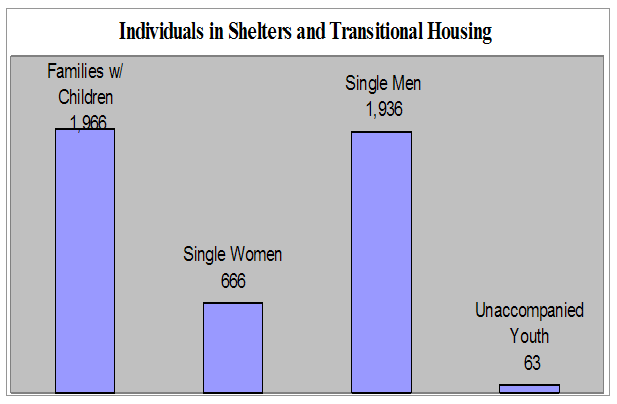
Single men were the most numerous of sheltered
and unsheltered homeless persons. Single
men made up 42% (1,936) of all persons living in shelters and transitional
housing programs. Families with children
also constituted 42% (1,966 individuals in families) and 14% (666 individuals) were
single women. Unaccompanied youth under
18 years of age (1% or 63 individuals) accounted for the remainder.
Source: Seattle-King County Coalition for
the Homeless, October 2004
·
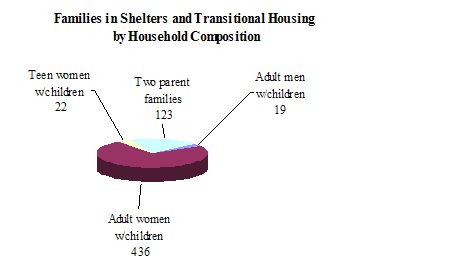
The number of households in shelters and
transitional housing programs included 600 families (defined as one or more
adults with one or more children). The
majority of children were with their mother or other female caretaker (76%),
some were with both parents or two caretakers (20%), and a few were with their
father or male caretaker (3%).
Source:
Seattle-King County Coalition for
the Homeless, October 2004
·
Twenty-five percent, or 1,118 of the persons in
shelters and transitional housing programs are children under the age of 18
years. In these same types of programs,
more than half (61%) are between the ages of 26-59 years of age.
|
Homeless
Individuals in Shelters and
Transitional
Housing
by Age
|
|
Age
|
Number
|
Percent
|
|
0-12 years
|
838
|
18%
|
|
13-17
|
280
|
6%
|
|
18-25
|
418
|
9%
|
|
26-59
|
2,436
|
52%
|
|
60 and older
|
234
|
5%
|
|
Total
|
4,636
|
100%
|
Source:
Seattle-King County Coalition for
the Homeless, October 2004
·
Two thirds of all adults (individuals) in
shelters and transitional housing were men.
·
Racial disparity is very apparent among the
homeless population. Although
information about race is not collected during the street count, the survey of
shelters and transitional housing programs reported that African American,
American Indian/Alaska Native, and Hispanic people comprise 34% of the homeless
population, whereas in the general populations people of these races make up
just 9% of the total adult population in Seattle.
Data from the Health Care for the Homeless Network also shows a
disproportionate number of homeless people who are people of color. Of the 21,776 unduplicated patients served by
HCHN, 54% were people of color – 20% were African American, 6% were American
Indian/Alaska Native, 16% were Hispanic/Latino, and 6% were multi-racial. (Report
to the HCHN Planning Council, May 17, 2004)
·
Shelter and transitional housing providers
continue to serve recent arrivals to the U.S.,
mainly from Africa, especially large families from East
Africa. Although Native
Americans account for 3% of persons seen by shelters and transitional housing
programs, their numbers are believed to be higher among the unsheltered
population. Southeast Asian refugees
have expressed concerns that shelters do not address their cultural and
language needs. As a consequence, many
prefer to double up with other Southeast Asian households, often living in very
crowded conditions.
|
Homeless
Individuals in Shelters and
Transitional
Housing
by Race/Ethnicity
|
|
Race/Ethnicity
|
Number
|
Percent
|
|
White/Caucasian
|
1,732
|
43%
|
|
Black/African American
|
1,165
|
29%
|
|
African
|
174
|
4%
|
|
Hispanic/Latino
|
394
|
10%
|
|
Native American/ Alaska
Native
|
105
|
3%
|
|
Asian/Asian American
|
129
|
3%
|
|
Hawaiian Native/Pacific Islander
|
58
|
1%
|
|
Multi-racial/Other
|
242
|
7%
|
|
Other/Unknown
|
637
|
|
|
Total
|
4,636
|
100%*
|
Source: Seattle-King County Coalition for
the Homeless, October 2004
*100% of the
3,999 individuals reporting race/ethnicity
·
Although immigrants or refugees were found in
shelters serving single adults and families, the greatest number were families
in transitional housing. Correspondingly,
these programs reported many of these individuals and families used another
language for their primary means of communication.
|
Homeless Households
in Shelters and Transitional Housing
by Immigration Status
and Need for Translation Services
|
|
|
Single
Adults
|
Families
|
|
|
Totals
|
Shelter
|
Transitional Housing
|
Shelter
|
Transitional Housing
|
|
Immigrants/
Refugees
|
351
|
75
|
37
|
45
|
196
|
|
Limited English Speaking
|
225
|
22
|
20
|
42
|
141
|
Source: Seattle-King County Coalition for
the Homeless, October 2004
·
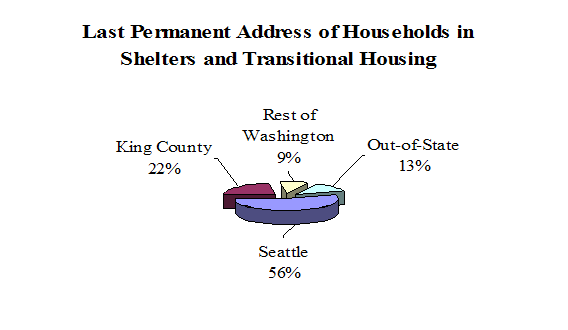
Of the 1,771 households who reported a last
permanent address in the One Night Count survey, 1,117 or 63% were from Seattle,
442 or 25% were from the balance of King
County, 172 or 10% were from other
parts of Washington, and 255 or 14%
were from other parts of the nation.
Source: Seattle-King County Coalition for
the Homeless, October 2004
Key factors
that contribute to homelessness
Several trends emerge as largely contributing to the rise in
homelessness across the nation. There is
the growing shortage of affordable rental housing compounded by a simultaneous
increase in poverty. The release of
individuals from mainstream systems, such as criminal justice, hospitals, and
foster care, without the benefit of a housing plan is another trend we see.
Contributing trends also include the lack of adequate health care, the rise in
domestic violence, the increasing severity of mental illness and substance
abuse, and insufficient support for immigrants and refugees.
Seattle,
unfortunately, has not escaped these impacts, and data from the annual One
Night Count and other local programs are consistent with these causal
factors. The following factors and
disabilities were reported to be contributing to homelessness:
|
Disability
|
Individuals
|
Percent
|
|
Alcohol/substance abuse
|
573
|
35%
|
|
Mental illness
|
605
|
37%
|
|
Dually diagnosed
|
254
|
16%
|
|
Physical disability
|
177
|
11%
|
|
Developmental disability
|
101
|
6%
|
|
HIV/AIDS
|
254
|
16%
|
|
Needing acute respite care
|
67
|
4%
|
|
Other
|
119
|
75
|
|
Total individuals reporting at least one disability
|
1,613
|
35%
|
Source: Seattle-King County Coalition for
the Homeless, October 2004
Acute and chronic health conditions are documented by
encounter data collected by the Health Care for the Homeless Network. In 2004, there were a total of 21,527
unduplicated individuals accounting for 86,901 separate encounters. Of these encounters, mental health was one of
the top
three most common problems recorded by medical providers for
single women, children, family adults, and unaccompanied youth under 18 years
of age. Although not recorded in the top
three, mental health was identified frequently among single men after such
acute health conditions as musculo/skeletal disorder and chemical dependency. As in past years, health problems related to
substance abuse, skin disorders, upper respiratory, and heart circulation
conditions were high on the list of common problems for homeless populations
seen.
As mentioned above, poverty and homelessness go hand in
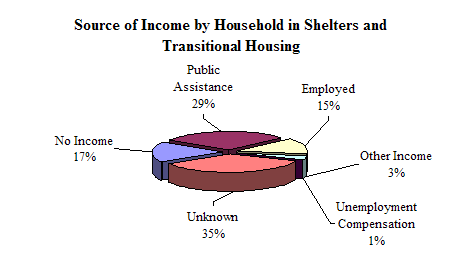
hand. According to the One Night Count,
3,285 households were surveyed in shelters and transitional housing
programs. Of these households, 568 or
17% had no income and another 957 or 29% were receiving some form of public
assistance. Only 15% (485 households)
were employed and 3% (87 households) reported other income such as veterans
disability, pension, or social security income.
Unemployment compensation was reportedly received by 21 households. Income information was not obtained for 1,167
households.
Source:
Seattle-King County Coalition for
the Homeless, October 2004
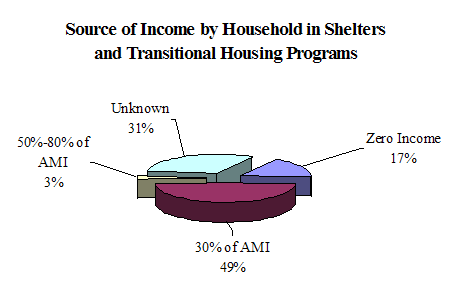
Another way of understanding the economic circumstances for
homeless people, at least those who are not on the streets, is to look at the
area median income (AMI) for Seattle. Of
the 3,285 households surveyed 556 or 17% had no income, 1,622 or 50% fell
within the 30% of AMI range. Only 85 or
2% of the households fell within the 50% to 80 % range. Income information was not obtained for 31%
or 1,029 of the households.
Source: Seattle-King County Coalition for
the Homeless, October 2004
An evaluation of the Sound Families program, conducted in
December 2004, offers another source of information about causes of
homelessness. Families in that program
reported the following primary cause of their homelessness:
|
Lack of affordable housing
|
46%
|
|
Loss of primary income/no income
|
42%
|
|
Lack of living wage
|
39%
|
|
Domestic violence
|
27%
|
|
Divorce/separation or loss of roommate
|
27%
|
|
Other*
|
22%
|
|
Poor financial management
|
15%
|
|
Drug abuse
|
14%
|
|
Medical/health issue
|
12%
|
|
Alcohol abuse
|
9%
|
|
Mental illness
|
9%
|
|
Eviction history
|
8%
|
|
Criminal history
|
7%
|
* The most frequent “other”
responses were relocation to WA or needed to leave the family home.
What we know about those at risk
of being homeless
While the above discussion describes people who are
homeless, it does not address those who are under housed or those who are at
risk of losing their housing. They come
from a variety of cultural, ethnic, and linguistic backgrounds. They include young adults freshly discharged
from the foster care system, middle-aged workers, as well as others who are
disabled or elderly. These households
live in market rate rental housing, subsidized housing, or may even own their
homes. They might be your neighbors, a
family member, a friend, or a veteran who served during wartime. They are people living in overcrowded or
unsafe conditions, or are those who “couch surf”, stay in motels or find other
temporary places to sleep at night.
Housing affordability is a major factor in determining the
risk of homelessness. Housing is
considered “affordable” when a low-income household pays no more than 30% of
its income for housing, including utilities.
Households paying more than 30% of their income on housing are
increasingly at risk. The advent of
welfare reform and the reduction in Temporary Assistance for Needy Families
(TANF) and other public benefits removed or reduced the income cushion for
vulnerable households. Many do not or
cannot make sufficient incomes to live in high-cost urban areas, such as the
City of Seattle. Based on available data from the 2000 Census,
29% of Seattle’s
households are extremely or very low-income (0-50% of Median Family Income, or
MFI). Of those households, 27,643
extremely and very low-income households (owner and renter) pay more than
one-half of their income for housing costs.
Even more alarming, 20,404 of these households earn less than 30% of the
median family income.
Ready access to safety net services, therefore, is critical
to meet the needs of people who are facing a housing crisis. Utilization reports from the Crisis Clinic,
our community’s primary information and referral resource, are an indicator of
need for eviction prevention services and emergency shelter for those who have
lost their housing. In calendar year
2004, 26,814 calls to the Crisis Clinic Community Information Line were
received from people seeking assistance with basic needs/housing assistance 14,358
were for housing and emergency shelter.
Another 9,142 calls were reported for financial assistance for
rent/mortgage, heat/lights, and water/sewer assistance. Moreover, repeated customer focus groups
overwhelmingly support the importance and efficacy of these prevention efforts. Likewise, respondents to the Community
Development Household Survey reported having housing hardships and ranked help
with rent costs as one of the top priorities for use of Consolidated Plan
funds. In fact, survey respondents,
almost half of whom live in rental assistance housing (47%) reported having
economic hardships, even with rental assistance (66% of all 1,077 respondents
reported having economic hardships).
City of Seattle’s response to homelessness – Ten-Year
Plan to End Homelessness guides improvement of the continuum of care
In 2003, the Committee to End Homelessness (CEH) was
designated as the principal region-wide forum to oversee Seattle-King
County’s homelessness response or
Continuum of Care. Eight founding
partners signed a Memorandum of Agreement that established a governing
structure and laid out a vision for the development of an effective continuum
of housing and services, plus strategies to end homelessness in King
County by the year 2014. As one of the founders of the Committee to
End Homelessness, the City of Seattle
actively participates in this regional forum, linking the planning process to
this Consolidated Plan.
The most significant development of the CEH’s efforts in
2004-2005 is the endorsement of the goals of “A Roof Over Every Bed in King County: Our
Community’s Ten-Year Plan to End Homelessness”. The Ten Year Plan is endorsed by Seattle
Mayor Greg Nickels and King County Executive Ron Sims as the guiding document
for prioritizing a wide range of private, community and government resources,
including those managed through the Consolidated Plan, related to services for
homeless persons.
The plan lays out a series of specific strategies and actions, with clear
goals and measurable outcomes by target populations, for local leaders and
community organizations to pursue over the next decade. It is intended to guide
investment of limited local resources and influence established state and
federal funding to services that serve homeless people most effectively. The
plan works to ensure alignment and coordination among all the entities in our
community that are engaged in meeting the needs of homeless people, and builds
on local and national best practices for resolving homelessness. The key
strategies are to:
- Prevent homelessness
Work together to make sure an adequate supply of appropriate housing and
supportive services are available to help people stay in their homes.
These services include rent and utility assistance, job training,
employment and education assistance, health care, mental health
counseling, foster care and chemical dependency treatment.
- Move people rapidly from
homelessness to housing
Place homeless people as quickly as possible in permanent housing and then
help them to stabilize and function independently by providing them with
the supportive services they need to be successful in their homes.
- Build the public and
political will to end homelessness
Expand our community’s commitment to ending homelessness by educating the
public, tracking our successes and building on them, and establishing
steady funding.
The
City of Seattle’s Consolidated Plan
Continuum of Care (detailed in the sections following) is integrated in many
ways with the Ten Year Plan to End Homelessness’ strategies for homeless single
adults, families and youth. Additionally,
the City’s Human Services Department (HSD) Strategic Investment Plan (SIP)
echoes the Ten Year Plan’s purpose by identifying “Food and a roof overhead” as
one of six priority goals set for investment of city resources managed by its
programs including CDBG, ESG, and HOPWA funds.
At the Mayor’s direction, moving forward from the 2006 City budget
development, departments will ensure support of the Ten Year Plan to End
Homelessness via its deployment of Consolidated Plan funding.
As
part of that commitment, HSD released the 2005-2006 Request for Proposals (RFP)
allocating Emergency Services Grants, City General Fund and CDBG monies with
specific targeting for services called out by the Ten Year Plan. The RFP is designed to support the work of
the Ten Year Plan by:
- Shifting proportional
allocation to provide emergency shelter but prioritize longer term housing
alternatives.
- Emphasizing that shelter
alone is not enough to respond to homelessness. Funded programs will demonstrate links
among shelter and transitional housing to attendant support and assistance
that will help people move beyond homelessness.
- Creating consistency with
HSD’s Strategic Investment Plan and the Ten Year Plan by holding
recipients responsible for clear and accountable community outcomes.
- Measurement of those
outcomes will be achieved in part by requiring recipients’ participation
in the Safe Harbors Homeless Management Information System (HMIS). To “actively participate” means the
program will, at a minimum, collect sufficient data to provide an
aggregated unduplicated count of its clients and any negotiated outcomes
resulting from the clients’ participation in the program. Participation in the Safe Harbors HMIS
will help our community improve services to homeless people by providing
accurate information on the extent and nature of homelessness in our
community and by accounting for our success in helping people move out of
homelessness.
Under the umbrella of the Ten Year Plan to End Homelessness,
the CEH will bring renewed focus to collaborative efforts that go beyond
managing homeless, to ending homelessness in Seattle
and King County
by 2014. The implementation structure
for the Ten Year Plan will include a governing board, a consumer advisory
council and an interagency council.
Until such time as the 10 Year Plan infrastructure is in
place, the CEH will continue to coordinate its work using five planning groups,
each charged with a particular planning area.
Each group meets monthly to focus on critical elements of the region’s
continuum of care, guaranteeing an efficient and comprehensive planning
process. The groups are as follows:
The McKinney Continuum
of Care Steering Committee is a planning and policy partner to the overall
continuum of care. It identifies
emerging issues and gaps and recommends improvements to the continuum. It also serves as an advisory group to the
HUD McKinney-Vento continuum of care staff team that oversees the priority
ranking process.
Health Care for the
Homeless Planning Council is a community-wide planning and governance
structure committed to the provision of health care for persons who are
homeless. The Health Care for the
Homeless Network provides leadership and direction in care that integrates
physical health, mental health, addiction services, housing, and necessary
social supports.
Chronic Populations
Action Council (CPAC) is charged with improving the system of support,
treatment and housing for those experiencing chemical dependency, mental health
and/or co-occurring disorders in King
County. To accomplish this, the CPAC analyzes data
about usage of systems, including criminal justice, and produces housing and
service plans for these populations; identifies and pursues new, integrated,
and expanded funding sources; and advocates for improved program policies,
procedures, and training.
AIDS Housing Committee
is the major planning entity for housing/services for persons with
HIV/AIDS. Their planning is driven by a
systems integration model that brings together key stakeholders across all
sub-populations and housing/services systems.
Taking Health Care
Home King County Funders Group is a system planning effort, staffed by the
City’s Office of Housing through financial support from the Corporation for
Supportive Housing, which brings funders of housing and services together to
create permanent supportive housing for persons who are chronically
homeless. The group consists of city and
county funders of housing development and supportive services that include
mental health, chemical dependency, health care and developmental disabilities
as well as other entities such as United Way
and the county hospital (Harborview Medical
Center).
The fundamental components of our continuum
of care
A continuum of care includes actions and strategies for
moving homeless individuals and families to stable housing and achieving
maximum self-sufficiency. The City of Seattle
contracts with a variety of non-profit organizations to provide most of the
housing or services. Some services, such
as utility assistance and case management for elderly and disabled households
to maintain their housing, are provided directly by City staff. Guiding the allocation of Seattle’s
resources are the Consolidated Plan, Strategic Investment Plan, McKinney
grant requirements, and Committee to End Homelessness Ten Year Plan. As recommendations of the Committee to End
Homelessness are developed, the City of Seattle
will work with its regional partners to improve our continuum of care. Future updates to the Consolidated Plan will
outline any changes we wish to make as well as progress to end homelessness in
our city.
The following section presents the fundamental components of
Seattle’s current continuum of care. Also included is a diagram of the continuum
that displays the connection between the various components.
Prevention
Numerous services are in place to keep individuals and
families in housing, whether they have never been homeless or were formerly
homeless and now live in permanent housing.
These range from large programs operated by government agencies,
including those providing mainstream services, and major non-profit
organizations, to small help funds established and operated by neighborhood and
faith-based groups. These services
foster a “no wrong door” approach to identify and remedy crises as quickly as
possible.
In addition to the provision of the services listed below,
efforts are underway to close the door to homelessness by working with
mainstream systems, such as foster care, health care, and criminal justice
through better discharge planning and transitional services.
Funding sources include Federal Emergency Management Agency
(FEMA), state Emergency Shelter Assistance Program (ESAP), state Transitional
Housing Operating and Rent (THOR) administered by King County, and state
Additional Requirements for Emergency Needs (AREN) programs, Low-Income Home
Energy Assistance Program (LIHEAP), Emergency Housing Assistance Program
(EHAP), Ryan White Title 1, HOPWA, local government allocations, United Way of
King County, private donations, faith-based entities, and local thrift store
receipts.
Intended result: To keep people in housing so they do not
become homeless.
Services in place:
Mortgage/rental assistance/other
housing-related financial assistance
Housing stability case management
(eviction prevention)
Payee programs
Tenant/landlord programs and legal
assistance
Utility assistance
Hotlines/help lines
Computerized eligibility and
application tools
Resource manuals
Adult day health
Youth-specific prevention efforts,
including efforts to prevent domestic violence
Immigrant and refugee service
organizations
Refugee resettlement agencies
Mental health and drug courts
How people
access/receive assistance:
Those with an immediate life/safety crisis rely on hotlines
for help. When calls are made to the
Crisis Clinic or other local hotlines, calls are screened for type of
assistance needed and geographic location, and referrals are made to
appropriate service providers. Callers
to HUD’s national homeless assistance hotline are linked to Crisis Clinic’s
Community Information Line. People also
rely on word of mouth or increasingly use on-line information and referral
tools, such as the Community Information Line’s Community Resources Online (www.crisisclinic.org) for information and referrals. These searchable databases delineate types
and locations of housing and supportive services. Lifelong AIDS has launched a housing website
that provides housing resource materials for people who are not eligible for
the AIDS-designated inventory. The
organization is also providing tenant trainings for finding and maintaining
housing.
Many people simply walk into a service provider in person
(e.g., day centers, hygiene programs, Mutual Assistance Associations and
multi-service centers). With our “no
wrong door” approach, intake workers, case managers and social workers play a
key role in assisting people at risk of homelessness by assessing the immediate
needs and making referrals to appropriate assistance. Front line staff use the Crisis Clinic’s
computerized database and resource manuals to help clients. Most organizations have established
relationships with each other to facilitate client referrals. This is true for the mainstream services in
our community as well.
Outreach, Intake, and Assessment
A variety of approaches identify and engage homeless
individuals in homeless assistance programs,
Special efforts are targeted to helping youth and young adults, veterans,
people who are seriously mentally ill, substance abusers, and people living
with HIV/AIDS. These approaches include
street canvassing, mobile vans, drop-in and hygiene centers, emergency shelter
dispatch, encampment response programs, day labor dispatch sites, health care,
special programs in public schools, criminal justice system, and literature,
websites, and presentations. Several
state and federal sources support this component, coupled with McKinney,
HOPWA, and General Funds. United Way and
private resources are also important.
Intended result: To identify the needs of homeless individuals
or family and link them to an appropriate housing and/or service resource.
Services in place for
unsheltered people:
In Seattle,
workers who are most familiar with chronic street people build relationships
based on trust and hope, overcome barriers, and bring care to homeless
people. Because these outreach workers
do their work while on the streets, in shelters, and at meal programs, drop-in
centers, and the sobering center, we characterize our efforts as outreach and
inreach. There are specialized
outreach/inreach programs as well as outreach components within a
homeless-serving agency’s larger array of services. Ongoing street
canvassing as well as the annual One Night Count provide us with information
about where unsheltered people are found.
The following describes outreach services for subpopulations of homeless
people:
Youth/Young Adults (minors alone and individuals under 24
years of age) –
Outreach workers spend most of their time where youth/young
adults hang out – on the streets and at drop-in, hygiene centers, and public
health clinics – to build relationships over time and to link them to case
management services, mainstream supports, and housing. Outreach workers also focus on survival sex
and sexual exploitation among the youth/young adults. Outreach workers of our McKinney-funded
regional youth outreach program, PRO Youth, also provide case management and
appropriately refer and document provision of supportive services and housing
for homeless youth/young adults in Seattle-King
County. Outreach, information and referral services,
and case management assist youth and young adults in taking whatever next step
may be for each of them toward stable housing.
Many young people are fearful of services and the provision of basic
needs like food and hygiene supplies by outreach workers is the first step in
engagement. Others need intensive
support for accessing services to meet multiple needs, while many require help
with completing their education, gaining job readiness and independent living
skills to work toward independent housing.
The system of outreach, case management and drop-in centers form a
central function in effectively engaging hundreds of youth and young adults in
services and moving them out of homelessness.
Single Adults –
Mental Health Chaplaincy is an outreach and engagement
program for the most difficult and most vulnerable mentally ill street homeless
people. This model has four phases to
working with homeless individuals – approach, companionship, partnership, and
mutuality – to build and share a relationship with the client. The process helps people evolve until they
are ready to access services on their own terms. In practice, outreach workers spend time with
homeless people on the street, becoming part of their everyday experience,
becoming familiar to them, and offering companionship. The Mental Health Chaplaincy works with
Harborview Mental Health, local emergency rooms, Downtown
Emergency Service
Center, and the Health Care for the
Homeless Network.
Outreach and engagement specialists of Downtown Emergency
Service Center’s HOST (Homeless, Outreach, Stabilization, and Transition)
Project target unsheltered homeless individuals who are typically chronically
homeless and have a severe and persistent mental illness or co-occurring disorder
or in specifically targeted programs or facilities. While some clients are approached directly
while on the street, engagement for others is initiated by a referral to DESC
from concerned citizens, jails, WA State Department of Health and Human
Services (DSHS), the mental health court, hospitals, the Harborview Medical
Crisis Triage Unit, public libraries, family members, and other mental health
professionals, shelters, and drop-in centers.
HOST staff connect people to other DESC services, including the day
center, emergency shelter, safe haven, and intensive case management
services. Or, depending on an assessment
of the client’s need, a referral is made to a more appropriate provider. Through a formal agreement with DSHS,
applications from HOST clients are expedited for GAU and GAX, which is the path
to Medicaid and thus other assistance.
Additionally, a HOST staff person is out-stationed at the DSHS agency one
day a week so eligibility workers there can refer clients to HOST if
necessary.
Evergreen Treatment
Center’s REACH Project targets
homeless chronic public inebriates and other drug abusers. REACH staff receive referrals from the Dutch
Shisler Sobering
Center, where they are co-located,
or conduct outreach on the street. Eight
case managers with caseloads of about 20 people each work with these
individuals to link them to support services and move them into appropriate housing. REACH case managers facilitate applications
to the state’s publicly-subsidized chemical dependency treatment program
(Alcohol Drug Abuse Treatment and Support Act - ADATSA) and other mainstream
services, and they make placements in various housing programs for these
clients.
Women’s Referral Center
and YWCA’s Angeline’s Day Center,
both centrally located in downtown Seattle,
serve as the primary portals for chronic homeless women. There, mental health and substance abuse
specialists and nursing staff provide inreach efforts. Additionally, resource specialists help women
apply for housing if they are appropriate for particular settings. Angeline’s staff members connect with case
managers from various programs so they know whom to contact if problems with
individual women arise. If a woman does not have a case manager from any
service provider, the staff connects them to a program that meets their
specific housing barriers and cultural needs.
Families –
Pathways Home, a McKinney-funded services only project,
promotes housing stability for homeless families experiencing serious, multiple
barriers to care by partnering with parent(s) to provide family-centered,
child-focused health and behavioral health services. The services include: outreach and engagement services, case management,
nursing care, primary medical care, psychiatric care, mental health and
substance abuse counseling services, assistance with securing permanent
housing, and securing linkages with mainstream, community-based services. Pathways Home identifies homeless families by
referrals from other programs and staff visits to clinics, day centers, and
shelters. Though not as common, some
families are self-referrals; they’ve heard about the program from another
homeless family.
Additionally, Pathways Home staff visit those families
self-paying in hotels and motels to try to engage them in our continuum of
care. Each family is evaluated for their
income sources, health care coverage, and use of mainstream services in
addition to their specific housing, social and health needs. For those clients who are eligible for
services but not utilizing them, the team will support the application process
for the client in whatever form necessary given the client’s capacity. This ranges from simple transportation to an
appointment to accompaniment and completion of forms for those who lack the
capacity to do so. Case managers serve
as advocates for the clients during an application process and monitor it
closely.
Other specialized
outreach, intake and assessment services:
For veterans, specially trained staff at the county and
federal levels make frequent visits to criminal justice facilities, shelters,
clinics, and drop-in centers to identify and enroll homeless veterans in
benefits for which they are eligible.
For people who are mentally ill, assistance is available
through a dedicated county-wide telephone crisis intervention response that is
operated by the Crisis Clinic, King County Crisis and Commitment Services,
Harborview Mental Health Crisis Intervention Services, King County Regional
Support Network, King County mental Health Court and Seattle Municipal Mental
Health Court.
A new HIV Enhancement and Engagement Team (HEET) provided
intensive outreach and engagement services to homeless persons with HIV/AIDS in
the King County
correctional facility. They work to
overcome existing gaps and barriers to housing and services by building
alliances with each client at his/her own pace.
Linkages are made for clients to rapidly work on housing acquisition
while simultaneously engaging in various needed treatment towards stabilization
and recovery.
Supportive Services
Supportive services make independent living possible for homeless
and formerly homeless people who have barriers that prevent them from
maintaining permanent housing. These
services are often provided by staff associated with the housing provider, by
mainstream systems or arranged under a memorandum of agreement between the
housing provider and a service provider(s).
New initiatives are underway in our community to improve the provision
of supportive services. Increased
collaboration among partners is enabling a more seamless linkage of homeless
people to eligible public benefits.
Multiple funding sources make the provision of supportive services available
in our community. In addition to state,
federal, United Way, and private sources, the City of Seattle allocates CDBG,
ESG, HOPWA, HOME, McKinney, and General Funds to this component of the
continuum. Program income is also an
important resource for providers.
Intended result: To enable homeless and formerly homeless
individuals and families to sustain their housing and live as independently as
possible.
Supportive services in
place:
Case management
Health care
Dental care
Eye care
Substance abuse and mental health
treatment
HIV/AIDS-related services
Education, vocational and
employment assistance
Child care
Food banks and meal programs
Day centers and hygiene
Transportation
Chore services
Parenting education
Legal assistance and advocacy, including
those services for victims of domestic violence
Credit counseling
Mail/banking/phone services.
Emergency Shelter:
Emergency shelter is temporary protection from the elements
and unsafe streets for individuals and families. In Seattle,
shelter programs are either fixed capacity (facility-based) or flexible
capacity (hotel/motel vouchers, tent city, etc.). The programs include night shelters where
individuals or families sleep as well as day shelters where their basic health,
food, clothing, and personal hygiene needs are addressed. Information and referral about supportive
services and housing in our community is provided by written materials and
bulletin boards and, in cases where programs having the funding to do so, by
staff who are able to provide more specialized attention to the households
staying in the shelter. Funding sources
include ESG, CDBG, state ESAP, FEMA, General Funds, United
Way, and private resources.
Intended result: To provide temporary protective environment
to homeless individuals and families.
Current capacity:
|
2005 Emergency Shelter Inventory
Seattle
|
|
Populations
|
Year Round Beds
|
Beds Under Development
|
Seasonal Beds
|
Total
|
|
Youth (under 18 yrs)
|
8
|
0
|
0
|
8
|
|
Young adults (18-25 yrs)
|
31
|
0
|
0
|
31
|
|
Single Women
|
276
|
0
|
45
|
321
|
|
Single Men
|
891
|
0
|
154
|
1,045
|
|
Single Adults
|
389
|
0
|
75
|
464
|
|
Single Women w/Children
|
171
(59 units)
|
0
|
0
|
171
(59 units)
|
|
Families
|
364
(74 units)
|
16 (6 units)
|
0
|
380
(80 units)
|
|
Total
|
2,130 beds
(1728 units)
|
16 beds
(6 units)
|
274 beds
(274 units)
|
2,420 beds
(2008 units)
|
Source: 2005 Seattle-King County Consolidated
Continuum of Care Application (McKinney)
Transitional Housing:
Transitional housing is temporary housing, ranging from 90
days to 24 months, with supportive services designed to help people make the
transition from homelessness to permanent housing. There are two different models of
transitional housing in our community:
(1) traditional facility-based programs that enable homeless people to
benefit from a peer group setting, a time-limited length of stay, and/or a
confidential location, and (2) “transition in place” programs in which
supportive services are transitional.
Once a resident no longer needs
supportive services, this individual or household has the option to stay in the
affordable unit in which they have been living.
In both models, individual needs of the residents determine the type and
intensity of services to promote residential stability, increased skill level
and/or income, and greater self-determination.
The primary funding sources for transitional housing are Seattle Housing
Levy, McKinney, Sound Families,
CDBG, HOME, Section 8, City General Funds, program income, United
Way, and private resources.
Intended result: To facilitate the movement of homeless
individuals and families to permanent housing within a reasonable amount of
time (usually 24 months).
Current capacity:
|
2005 Transitional Housing Inventory
Seattle
|
|
Subpopulations
|
Year Round Units/Beds
|
Units/Beds Under Development
|
Total
|
|
Youth (under 18 yrs)
|
41
|
0
|
41
|
|
Young adults (18-25 yrs)
|
78
|
0
|
78
|
|
Single Women
|
101
|
0
|
101
|
|
Single Men
|
504
|
0
|
504
|
|
Single Adults
|
595
|
0
|
595
|
|
Young Parents
|
16
units/32 beds
|
0
|
16
units/ 32 beds
|
|
Women w/children
|
70
units/188 beds
|
0
|
70
units/188 beds
|
|
Families
|
340
units/1,415 beds
|
65
units/232 beds
|
405
units/1,647 beds
|
|
Total
|
1,745 units
2,954 beds
|
65 units
232 beds
|
1,810 units
3,186 beds
|
Source: 2005 Seattle-King County Consolidated
Continuum of Care Application (McKinney)
Permanent Supportive Housing
For homeless individuals and families with chronic
disabilities, long-term housing with supportive services is a critical
requirement for sustaining housing stability.
This type of supportive environment enables special needs populations to
live as independently as possible in a permanent setting. The supportive services may be provided by
the organization managing the housing or coordinated other public or private
service agencies. Permanent housing can
be provided in one structure or several structures at one site or in multiple
structures at scattered sites. The
primary funding sources for permanent supportive housing are Seattle Housing
Levy, McKinney, CDBG, HOME, Section
8, City General Funds, program income, United Way,
and private resources.
Intended results: To allow formerly homeless individuals and
families with disabilities to live as independently as possible in a permanent
housing setting.
Current capacity:
|
2005 Permanent Supportive Housing
Inventory
Seattle
|
|
Subpopulations
|
Year Round Units/Beds
|
Units/Beds Under Development
|
Total
|
|
Single Women
|
90
|
0
|
90
|
|
Single Men
|
68
|
0
|
68
|
|
Single Adults
|
1,189
|
294
|
1,483
|
|
Families
|
31
units/97 beds
|
0
|
31
units/97 beds
|
|
Total
|
1,379 units
1,444 beds
|
294 units 294 beds
|
1,673 units
1,738 beds
|
Source:
2005 Seattle-King County Consolidated
Continuum of Care Application (McKinney)
Permanent Housing
Housing stability is achieved through permanent housing that
is affordable (typically incomes that are at or below 30% of median family
income). The Consolidated Plan section
entitled Low-Income Households with Housing Needs provides a comprehensive
discussion about permanent housing needed in our community for low-income
individuals and families, including those who are ending their
homelessness.
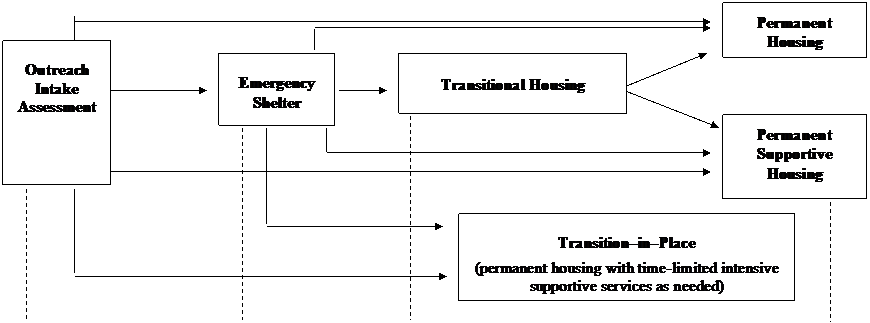
The following diagram illustrates each of the fundamental
components of the continuum of care and how they are connected.
Homelessness Continuum of Care
|
For People
in
Crisis
|
 
|
For People
in Transition
|
|
For People
Maintaining Stability
|
|
Supportive
services:
|
|
|
|
Primary health care
|
Independent living
skills
|
Protective payee
|
|
Mental health care
|
Case management
|
Food and clothing
|
|
Substance abuse
services
|
Child care
|
Legal services
|
|
Education
|
HIV/AIDS services
|
Transportation
|
|
Job
training/placement
|
Financial counseling
|
Storage
|
|
Public assistance
|
Translation services
|
Housing search
|
|
Domestic violence
services
|
Veteran’s services
|
Housing
stabilization
|
|
Hygiene services
|
Rental
assistance/housing subsidy
|
Other services
|
Priority
Needs of Homeless People
The data in the following two charts are requirements of the
2005 application for McKinney-Vento homelessness assistance funding. Note: data used for these charts are Seattle and King County. The methodology used to complete these charts
is found on the following page.
N=enumeration.
Continuum
of Care: Housing Gaps Analysis Chart
|
Housing Gaps Analysis Chart
|
Current Inventory in 2005
|
Under Development in 2005
|
Unmet need/ Gap
|
|
Individuals (data displayed as beds)
|
|
Beds
|
Emergency Shelter
|
1948
|
0
|
0
|
|
Transitional Housing
|
1418
|
78
|
50
|
|
Permanent Supportive Housing
|
1830
|
354
|
691
|
|
Total
|
5196
|
432
|
741
|
|
Persons in Families with Children
(data displayed as beds/household units)
|
|
Beds/units
|
Emergency Shelter
|
796 beds/ 206 units
|
9 beds/ 3 units
|
20 beds/ 6 units
|
|
Transitional Housing
|
2210 / 654
|
467 / 130
|
42 / 14
|
|
Permanent Supportive Housing
|
574 / 185
|
50 / 16
|
150 / 50
|
|
Total
|
3580 / 1045
|
526 /149
|
212 / 70
|
Continuum of Care:
Homeless Population and Subpopulations Chart
|
Part 1:
Homeless Population
|
Sheltered
|
Unsheltered
|
Total
|
|
Emergency
|
Transitional
|
|
1. Homeless Individuals
|
1,870 (N)
|
1,155 (N)
|
1,330 (N)
|
4,355
|
|
2. Homeless Families with
Children
|
201 (N)
|
496 (N)
|
317 (N)
|
714
|
|
2a. Persons in Homeless Families with
Children
|
592 (N)
|
1,482 (N)
|
886 (N)
|
2,960
|
|
Total (lines 1 + 2a only)
|
2,462 (N)
|
2,637 (N)
|
2,216 (N)
|
7,315
|
|
Part 2:
Homeless Subpopulations
|
Sheltered
Emergency
Transitional
|
Unsheltered
|
Total
|
|
1. Chronically Homeless
|
837 (N) 296 (N)
|
798 (N)
|
1,931
|
|
2. Severely Mentally Ill
|
333 (N) 520 (N)
|
*
|
853
|
|
3. Chronic Substance Abuse
|
622 (N) 477 (N)
|
*
|
1,099
|
|
4. Veterans
|
368 (N) 170 (N)
|
*
|
538
|
|
5. Persons with HIV/AIDS
|
6 (N) 115 (N)
|
*
|
121
|
|
6. Victims of Domestic
Violence
|
244 (N) 529 (N)
|
*
|
773
|
|
7. Youth (Under 18 years old)
|
15 (N) 25 (N)
|
*
|
40
|
Methods
used to Collect Information for the Housing Activity Chart, Housing Gaps
Analysis, and Homeless Population/Subpopulations Charts
Data for the Housing Activities and Housing Gaps Analysis
Charts come from the most recent inventory of homeless units in Seattle-King
County. This inventory is updated on an annual basis
utilizing two primary steps to capture accurate information: (1) review of all housing programs listed on
the Crisis Clinic’s database (www.crisisclinic.org),
reports of new projects from local housing development funders, and meetings
with contract specialists who monitor housing programs to identify any changes
in the past year (closures, target population, geographic, and capacity), and
(2) verification of each organization’s information by e-mail or fax survey. This point in time inventory update was
completed for January 18, 2005. As the only inventory of homeless units in Seattle-King
County, it is the primary source of
data used by the community and for continuum of care planning purposes.
The unmet need was determined using the survey and One Night
Count (ONC) as described below and the housing inventory. We estimate that the majority of homeless
people simply need permanent affordable housing and are, therefore, not reflected
in this chart. For the others, our
methodology is:
Individuals - The
unmet need for Permanent Supportive Housing (691 beds) is calculated by taking
the number of unsheltered homeless (both chronic and non-chronic) less the
number of Permanent Supportive Housing (PSH) beds under development (both
chronic and non-chronic) and less 10% to account for the number of PSH
residents who move on to other housing (per aggregate Annual Performance Report
(APR) data. Turnaway data indicate a
need for additional transitional housing for young adults. As we look to ending homelessness and to more
housing first in our approach, we are not looking to expand shelter capacity at
this time.
Families - The
unmet need for Permanent Supportive Housing (150 beds) is based on Health Care
for the Homeless Network (HCHN) data regarding families with multiple housing
barriers. Turnaway data from providers
indicate a need for additional shelter and transitional housing, particularly
for households experiencing domestic violence.
Readers should note that most of the transitional units under production
are transition-in-place units of the Sound Families Initiative. These become permanent housing through
Section 8 vouchers.
The sheltered portion of the
Homeless Population and Subpopulation Chart was completed by Continuum of Care
staff using data collected through an e-mail survey completed by all shelter
and transitional housing programs on the night of January 18, 2005.
The survey confirmed the inventory, enumerated the number of persons and
households served, and gathered information about subpopulations, including
chronically homeless status. The
response rate for our survey was 95%.
The unsheltered portion of the
Homeless Population and Subpopulation Chart was completed using data collected
in our most recent point in time street count led by the Seattle-King County
Coalition for the Homeless, which occurred on October 22, 2004.
This date was in keeping with our continuum’s twenty-five year tradition
of implementing an annual street count on the third Thursday of October. In the future, our street count will take
place in January 2006 and our next point in time street counts are scheduled
for the last week in January 2006, to coincide with the sheltered count on January 26, 2006.
For the street count, teams of
people walked through geographic areas from 2:30
to 5:30 AM, and counts from those areas
were tallied to produce an aggregate, unduplicated count. When age, gender or family composition cannot
be determined because they covered by blankets, in cardboard tents, or sleeping
in cars, these numbers are entered as unknown.
A standard formula is used for anyone found in a car. Due to these limitations, we have estimated
that 60% of the unsheltered people are individuals and 40% are families with
2.8 members per family. Until such a
time as we have outreach programs participating in our Safe Harbors HMIS, the
One Night Count serves as the basis for the number of chronically homeless
individuals who are unsheltered. Using
the methodology of Dr. Martha Burt, a nationally renowned researcher on
homelessness, we estimate that 60% or 798 of the single adults found in the One
Night Count are chronically homeless.
Priority
needs of homeless people in Seattle supported by Consolidated Plan
funding
This
Consolidated Plan is an assessment of our continuum of care that takes into
consideration an analysis of the best data available, emerging trends, system
capacity and performance, changing demographics of homeless populations, best
practices and important initiatives that are currently underway. Important information was gleaned from
homeless and low-income persons during the public participation process
associated with the plan’s development and other continuum of care planning
activities. Combined, these assessments
have resulted in the following priorities for Consolidated Plan funding to meet
the needs of people in Seattle who
are homeless or at-risk of homelessness.
Services:
·
Case management that keeps people in their
permanent housing, moves them to more appropriate housing, or prevents
evictions;
·
Tenant-based rental assistance to help
households address housing instability;
·
Through the Taking Health Care Home Initiative,
encourage provision of supportive services in permanent housing projects to
allow chronically homeless people to achieve and sustain housing;
·
Supportive services that enable homeless and
formerly homeless people to sustain their housing and live as independently as
possible;
·
Hygiene and day centers services.
Housing:
·
Day and night shelter with supportive services;
·
Increase service-enriched transitional housing
that enables residents to move to stable, permanent housing and achieve
self-sufficiency;
·
Increase the supply of permanent affordable housing
units linked with supportive services for homeless and special needs
households;
·
Increase the supply of below-market-rent housing
for households with low-incomes;
·
Ensure that City-funded housing units are
well-maintained and serve intended low-income residents.
Continuum-wide priorities:
·
Implement recommendations of the Ten Year Plan
to End Homelessness and incorporate relevant policies from the State policy
academy on chronic homelessness;
·
Work to improve program delivery and services,
as well as housing and services funding, for supportive housing through
planning and evaluation studies;
·
Strive to increase state, federal and private
funding for housing and to preserve existing resources through partnerships
with public, private and nonprofit organizations;
·
Allocate funds in accordance with the Strategic
Investment Strategy;
·
Shift toward a “Housing First” approach for
homeless persons with disabilities who have long histories of being homeless;
·
Obtain and evaluate data about homeless people
by implementing a homeless management information system.
Rent-assisted housing, depending upon a project’s
financing structure and sources of operating support, does not necessarily
lower an individual renter’s rent cost to within the 30% affordability level defined
by HUD. Therefore, many tenants in
affordable housing units continue to have a cost burden greater than 30% of
household income.