![[HOME]](/netaicon/homeicon.gif)
![[SEARCH]](/netaicon/srchpage.gif)

![[CURR_LIST]](/netaicon/curlist.gif)


![[BOTTOM]](/netaicon/bottom.gif)
![[HELP]](/netaicon/help.gif)
Seattle City Council Bills and Ordinances
Information modified on May 10, 2017; retrieved on May 2, 2026 4:07 PM
Ordinance 122235
Introduced as Council Bill 115652
Title | |
|---|---|
| AN ORDINANCE relating to land use and zoning, amending Chapter 23.49 of the Seattle Municipal Code to incorporate updated and corrected maps, revise provisions for street level use requirements and tower width limits, provide for tower spacing in DMC zones south of Union Street, and revise requirements for provision of lighting; amending Section 23.41.012 to limit the scope of Design Review departures from Land Use Code requirements; clarifying provisions for the location of parking and access to parking in 23.49.019; amending Chapters 23.76 and 23.84 to repeal provisions made obsolete by Ordinance 122054; amending Section 23.45.008 to clarify the effect of changes in definitions on special provisions for low-income housing; removing an obsolete reference from the Downtown Amenity Standards; and making technical corrections. | |
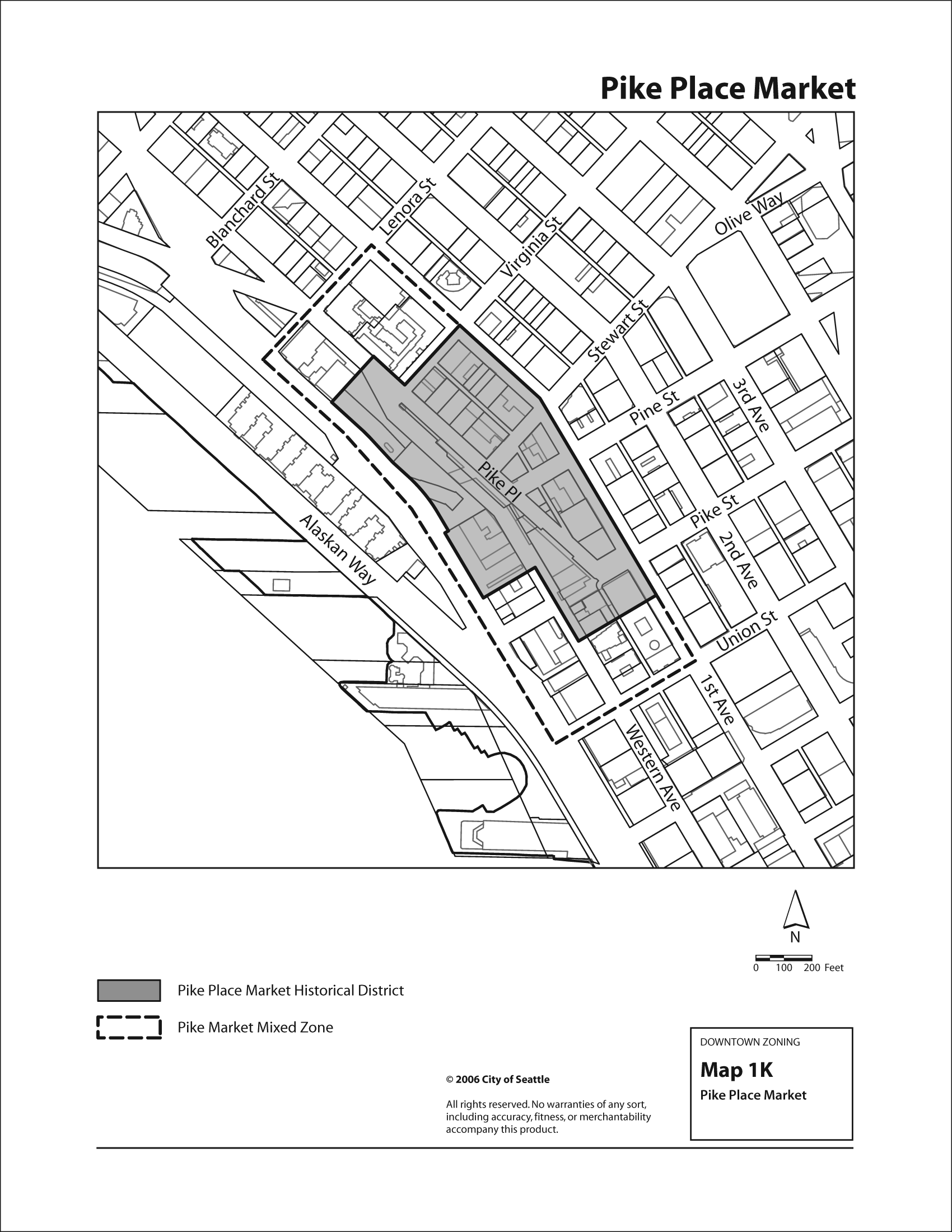
Description and Background | |
|---|---|
| Current Status: | Passed |
| Fiscal Note: | Fiscal Note to Council Bill No. 115652 |
| Index Terms: | LAND-USE-CODE, LAND-USE-PLANNING, DOWNTOWN |
| Notes: | Downtown Plan Technical Corrections |
| References: | Related: Ord 122054, |
Legislative History | |
|---|---|
| Sponsor: | STEINBRUECK |
| Date Introduced: | July 24, 2006 |
| Committee Referral: | Urban Development and Planning |
| City Council Action Date: | September 18, 2006 |
| City Council Action: | Passed |
| City Council Vote: | 9-0 |
| Date Delivered to Mayor: | September 19, 2006 |
|
Date Signed by Mayor: (About the signature date) | September 25, 2006 |
| Date Filed with Clerk: | September 28, 2006 |
| Signed Copy: | PDF scan of Ordinance No. 122235 |
Text | |
|---|---|
|
ORDINANCE _________________ AN ORDINANCE relating to land use and zoning, amending Chapter 23.49 of the Seattle Municipal Code to incorporate updated and corrected maps, revise provisions for street level use requirements and tower width limits, provide for tower spacing in DMC zones south of Union Street, and revise requirements for provision of lighting; amending Section 23.41.012 to limit the scope of Design Review departures from Land Use Code requirements; clarifying provisions for the location of parking and access to parking in 23.49.019; amending Chapters 23.76 and 23.84 to repeal provisions made obsolete by Ordinance 122054; amending Section 23.45.008 to clarify the effect of changes in definitions on special provisions for low-income housing; removing an obsolete reference from the Downtown Amenity Standards; and making technical corrections. WHEREAS, by Ordinance 122054 the City Council substantially revised Chapter 23.49 of the Seattle Municipal Code, regulating development Downtown; and WHEREAS Ordinance 122054 adopted certain new and revised maps in Chapter 23.49 and repealed other maps, inadvertently giving two maps the same letter designation; and WHEREAS some of the maps in Chapter 23.49 can be made clearer and more useful by replacing them with maps with higher quality graphics and in some cases updated information; WHEREAS in Ordinance 122054 the same tower spacing requirement that applies in the Denny Triangle Urban Center was inadvertently not applied to the Downtown Mixed Commercial zones south of Union Street; WHEREAS, other technical corrections should be made in light of Ordinance 122054; NOW, THEREFORE, BE IT ORDAINED BY THE CITY OF SEATTLE AS FOLLOWS: Section 1. Subsection B of Section 23.41.012, which Section was enacted by Ordinance 122054, is amended, and a new subsection C is added to that Section, as follows: 23.41.012 Development standard departures. * * * B. Departures may be granted from any Land Use Code standard or requirement, except for the following: 1. Procedures; 2. Permitted, prohibited or conditional use provisions, except that departures may be granted from development standards for required Downtown street level uses; 3. Residential density limits;
4. In
5. In
6. In 7. In Downtown zones, the provisions for combined lot developments as provided in Section 23.49.041; 8. In Downtown Mixed Commercial zones, tower spacing requirements as provided in 23.49.058E;
9. Downtown view corridor requirements, provided that departures may be granted to allow open railings on upper level roof decks or rooftop open space to project into the required view corridor, provided such railings are determined to have a minimal
impact on views and meet the requirements of the Building Code;
11. Maximum size of use; 12. Structure height, except that: a. Within the Roosevelt Commercial Core building height departures may be granted (up to an additional three (3) feet) for properties zoned NC3-65', (Exhibit 23.41.012 A, Roosevelt Commercial Core); b. Within the Ballard Municipal Center Master Plan area building height departures may be granted for properties zoned NC3-65', (Exhibit 23.41.012 B, Ballard Municipal Center Master Plan Area). The additional height may not exceed nine (9) feet, and may be granted only for townhouses that front a mid-block pedestrian connection or a park identified in the Ballard Municipal Center Master Plan; c. In Downtown zones building height departures may be granted for minor communication utilities as set forth in Section 23.57.013B; 13. Quantity of parking required, maximum parking limit in Downtown zones, and maximum number of drive-in lanes, except that within the Ballard Municipal Center Master Plan area required parking for ground level retail uses that abut established mid-block pedestrian connections through private property as identified in the "Ballard Municipal Center Master Plan Design Guidelines, 2000" may be reduced. The parking requirement shall not be less than the required parking for Pedestrian designated areas shown in Section 23.54.015 Chart D; 14. Provisions of the Shoreline District, Chapter 23.60; 15. Standards for storage of solid-waste containers; 16. The quantity of open space required for major office projects in Downtown zones as provided in Section 23.49.016B;
17. Noise and odor standards
18. Standards for the location of access to parking in Downtown zones;
19. Provisions of Chapter 23.52, Transportation Concurrency Project Review System;
20. Provisions of Chapter 23.53, Requirements for Streets, Alleys and Easements, except that departures may be granted from the access easement standards in Section 23.53.025 and the provisions for structural building overhangs in Section
23.53.035;
21. Definitions; and
22. Measurements.
C. Limitations upon departures through the design review process established in subsection B of this section do not limit departures expressly permitted by other provisions of this title or other titles of the Seattle Municipal Code.
23.45.008 Density -Lowrise zones. * * *
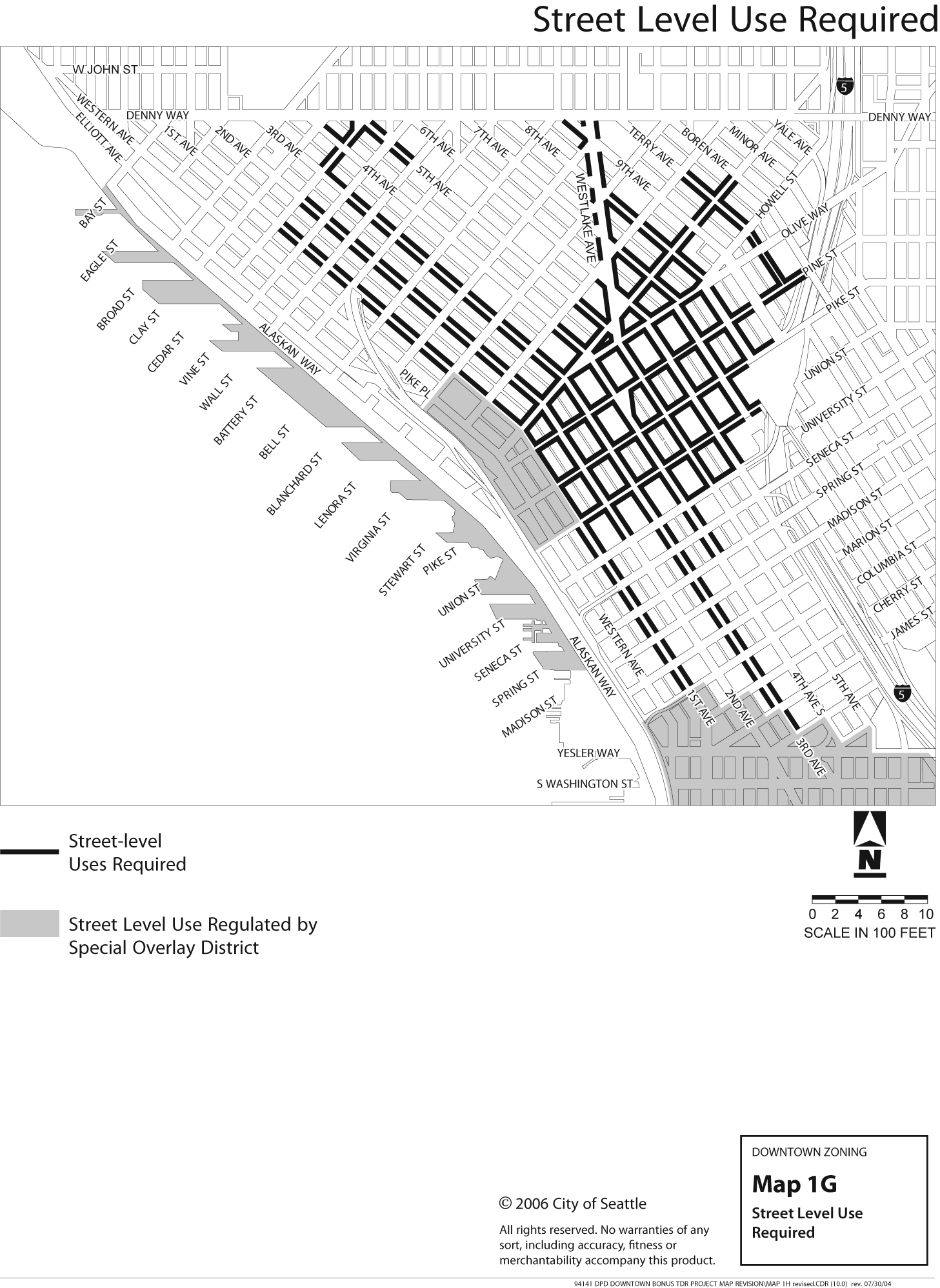
B. 1. In Lowrise 3 and Lowrise 4 zones, low-income disabled multifamily structures, low-income elderly multifamily structures Lowrise 3 - One (1) dwelling unit per five hundred fifty (550) square feet of lot area. Lowrise 4 - One (1) dwelling unit per four hundred (400) square feet of lot area. 2. In order to qualify for the density provisions of this subsection B, a majority of the dwelling units of the structure shall be designed for and dedicated to tenancies of at least three (3) months. 3. The dwelling units shall remain as a low-income disabled multifamily structure, low-income elderly multifamily structure, or low-income elderly/low-income disabled multifamily structure for the life of the structure. * * * Section 3. Maps 1A through 1K, inclusive, in Chapter 23.49 of the Seattle Municipal Code, as last amended by Ordinance 122054, are hereby repealed and Maps 1A through 1K attached to this ordinance are hereby enacted, to be codified at the end of Chapter 23.49. Section 4. Subsection A of Seattle Municipal Code Section 23.49.009, as enacted by Ordinance 122054, is amended as follows: 23.49.009 Street-level use requirements. One or more of the uses listed in subsection A are required at street level on all lots abutting streets designated on Map 1G. Required street-level uses shall meet the standards of this section. A. Types of Uses. The following uses qualify as required street-level uses: 1. Retail sales and services, except lodging; 2. Human service uses and childcare facilities; 3. Customer service offices; 4. Entertainment uses; 5. Museums, and administrative offices within a museum expansion space meeting the requirement of subsection 23.49.011B1h; 6. Libraries; 7. Elementary and secondary schools; and
* * * Section 5. Subsections A and B of Seattle Municipal Code Section 23.49.015, as enacted by Ordinance 122054, are amended as follows: 23.49.015 Bonus residential floor area for voluntary agreements for low-income housing and moderate income housing. A. General Provisions. 1. The purpose of this section is to encourage residential development in addition to that authorized by basic zoning regulations ("bonus development"), provided that certain adverse impacts from the bonus development are mitigated. "Basic zoning regulations" for purposes of this section are the provisions of Section 23.49.008 that determine base height limits for residential use in DOC-1, DOC-2 and DMC zones, and for DMC zones, the provisions of Section 23.49.058 that determine the maximum average floor area per story. The City has determined that one impact of high-rise residential development is an increased need for low-income housing and moderate-income housing downtown to house the families of workers having lower paid jobs who serve the residents of such development. The City also finds that DOC-1, DOC-2 , and DMC zones are areas in which increased residential development will assist in achieving local growth management and housing policies, and has determined that increased residential development capacity and height of residential structures can be achieved within these zones, subject to consideration of other regulatory controls on development. The City Council finds that in the case of affordable housing for rental occupancy, use of the income level for low-income housing rather than a lower level is necessary to address local housing market conditions, and that in the case of affordable housing for owner occupancy, higher income levels than those for low-income housing are needed to address local housing market conditions. The City hereby adopts the extension of the authority of Chapter 149, Laws of 2006 of the State of Washington, to the bonus development program under this Section 23.49.015, in addition to the City's preexisting authority. To the extent that any provision of this Section or the application thereof to any project for which a Master Use Permit application is considered under the Land Use Code as in effect after the effective date of Section 2 of Chapter 149, Laws of 2006 would conflict with any requirement of that statute, the terms of this Section shall be deemed modified to conform to the requirements of Section 2 of Chapter 149, Laws of 2006. 2. An applicant may elect to seek bonus development under this section only for a project in a DOC1, DOC2 or DMC zone that includes residential development. If an applicant elects to seek approval of bonus development under this section, the applicant must execute a voluntary agreement with the City in which the applicant agrees to provide mitigation for impacts described in subsection A1 of this section. The mitigation may be provided in the form of low-income housing or moderate-income housing, or both, either within or adjacent to the residential project using the bonus development (the "performance option"), by paying the City to build or provide the housing (the "payment option"), or by a combination of the performance and payment options. 3. No bonus development under this section shall be granted to any proposed development that would result in significant alteration to any designated feature of a Landmark structure unless a Certificate of Approval for the alteration is granted by the Landmarks Preservation Board. 4. No bonus development under this section shall be granted for any housing in a new structure unless the applicant makes a commitment that the structure shall earn a LEED Silver rating. When such a commitment is made, the provisions of SMC Section 23.49.020 shall apply. This subsection 4 shall expire and be of no further effect five (5) years after the effective date of this ordinance. 5. The Master Use Permit application to establish any bonus development under this section shall include a calculation of the amount of bonus development sought and shall identify the manner in which the conditions to such bonus development shall be satisfied. The Director shall, at the time of issuance of any Master Use Permit decision approving any such bonus development, issue a Type I decision as to the amount of bonus development to be allowed and the conditions to such bonus development, which decision may include alternative means to achieve bonus development, at the applicant's option, if each alternative would be consistent with this section and any other conditions of the permit, including Design Review conditions if applicable. B. Voluntary Agreements for Housing. 1. The voluntary agreement shall commit the applicant to provide or contribute to low-income housing or moderate-income housing, or both, in an amount as set forth in this subsection B. The quantities in this subsection are based on findings of an analysis that quantifies the linkages between new market-rate units in high-rise residential structures in DOC1, DOC2, and DMC zones and the demand that residents of such units generate for low-income housing and moderate-income housing. The amount of such housing and income levels served, and the amount of any cash payment, shall be determined as follows: a. For the performance option, the applicant shall provide, as low-income housing or moderate-income housing, net rentable floor area equal to eleven (11) percent of the net residential floor area sought as bonus development, computed by multiplying the following sum by an efficiency factor of eighty (80) percent: (i) the total square footage of gross residential floor area to be developed on the lot above the base height limit for residential use under SMC Section 23.49.008, plus (ii) the excess, if any, in each tower to be developed on the lot, of (X) the total number of square feet of gross residential floor area between the height of eighty-five (85) feet and such base height limit, over (Y) the product of the "average residential gross floor area limit of stories above 85 feet if height does not exceed the base height limit for residential use" as provided in Chart 23.49.058D1, column 2, multiplied by the number of stories with residential use in such tower above eighty-five (85) feet and below such base height limit. All low-income housing or moderate income housing provided under the performance option shall be on the lot where the bonus development is used or an adjacent lot. The adjacent lot must be within the block where the bonus development is used and either abut the lot where bonus development is used, or be separated only by public right-ofway. All rental housing provided under the performance option shall be low-income housing. b. For the payment option, the applicant shall pay the lesser of the following: (1) an amount that equals the approximate cost of developing the same number and quality of housing units that would be developed under the performance option, as determined by the Director ; or (2) (i) in DMC zones, ten (10) dollars per square foot of net residential floor area sought as bonus development between the height of eighty-five (85) feet and the base height limit for residential use under Section 23.49.008, fifteen (15) dollars per square foot of the net residential floor area of the first four (4) floors above the base height limit for residential use, twenty (20) dollars per square foot of net residential floor area of the next three (3) floors, and twenty-five (25) dollars per square foot of net residential floor area of the remaining floors up to the maximum residential height limit, not to exceed an average of eighteen dollars and ninety-four cents (18.94) per square foot of net residential floor area sought as bonus development; and (ii) in DOC1 and DOC2 zones, eighteen dollars and ninety-four cents (18.94) per square foot of net residential floor area sought as bonus development above the base height limit for residential use under Section 23.49.008. Net residential floor area shall be computed by multiplying the total gross floor area sought as bonus development by an efficiency factor of eighty (80) percent. The full amount must be paid to the City in cash, except that if the City shall approve by ordinance the acceptance of specific real property in lieu of all or part of the cash payment, the Housing Director may accept such real property. 2. Each low-income housing unit provided as a condition to the bonus allowed under this section shall serve only households with incomes at or below eighty (80) percent of median income at the time of their initial occupancy. Each moderate-income housing unit provided as a condition to the bonus allowed under this section shall serve only as owner-occupied housing for households with incomes no higher than median income at the time of their initial occupancy. For rental housing, housing costs, including rent and basic utilities, shall not exceed 30% of eighty (80) percent of median income, adjusted for the average size of family expected to occupy the unit based on the number of bedrooms, all as determined by the Housing Director, for a minimum period of fifty (50) years. For owner-occupied housing, the initial sale price shall not exceed an amount determined by the Housing Director to be consistent with affordable housing for a moderate-income household with the average family size expected to occupy the unit based on the number of bedrooms, and the units shall be subject to recorded instruments satisfactory to the Housing Director providing for sales prices on any resale consistent with affordability on the same basis. The Housing Director may promulgate rules specifying the method of determining affordability, including eligible monthly housing costs. The Housing Director may also promulgate rules for determining whether units satisfy the requirements of this section and any requirements relating to down-payment amount, design, quality, maintenance and condition of the low-income housing or moderateincome housing. 3. For purposes of this section, housing may be considered to be provided by the applicant seeking bonus development under the performance option if the housing satisfies all of the following conditions: (i) It is committed to serve an eligible income group, and for a time period, referred to in this section pursuant to an agreement between the housing owner and the City. (ii) The agreement required by subsection (i) is executed and recorded prior to the issuance of the master use permit to establish the use for the project using the bonus development, but except when subsection (iii)(B) below applies, no earlier than 1 year prior to issuance of that master use permit.
(iii) Either (A) the Certificate of Occupancy for the new low-income housing or moderate income housing, or both, must be issued within 3 years of the date the Certificate of Occupancy is issued for the project using the
bonus (iv) If the low-income housing or moderate-income housing is not owned by the applicant, then the applicant made a financial contribution to the low-income housing or moderate-income housing, or promised such contribution and has provided to the City an irrevocable, unconditional letter of credit to ensure its payment, in form and content satisfactory to the Housing Director, in either case in an amount determined by the Housing Director to be, when reduced by the value of any expected benefits to be received for such contribution other than the bonus development, approximately equal to the cost of providing units within the project using the bonus development, and the owner of the low-income housing or moderateincome housing has entered into a linkage agreement with the applicant pursuant to which only the applicant has the right to claim such housing for purposes of bonus development under this section or any other bonus under this title. 4. Any applicant seeking to qualify for bonus floor area based on development of new housing shall provide to the City, prior to the date when a contribution would be due for the cash option under subsection C of this section, an irrevocable bank letter of credit or other sufficient security approved by the Director of the Office of Housing, and a related voluntary agreement, so that at the end of the three (3) year period specified in subsection B3 of this section, if the housing does not qualify or is not provided in a sufficient amount to satisfy the terms of this section, the City shall receive (i) a cash contribution for housing in the amount determined pursuant to this section after credit for any qualifying housing then provided, plus (ii) an amount equal to interest on such contribution, at the rate equal to the prime rate quoted from time to time by Bank of America, or its successor, plus three (3) percent per annum, from the date of issuance of the first building permit for the project using the bonus. If and when the City becomes entitled to realize on any such security, the Director of the Office of Housing shall take appropriate steps to do so, and the amounts realized, net of any costs to the City, shall be used in the same manner as cash contributions for housing made under this section. In the case of any project proposing to use bonus development for which no building permit is required, references to the building permit in this subsection shall mean the master use permit allowing establishment or expansion of the use for which bonus development is sought. 5. Nothing in this chapter shall be construed to confer on any owner or developer of housing, any party to a linkage agreement, or any assignee, any development rights or property interests. Because the availability and terms of allowance of bonus development depend upon the regulations in effect at the relevant time for the project proposing to use such bonus development, pursuant to SMC Section 23.76.026, any approvals or agreements by the Director of the Office of Housing regarding the eligibility of actual or proposed housing as to satisfy conditions of a bonus, and any approval of a linkage agreement and/or assignment, do not grant any vested rights, nor guarantee that any bonus development will be permitted based on such housing. 6. The Director of the Office of Housing is authorized to accept and execute agreements and instruments to implement this section. For the performance option, the voluntary agreement by the applicant or, if the applicant is not the housing owner, then a recorded agreement of the housing owner acceptable to the Housing Director, shall provide for an initial monitoring fee payable to the City of $500 per unit of low-income housing or moderate-income housing provided, and in the case of rental housing, an annual monitoring fee payable to the City of $65 for each such unit. For rental housing, such agreement also shall require the housing owner to submit to the City annual reports with such information as the Housing Director shall require for monitoring purposes. In the case of housing for owner-occupancy, the recorded resale restrictions also shall include a provision requiring payment to the City, on any sale or other transfer, of a fee of $500 for the review and processing of transfer documents to determine compliance with income and affordability restrictions. 7. If the Housing Director shall certify to the Director that the Housing Director has accepted and there have been recorded one or more agreements or instruments satisfactory to the Housing Director providing for occupancy and affordability restrictions on housing provided for purposes of the performance option under this section, and that either all affordable housing has been completed or the applicant has provided the City with an irrevocable, unconditional letter of credit satisfactory to the Housing Director in the amount of the contribution to the affordable housing approved by the Housing Director, if applicable, then any failure of such housing to satisfy the requirements of this subsection B shall not affect the right to maintain or occupy the bonus development. Unless and until the Housing Director shall so certify, it shall be a continuing permit condition, whether or not expressly stated, for each project obtaining bonus floor area based on the provision of housing under this subsection, that the low-income or moderate-income housing units, or both, as applicable, shall continue to satisfy the requirements of this subsection throughout the term specified in this section and that such compliance shall be documented to the satisfaction of the Director of the Office of Housing. The Director of the Office of Housing may provide by rule for circumstances in which low-income or moderate-income housing units, or both, as applicable, may be replaced if lost due to casualty or other causes, and for terms and conditions upon which a cash contribution may be made in lieu of continuing to provide low-income housing or moderateincome housing, or both, under the terms of this subsection.
8. Housing units produced with voluntary contributions made under this section, shall include a range of unit sizes, including units suitable for families with children. Housing units provided to qualify for bonus development shall comply with the
following: (i) they shall be provided in a range of sizes comparable to those available to other residents; (ii) to the extent practicable, the number of bedrooms in low-income units and moderateincome units must be in the same proportion as the number
of bedrooms in units within the entire building; (iii) the low-income units and moderate-income units shall generally be distributed throughout the building, except that they may be provided in an adjacent building; and (iv) the low-income units and
moderate-income units shall have substantially the same functionality as the other units in the building or buildings. The Housing Director is authorized to prescribe by rule standards and procedures for determining compliance with the requirements of
this subsection 9. References in this subsection B to a Certificate of Occupancy for a project mean the first Certificate of Occupancy issued by the City for the project, whether temporary or permanent. * * * Section 6. Subsection E of Seattle Municipal Code Section 23.49.018, as enacted by Ordinance 122054, is amended as follows: 23.49.018 Overhead Weather Protection and Lighting. * * *
E. Adequate
23.49.019 Parking quantity, location and access requirements, and screening and landscaping of surface parking areas. * * * B. Parking Location within Structures. 1. Parking at street level a. On Class I pedestrian streets and designated green streets, parking is not permitted at street level unless separated from the street by other uses, provided that garage doors need not be separated. b. On Class II pedestrian streets, parking may be permitted at street level if: (1) at least thirty (30) percent of the street frontage of any street level parking area, excluding that portion of the frontage occupied by garage doors, is separated from the street by other uses; (2) the facade of the separating uses satisfies the transparency and blank wall standards for Class I pedestrian streets for the zone in which the structure is located; (3) the portion of the parking, excluding garage doors, that is not separated from the street by other uses is screened from view at street level; and (4) the street facade is enhanced by architectural detailing, artwork, landscaping, or similar visual interest features. 2. Except as provided in subsection B1 above for parking at street level, parking within structures shall be located below street level or separated from the street by other uses, except as follows: a. On lots that are less than thirty thousand (30,000) square feet in size or that are less than one hundred and fifty (150) feet in depth measured from the lot line with the greatest street frontage, parking shall be permitted above the first story under the following conditions: (1). One story of parking shall be permitted above the first story of a structure for each story of parking provided below grade that is of at least equivalent capacity, up to a maximum of four stories of parking above the first story. (2). Parking above the third story of a structure shall be separated from the street by another use for a minimum of 30% of each street frontage of the structure. For structures on lots located at street intersections, the separation by another use shall be provided at the corner portion(s) of the structure. (3) The perimeter of each story of parking above the first story of the structure shall have an opaque screen at least three and one-half (31/2) feet high where the parking is not separated from the street by another use. b. The Director may permit more than four stories of parking above the first story of the structure, or may permit other exceptions to subsection B2a(1) as a Type I decision if the Director finds that locating parking below grade is infeasible due to physical site conditions such as a high water table or proximity to a tunnel. In such cases, the applicant shall place the maximum feasible amount of parking below grade before more than four stories of parking above the first story shall be permitted. Site size is not a basis for granting an exception under this subsection 2b. * * * H. Standards for location of access to parking. This subsection does not apply to Pike Market Mixed, Pioneer Square Mixed, International District Mixed, and International District Residential zones. 1. Curbcut Location.
a. When a lot abuts an alley, alley access shall be required, unless the Director otherwise determines under subsection H1c.
b.
vii. Designated green street.
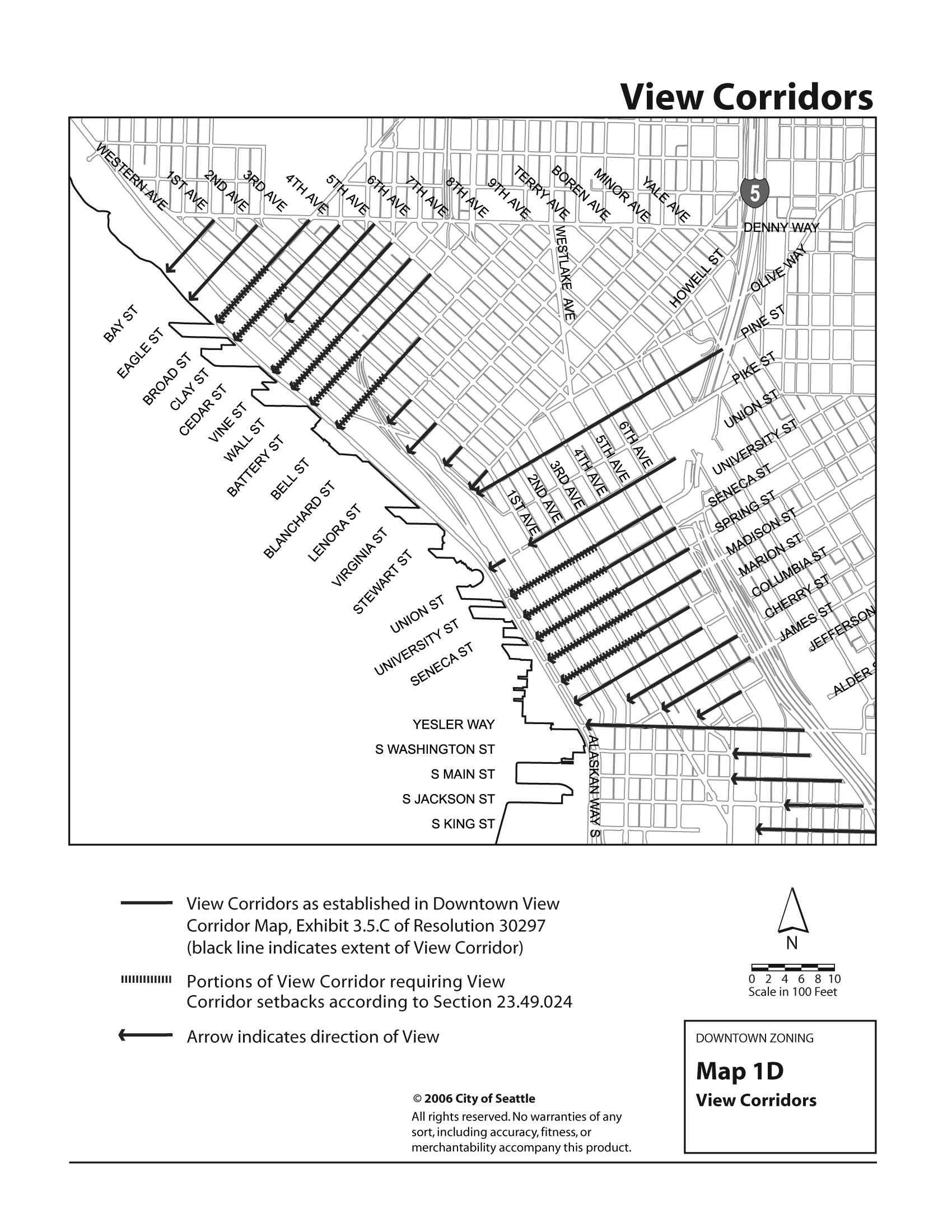
* * * Section 8. Subsection A of Seattle Municipal Code Section 23.49.024, which Section was last amended by Ordinance 113279, is amended as follows: 23.49.024 View corridor requirements.
A. Upper-level setbacks shall be required for the following view corridors, identified on Map 1. Broad, Clay, Vine, Wall, Battery and Bell Streets west of First Avenue; and 2. University, Seneca, Spring, Madison and Marion Streets west of Third Avenue. * * * Section 9. Subsections C, D and E of Seattle Municipal Code Section 23.49.058, which Section was last amended by Ordinance 122054, are amended as follows: 23.49.058 Downtown Office Core 1, Downtown Office Core 2, and Downtown Mixed Commercial upper-level development standards. * * *
C. D. Tower floor area limits and tower width limits for portions of structures in residential use. The requirements of this subsection D apply only to structures that include portions in residential use above a height of one hundred and sixty (160) feet. 1. Maximum limits on average residential gross floor area per story and maximum residential floor area per story of towers are prescribed in Chart 23.49.058D1. Chart 23.49.058D1 Average residential gross floor area per story and maximum residential gross floor area per story of a tower* (1) Zone (2) Average (3) Average (4) Maximum residential gross residential gross residential floor floor area limit floor area limit area of any story ((o)) per story per story of a in a tower of a tower if tower when height height does not exceeds the base exceed the base height limit for height limit for residential use residential use DMC 240/290-400 10,000 sq. ft. 10,700 sq. ft. 11,500 sq. ft. and DMC 340/290-400 DOC2 15,000 sq. ft. 12,700 sq. ft. 16,500 sq. ft. DOC1 15,000 sq. ft. 13,800 sq. ft. 16,500 sq. ft. *For the height at which a "tower" begins, see the definition at the beginning of this Section 23.49.058. a. For structures that do not exceed the base height limit for residential use, each tower is subject to the average floor area per story limits specified in column (2) on Chart 23.49.058D1. b. For structures that exceed the base height limit for residential use (which requires that the applicant obtain bonus residential floor area pursuant to Section 23.49.015), the average residential gross floor area per story of each tower is subject to the applicable maximum limit specified in column (3) on Chart 23.49.058D1. c. In no instance shall the residential gross floor area of any story in a tower exceed the applicable maximum limit specified in column (4) on Chart 23.49.058D1. d. Unoccupied space provided for architectural interest pursuant to Section 23.49.008B shall not be included in the calculation of gross floor area. 2. Maximum Tower Width. a. In DMC zones, the maximum facade width for portions of a building above eighty-five (85) feet along the general north/south axis of a site (parallel to the Avenues) shall be one-hundred twenty (120) feet or eighty (80) percent of the width of the lot measured on the Avenue, which ever is less, except that:
(1) On a lot where the limiting factor is the eighty (80) percent width limit, the facade width is one (2) On lots smaller than ten thousand seven hundred (10,700) square feet that are bounded on all sides by street right-of-way, the maximum facade width shall be one hundred twenty (120) feet. b. In DOC1 and DOC2 zones, the maximum facade width for portions of a building above eighty-five (85) feet along the general north/south axis of a site (parallel to the Avenues) shall be one hundred forty-five (145) feet.
(1). All lots have frontage on the same street;
(2). Any existing structure does not exceed a height of one hundred twenty-five (125) feet;
(3). The coverage and spacing of both the proposed and any existing structures meets the limits established in this Section; and
(4). The fee owners of the abutting lot(s) execute and record a covenant that restricts future development on the abutting lot to a maximum height of one hundred twenty-five (125) feet for the life of the proposed structure; and that precludes the use
of the abutting lot(s) in combination with any other lots for purposes of meeting the requirements of this section.
1. For the purposes of this section, no separation is required: a. between structures on different blocks, except as may be required by view corridor or designated green street setbacks, or b. from a structure on the same block that is not located in a DMC zone; or
c. from a structure allowed pursuant to the Land Use Code in effect prior to the effective date of 2. Except as otherwise provided in this subsection E, in the DMC 240'/290-400' zone located between Stewart Street, Union Street, Third Avenue and First Avenue, if any part of a tower exceeds one hundred sixty (160) feet in height, then all portions of the tower that are above one hundred and twenty-five (125) feet in height shall be separated by a minimum of two hundred (200) feet from any portion of any other existing tower above one hundred and twenty-five (125) feet in height. 3. Except as otherwise provided in this subsection E, on DMC zoned sites with maximum height limits of more than one hundred sixty (160) feet located either in the Belltown Urban Center Village, as shown on Exhibit 23.49.058E, or south of Union Street, if any part of a tower exceeds one hundred sixty (160) feet in height, then all portions of the tower that are above one hundred and twenty-five (125) feet in height must be separated by a minimum of eighty (80) feet from any portion of any other existing tower above one hundred and twenty-five (125) feet in height. 4. Except as otherwise provided in this subsection E, on DMC zoned sites with maximum height limits of more than one hundred sixty (160) feet located in the Denny Triangle Urban Center Village, as shown on Exhibit 23.49.056F, if any part of a tower exceeds one hundred sixty (160) feet in height, then all portions of the tower that are above one hundred and twenty-five (125) feet in height must be separated by a minimum of sixty (60) feet from any portion of any other existing tower above one hundred and twenty-five (125) feet in height. 5. The projection of unenclosed decks and balconies, and architectural features such as cornices, shall be disregarded in calculating tower separation.
6. If the presence of an existing tower would preclude the addition of another tower proposed on the same block, as a special exception, the Director may waive or modify the tower spacing requirements of this section to allow a maximum of two towers to
be located on the same block that are not separated by at least the mi n a. potential impact of the additional tower on adjacent residential structures, located within the same block and on adjacent blocks, in terms of views, privacy, and shadows; b. potential public benefits that offset the impact of the reduction in required separation between towers, including the provision of public open space, designated green street or other streetscape improvements, preservation of landmark structures, and provision of neighborhood commercial services, such as a grocery store, or community services, such as a community center or school; c. potential impact on the public environment, including shadow and view impacts on nearby streets and public open spaces; d. design characteristics of the additional tower in terms of overall bulk and massing, facade treatments and transparency, visual interest, and other features that may offset impacts related to the reduction in required separation between towers; e. the City's goal of encouraging residential development downtown; and f. the feasibility of developing the site without an exception from the tower spacing requirement. 7. For purposes of this section, an "existing" tower is either: (a) a tower that is physically present, except as provided below in this subsection E6, or (b) a proposed tower for which a Master Use Permit decision that includes approval of the Design Review element has been issued, unless and until either (i) the Master Use Permit issued pursuant to such decision expires or is cancelled, or the related application is withdrawn by the applicant, without the tower having been constructed; or (ii) a ruling by a hearing examiner or court of competent jurisdiction reversing or vacating such decision, or determining such decision or the Master Use Permit issued thereunder to be invalid, becomes final and no longer subject to judicial review. A tower that is physically present shall not be considered "existing" if the owner of the lot where such tower is located shall have applied to the Director for a permit to demolish such tower and such application shall be pending or a permit issued for such demolition shall be in effect, but any permit decision or permit for any structure that would not be permitted under this section if such tower were considered "existing" may be conditioned upon the actual demolition of such tower. Section 10. Subsection B of Seattle Municipal Code Section 23.49.248, as last amended by Ordinance 120443, is amended as follows: 23.49.248 International District Residential, side setback and green street setback requirements. * * *
B. Green Street Setbacks. A setback from the street Elevation of Portion of Structure Required Setback 40' to 85' 10' 86' to 240' (H-85') x .2 + 10'
where H = Total structure height in feet.
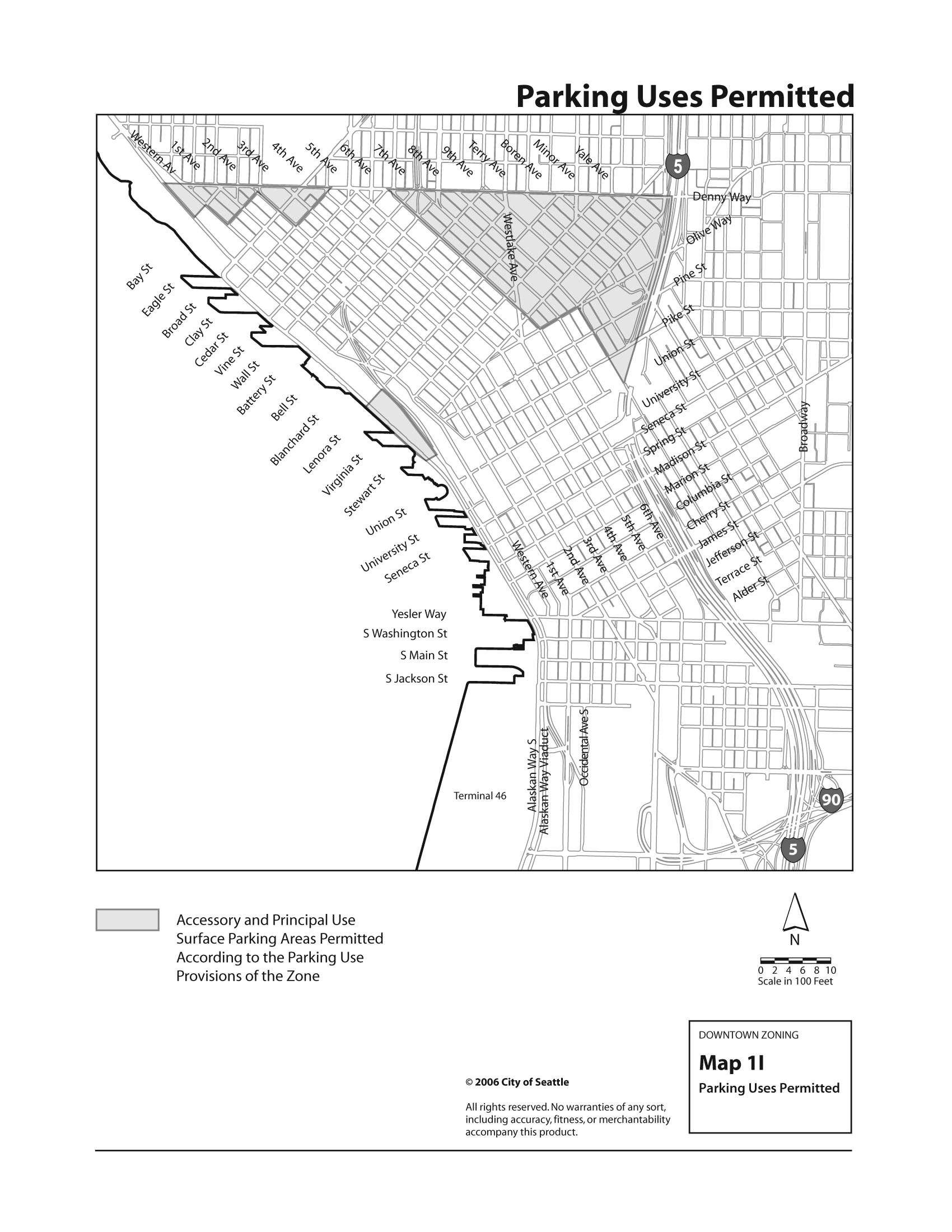
23.49.322 Downtown Harborfront 2, principal and accessory parking. A. Principal Use Parking. 1. Principal use parking garages for both long-term and short-term parking shall be conditional uses, according to Section 23.49.324.
2. Principal use surface parking areas shall be conditional uses in areas shown on Map 1I B. Accessory Parking. 1. Accessory parking garages for both long-term and short-term parking shall be permitted outright.
2. Accessory surface parking areas shall
a. Permitted outright when located in areas shown on Map 1I
b. Permitted as a conditional use when located in areas shown on Map 1I
c. Prohibited in areas not shown on Map 1I Section 12. Seattle Municipal Code Section 23.49.336, which Section was last amended by Ordinance 120443, is amended as follows: 23.49.336 Pike Market Mixed, permitted uses.
A. Permitted uses within the Pike Place Market Historical District, shown on Map 1K
B. In areas outside of the Pike Place Market Historical District in the Pike Market Mixed (PMM) zone, as shown on Map 1K Section 13. The introductory subsection of Section 12 of Ordinance 122054 is amended as follows:
Section 12. S * * * Section 14. Subsection F of Seattle Municipal Code Section 23.76.026, which Section was last amended by Ordinance 121477, is repealed. Section 15. The subsection entitled "Maximum structure height" in SMC Section 23.84.025, which Section was last amended by Ordinance 122054, is repealed. Section 16. The introductory subsection of Section II.N of the Downtown Amenity Standards, which Standards were enacted by Ordinance 122054, is amended as follows: * * * N. Restoration and Preservation of Landmark Performing Arts Theatre
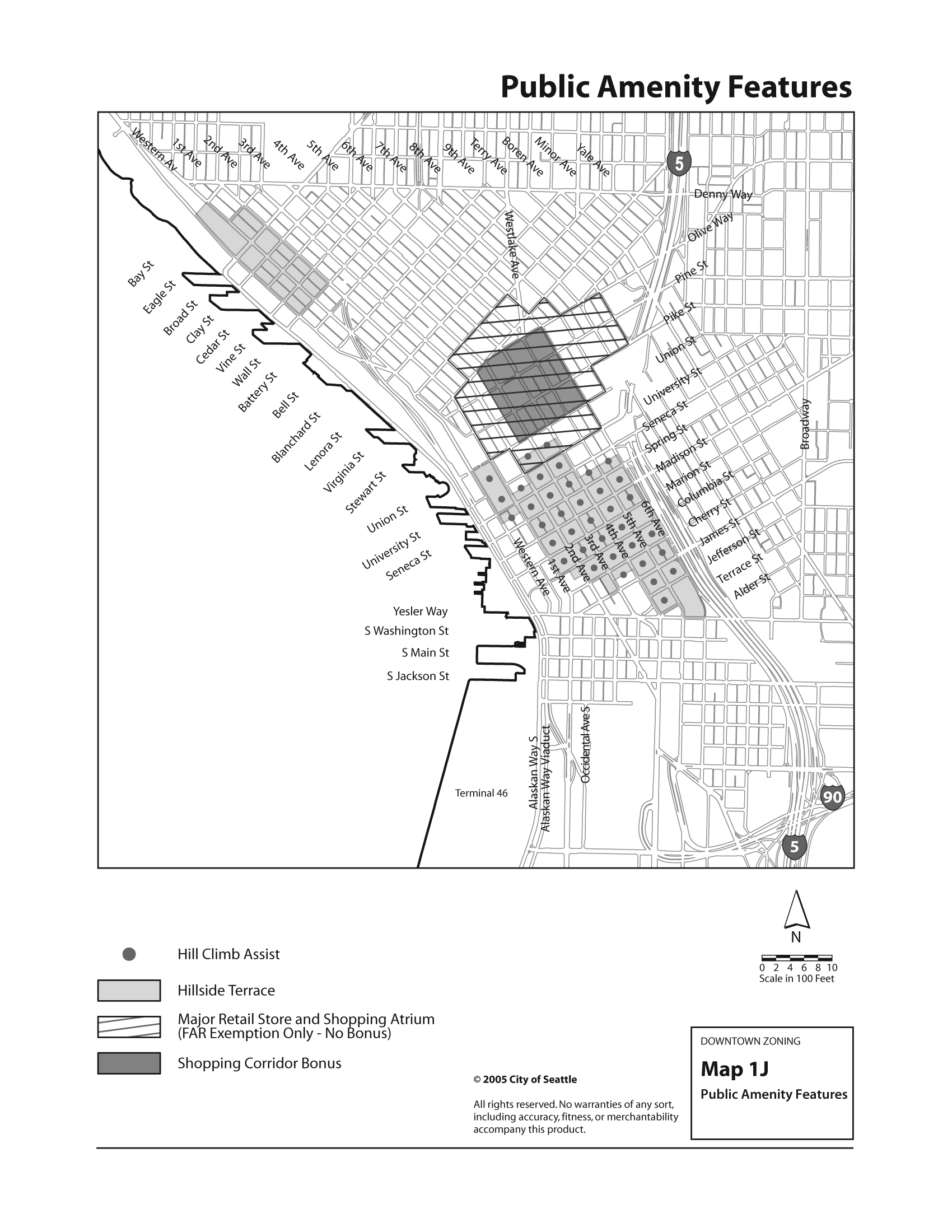
The landmark performing arts theater (LPAT) bonus is intended to contribute to the city's architectural, historic and cultural heritage by encouraging the preservation, rehabilitation and use of landmark performing arts theaters * * * Section 17. This ordinance is intended in part to clarify the intent of existing law, including without limitation the intent that the map designated "1G" in Ordinance 122054 be designated "1F" and that definitions, measurements, transportation concurrency and certain right-of-way improvement requirements are not within the scope of standards or requirements from which departures may be granted. Section 18. The provisions of this ordinance are declared to be separate and severable. The invalidity of any particular provision, or its invalidity as applied in any circumstances, shall not affect the validity of any other provision or the application of the particular provision in other circumstances. To the extent that sections of this ordinance enact maps that are substantively identical to maps being repealed hereby, this ordinance shall be construed to continue the substance of the previous maps in effect. The repeal of various sections or maps of Title 23 of the Seattle Municipal Code by this ordinance shall not relieve any person of the obligation to comply with the terms and conditions of any permit issued pursuant to the provisions of such Title as in effect prior to such repeal, nor shall it relieve any person or property of any obligations, conditions or restrictions in any agreement or instrument made or granted pursuant to, or with reference to, the provisions of such Title in effect prior to such repeal. Section 19. This ordinance shall take effect and be in force thirty (30) days from and after its approval by the Mayor, but if not approved and returned by the Mayor within ten (10) days after presentation, it shall take effect as provided by Municipal Code Section 1.04.020. Passed by the City Council the ____ day of _________, 2006, and signed by me in open session in authentication of its passage this _____ day of __________, 2006. _________________________________ President __________of the City Council Approved by me this ____ day of _________, 2006. _________________________________ Gregory J. Nickels, Mayor Filed by me this ____ day of _________, 2006. ____________________________________ City Clerk (Seal) Attachment 1: Downtown Maps: Map 1A: Downtown Zones Map 1B: Street Classifications Map 1C: Sidewalk Widths Map 1D: View Corridors Map 1E: Existing Public Benefit Features under Title 24 Map 1F: Pedestrian Street Classifications Map 1G: Street Level Use Required Map 1H: Property Line Facades Map 1I: Parking Uses Permitted Map 1J: Public Amenity Features Map 1K: Pike Place Market Version 18 20 |
|
Attachments |
|---|
![[TOP]](/netaicon/toppg.gif)