

![[HOME]](/netaicon/homeicon.gif)
![[SEARCH]](/netaicon/srchpage.gif)

![[CURR_LIST]](/netaicon/curlist.gif)


![[BOTTOM]](/netaicon/bottom.gif)
![[HELP]](/netaicon/help.gif)
Seattle Comptroller/Clerk Files Index
Information modified on March 20, 2013; retrieved on May 22, 2026 1:04 PM
Clerk File 312890
Title | |
|---|---|
Description and Background | |
|---|---|
| Current Status: | Filed |
| Index Terms: | DEPARTMENT-OF-PARKS-AND-RECREATION, BOARD-OF-PARKS-COMMISSIONERS, FINANCE, BUDGET, PLANNING |
Legislative History | |
|---|---|
| Date Filed with Clerk: | March 19, 2013 |
| PDF Copy: | Clerk File 312890 |
Text | ||||||||||||||||||||||||||||||||||||||||||||||||||||||||||||||||||||||||||||||||||||||||||||||||||||||||||||||||||||||||||||||||||||||||||||||||||||||||||||||||||||||||||||||||||||||||||||||||||||||||||||||||||||||||||||||||||||||||||||||||||||||||||||||||||||||||||||||||||||||||||||||||||||||||||||||||||||||||||||||||||||||||||||||||||||||||||||||||||||||||||||||||||||||||||||||||||||||||||||||||||||||||||||||||||||||||||||||||||||||||||||||||||||||||||||||||||||||||||||||||||||||||||||||||||||||||||||||||
|---|---|---|---|---|---|---|---|---|---|---|---|---|---|---|---|---|---|---|---|---|---|---|---|---|---|---|---|---|---|---|---|---|---|---|---|---|---|---|---|---|---|---|---|---|---|---|---|---|---|---|---|---|---|---|---|---|---|---|---|---|---|---|---|---|---|---|---|---|---|---|---|---|---|---|---|---|---|---|---|---|---|---|---|---|---|---|---|---|---|---|---|---|---|---|---|---|---|---|---|---|---|---|---|---|---|---|---|---|---|---|---|---|---|---|---|---|---|---|---|---|---|---|---|---|---|---|---|---|---|---|---|---|---|---|---|---|---|---|---|---|---|---|---|---|---|---|---|---|---|---|---|---|---|---|---|---|---|---|---|---|---|---|---|---|---|---|---|---|---|---|---|---|---|---|---|---|---|---|---|---|---|---|---|---|---|---|---|---|---|---|---|---|---|---|---|---|---|---|---|---|---|---|---|---|---|---|---|---|---|---|---|---|---|---|---|---|---|---|---|---|---|---|---|---|---|---|---|---|---|---|---|---|---|---|---|---|---|---|---|---|---|---|---|---|---|---|---|---|---|---|---|---|---|---|---|---|---|---|---|---|---|---|---|---|---|---|---|---|---|---|---|---|---|---|---|---|---|---|---|---|---|---|---|---|---|---|---|---|---|---|---|---|---|---|---|---|---|---|---|---|---|---|---|---|---|---|---|---|---|---|---|---|---|---|---|---|---|---|---|---|---|---|---|---|---|---|---|---|---|---|---|---|---|---|---|---|---|---|---|---|---|---|---|---|---|---|---|---|---|---|---|---|---|---|---|---|---|---|---|---|---|---|---|---|---|---|---|---|---|---|---|---|---|---|---|---|---|---|---|---|---|---|---|---|---|---|---|---|---|---|---|---|---|---|---|---|---|---|---|---|---|---|---|---|---|---|---|---|---|---|---|---|---|---|---|---|---|---|---|---|---|---|---|---|---|---|---|---|---|---|---|---|---|---|---|---|---|---|---|---|---|---|---|---|---|---|---|---|---|---|---|---|---|---|---|---|---|---|---|---|---|---|---|---|---|---|---|---|---|---|---|---|---|---|---|---|---|---|---|---|---|---|---|---|---|---|---|---|---|---|---|---|---|---|---|---|---|---|---|---|---|---|---|---|---|---|---|---|---|---|---|---|
|
Seattle Department of Parks and Recreation Date: February 20, 2013 To: Sally Bagshaw, Chair Parks and Neighborhoods Committee Seattle City Council From: Christopher Williams, Acting Superintendent Subject: Parks Long Term Funding Options SLI 83-1-A-1 Introduction The 2012 Adopted Budget included a Statement of Legislative Intent (SLI) that requested Seattle Parks work with the Board of Parks Commissioners and other interested partners to explore potential new sources of revenue to support parks operations. The request also asked that the reports include a "definition of parks service levels and the amount of revenue required to support those service levels" and that the reports "take into account the City's larger financial picture and how the options fit with the City's other fiscal priorities." The Council asked that a preliminary report be submitted to the Council's Parks and Neighborhoods Committee by June 30, 2012 to include a discussion of parks maintenance and recreation service levels and their revenue requirements and a preliminary discussion of potential parks funding options. A final report was asked to be submitted by January 2013. This memo is a response to portions of the SLI in regards to funding for Seattle Parks and Recreation funding at present, a review of revenue sources used by other local park agencies to fund their operations, and an assessment of the costs of services presently provided by Seattle Parks and Recreation. Later this year, Seattle Parks and Recreation will transmit our Parks Legacy Plan to the Seattle City Council. This new strategic plan will assess current services and programs, recap the results of public surveys undertaken last year to assess the public's demands for parks and recreation services, and outline priorities for the future. Many of the issues raised in this memo will be amplified and discussed in more detail in the plan. The Parks and Neighborhood Committee will be briefed on the plan as it is developed. The plan will be completed later this year, following citizen input and discussions with the Board of Parks Commissioners. Background on Seattle Parks and Recreation Seattle Parks and Recreation is a major operating department of the City of Seattle. The department consists of the Superintendent's Office, a Finance and Administration Division, a Human Resources Office, a Planning and Development Division (largely responsible for capital improvement work), a Parks Division that handles all aspects of park maintenance, and a Recreation Division that operates various facilities and programs. This paper will focus on the work of these last two divisions, describing service levels and costs of such. Seattle Parks and Recreation manages a 6,400 acre park system of 430 developed parks with numerous athletic fields, tennis courts and play areas and extensive natural areas and over 25 miles of boulevards. The system includes 26 community centers, eight indoor pools, three environmental learning centers, two outdoor (summer) swimming pools, two small craft centers, four golf courses, an outdoor stadium, specialty gardens, and much more. The Woodland Park Zoo and Seattle Aquarium, while owned by Seattle Parks and Recreation, are operated by non-profit entities. Other facilities owned by Seattle Parks and Recreation that are operated by others to offer recreational programs to Seattle residents include Spectrum Dance Studio at Madrona Park, Pratt Fine Arts Studio at Pratt Park, Sail Sand Point at Magnuson Park, and the Seward Park Audubon Center operated by the Audubon Society. The operating budget for Seattle Parks and Recreation in 2012 was approximately $123 million. Approximately two-thirds of the revenue to support this operation was from the City's General Fund, the other one-third was derived from various fees, charges, leases and other sources. Approximately 9% of the General Fund was allocated to Seattle Parks and Recreation; the fund also supports fire, police, and other municipal services. This fund is a combination of property taxes, retail sales tax, utility taxes, business and occupation taxes, parking fees and various fines. With the economic recession that has affected the Seattle area since the end of 2008, many tax revenues that support the City's General Fund have been in decline and the City's General Fund has been adversely affected. This reduction in General Fund led to budget reductions for Seattle Parks and Recreation beginning in 2009. Compounding this issue has been the additional burden of maintaining new park facilities that have been developed as a result of the implementation of three levy-funded capital programs in the past decade. As a result of budget cuts since mid-year in 2009, Seattle Parks and Recreation has reduced staff and services as well as raised various fees and charges for various activities. Parks has closed its park nursery, reduced staffing for various grounds maintenance activities and reorganized park maintenance districts, and eliminated one of the system's three tree crews. The fence crew was eliminated, paint shop staffing cut in half, and the metal and machine shop reduced. In 2011, five community centers were shifted to limited operations due to staffing reductions, and in 2012 a different community center operating model was initiated due to further budget reductions. The centers are now clustered into geographical groupings with three different levels of operating hours. The Carkeek Park Environmental Learning Center was closed and will be leased to others in 2013. Due to the reduced amount of General Fund, other funding has been used to maintain services. The Langston Hughes Performing Arts Center, as well as the downtown arts and neighborhood arts programs, were funded with revenues from the City's admission tax during 2011-12. Parks' Associated Recreation Council (ARC), which provides the instructors and other staff for various recreational programs at park facilities through class registration fees, has provided funding to help support community center operations for the past three years to offset General Fund reductions as well. Table 1 is a summary of Seattle Parks and Recreation's 2012 budget, showing General Fund, revenue, and staffing levels in full-time equivalents (FTE), organized by Budget Control Level (BCL). Tables 2 and 3 at the end of this report provide additional detail on the budgets for the Parks and Recreation divisions. TABLE 1
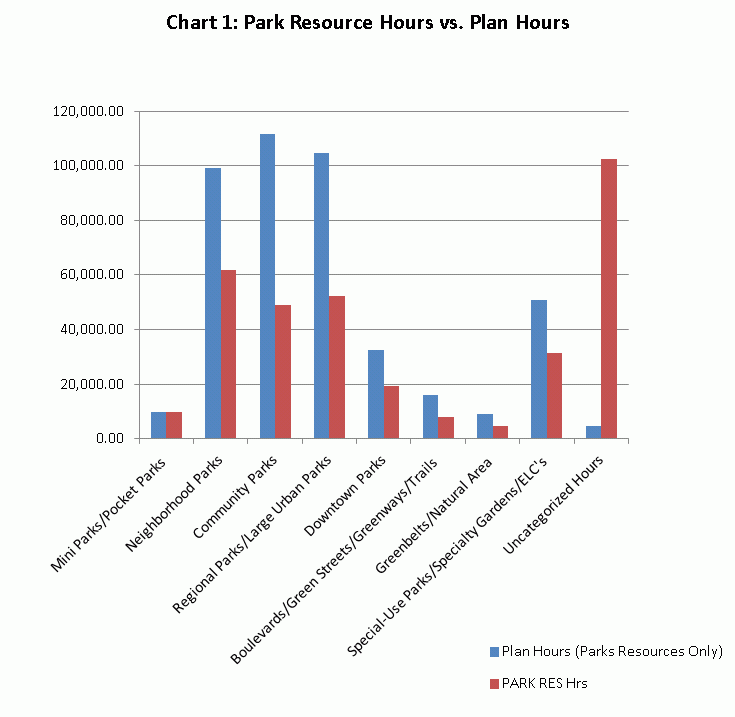
Parks Maintenance Overview Care of Seattle's parks system requires extensive grounds and facilities maintenance activities, handled by the Parks Division, with over 400 employees and a budget of nearly $50 million. The following paragraphs provide a fuller description of this work. Table 2 at the end of this report provides a summary of the expense and revenue associated with Parks Division operations, organized by BCL. Environmental Learning ($3.7M) : In recent years, the Parks Division has included various environmental programs, including the operation of the environmental learning centers at Carkeek Park, Camp Long and Discovery Park. Besides the vast natural areas at these three parks, there are visitor centers with classroom spaces where environmental education programs are offered. In the case of Camp Long and Discovery Park, such programs are offered by park naturalists and docent volunteers. At Carkeek, park programs have been curtailed but have been offered by others (including Seattle Audubon). Crews at each of these parks provide for mowing, litter control, plant care and other grounds maintenance activities. Programs at the Japanese Garden are offered through this environmental unit as well. Volunteer coordination, water conservation, hazardous material management and other maintenance support functions are part of the environmental group of the Parks Division. For 2013-14, the naturalist staffs at Camp Long and Discovery Park, the entrance cashier/program staff at the Japanese Garden, and the Outdoor Opportunities teen program (known as O2) have all been transferred to the Recreation Division. Facility and Structure Maintenance ($13.6M): The facilities maintenance part of the Parks Division provides for repairs of various community centers, swimming pools, other buildings, and numerous other outdoor assets (such as irrigation systems, drainage systems, lighting, signs, park furniture, and play equipment) with carpentry, plumbing, electrical, paint, and metal and machine shops that are dispatched on a work order basis. The department's security unit, work order dispatch, and other park maintenance support units are part of facilities maintenance, which is based at the Westbridge facility. Park Cleaning, Landscaping and Restoration ($26.4M): Day to day cleaning and landscape custodial care of parkland is handled by eight geographically-based park district crews in the Parks Division. These crews total over 224 FTE employees that provide for litter control and garbage pick-up, mowing and trimming of lawns, preparation of ballfields, leaf raking and pick-up, shrub bed care and other landscape related work. The district crews are also responsible for cleaning of picnic areas and parks comfort stations (restrooms) as well as care of play areas. Natural Resources ($4.6M): The basic grounds maintenance provided by the district crews are supported by a natural resources unit consisting of an urban forestry unit with two tree crews, a construction and turf unit with heavy equipment and trucking crews, a natural area crew and a landscape crew. These crews have citywide responsibilities and perform specialized tasks beyond typical custodial types of grounds maintenance. The Volunteer Park Conservatory, Kubota Garden and the Japanese Garden at Washington Park all have gardener staff that care for the plant collections and perform other maintenance duties at those sites. Park Maintenance Levels of Service The day to day maintenance of parkland provided by the eight district crews is guided by a "Park Labor and Timekeeping" system known as PLANT. This maintenance management system includes an extensive inventory of park assets, planned maintenance levels for each asset within each park, and timekeeping to assess the level of maintenance activity that is realized. The system is focused on developed parkland, amounting to nearly 2,100 acres of actively managed parkland and 2,500 additional acres of natural area. The PLANT plan for park maintenance is based on "best practices" in the landscape and horticulture industry, tailored to Seattle parks, and was fully implemented across all parks for the first time in 2011. The PLANT system places 465 park sites, totaling nearly 6,000 acres with approximately 4,500 acres of maintained park lands (not included are submerged tidelands or shorelands) into eight park categories. The categorization is essentially ordered by the size and character of the parks, from small mini-parks to large regional/large urban parks, with certain specialized parks in other categories. In 2011, planned maintenance levels would have been over 434,000 hours of activities, based on best practices in the park and horticultural industry. However, only 340,000 hours were able to be achieved due to budget limitations. More information on the differences between planned versus actual levels of maintenance, as well as how the planned levels were developed, will be included in the Parks Legacy Plan. The level of care can be further broken out across the various categories. In 2011, a 100% level of planned care was achieved in aggregate on the 116 parks categorized as miniparks/pocket parks, which constitute less than 1% of the maintained acreage. In contrast, for parks categorized as neighborhood, community, or regional/large urban (which constitute approximately 43% of the maintained acreage of the park system) the number of actual maintenance hours ranged from 43% to 59% of the planned amount. It must be noted that these are aggregate totals, as there is considerable variation in the comparison of actual versus planned level of service from park to park. Within the PLANT system are a number of hours that were not assigned to particular park categories as they involved maintenance activities not at the parks (e.g., work was at maintenance shops and yards, involved in tool care, etc. ) or were recorded as personal time such as training, breaks and absences. A comparison of the planned versus actual deployment of park resource hours is shown in Chart 1 on the next page. This PLANT system was first deployed in 2011 and continues to undergo revisions and refinement.
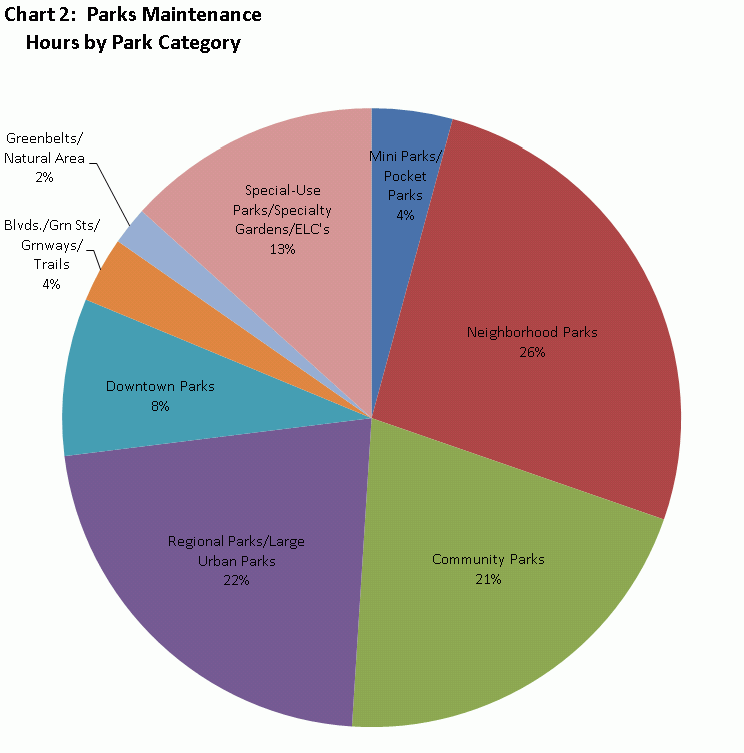
The distribution of maintenance effort across the park categories can be derived from this data and is shown on Chart 2, on the next page. The 10,000 hours devoted to maintenance of mini-parks amounts to 4% of the total maintenance effort (a total 339,718 hours). In contrast, nearly 70% of the effort is expended on parks categorized as neighborhood, community, or regional/large urban parks, which collectively form the "backbone" of the park system and which contain many heavily used parks such as Seward, Green Lake, and Lincoln Parks as well as a host of local parks, playgrounds and playfields.
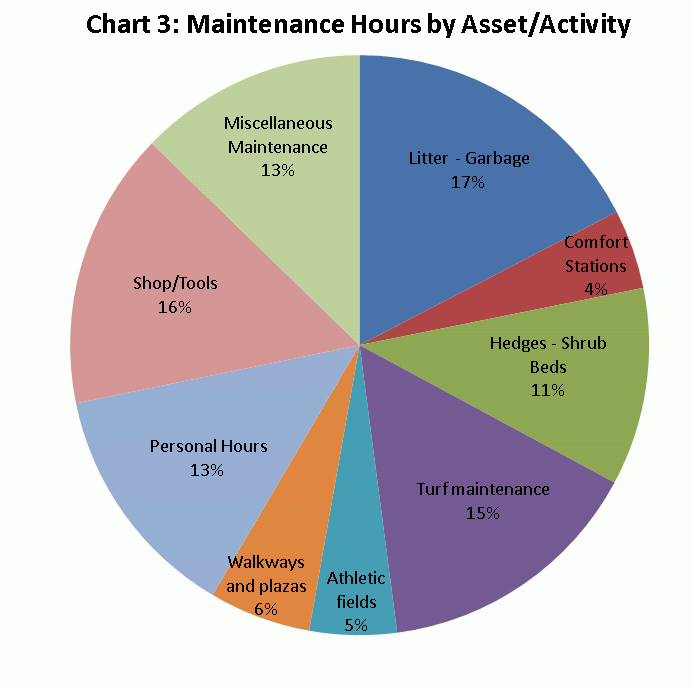
The types of maintenance activities undertaken across the park system, as tracked in the PLANT system for 2011, are presented in Chart 3 on the next page. The bulk of the maintenance effort undertaken by the park resource district crews is directed to keeping parks clean. In 2011, of the total expenditure of over 330,000 hours, over 59,000 hours (or approximately 17% of the grounds maintenance effort), were devoted to litter control; over 51,000 hours (or nearly 15%), were involved in turf maintenance-mowing, trimming and the like; and over 15,000 hours (over 4%), were used to clean comfort stations (park restrooms). The distribution of these various park maintenance activities, across all categories of parks, is presented in Chart 3.
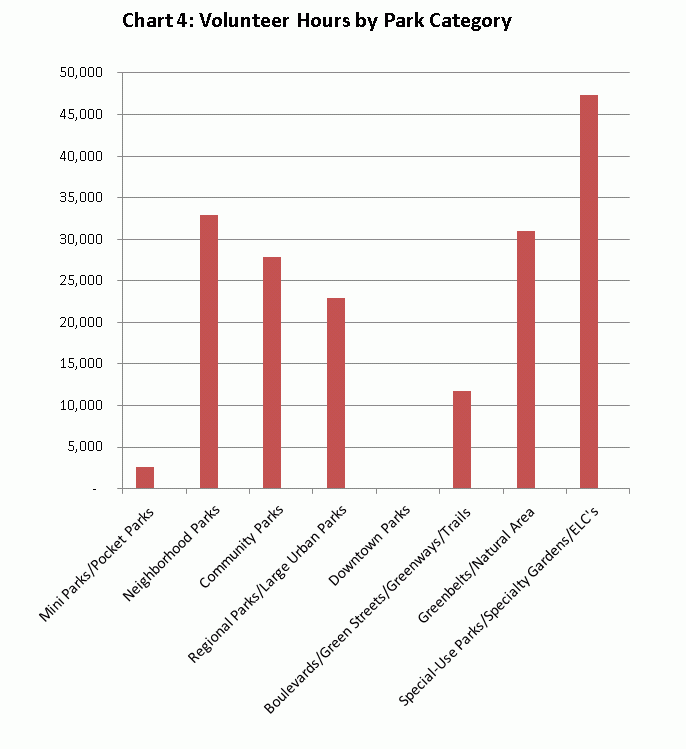
It is interesting to note the high degree of volunteerism in the various local park categories, likely attributable to various community work parties and the like, as well as the high degree of volunteerism at greenbelts, where there is a significant amount of forest stewardship activity. Likewise, there is a high degree of volunteerism at the parks categorized as specialty gardens and environmental learning centers. This is attributable to restoration activities as well as environmental education support by the volunteers. In fact, nearly a fourth of all volunteer hours were tracked to the eight parks in this category. Conversely, there are few volunteer hours at either the mini/pocket parks or the downtown parks, but there is a great deal of other support for downtown parks in the form of concerts and activities provided directly by or with financial contributions by the Downtown Seattle Association. Chart 4, shown on the next page, displays the amount of volunteer hours expended in 2011 in these categories. The use of volunteers must be recognized as a means to augment routine park maintenance services, not to replace required maintenance activities that often require use of mechanized equipment.
Tables 4 and 5 at the end of this report provide the source data for the information presented in the charts shown in this section of the report. Included in the parks resource categories are tallies of shops and natural resource support for the parks. Recreation Programs Overview Seattle Parks and Recreation provides a wide variety of recreational programs through community centers, swimming pools and other facilities as well as through programs that are not facility based. Most of these activities are fee based to cover some (in many cases substantial) portion of the cost of providing such services. In most programs, Parks recreation staff organize the programs and manage the buildings, while actual classes are typically taught by instructors or coaches hired through various advisory councils which collectively constitute the Associated Recreation Council (ARC). The personnel and administrative costs of the ARC staff (including centralized accounting/payroll, human resource and management functions) are completely offset by fees charged for the classes and programs. Various recreational programs and activities are booked through a Business Resources Center in the Recreation Division. Table 3 (found at the end of this report) is a summary of the 2012 budget for the expenses and revenues associated with Recreation programs as organized by BCL. Table 6 provides a recap of the 2012 budget for various recreation programs offered though the Associated Recreation Council (ARC). In total, the Recreation Division budget amounted to nearly $38 million in 2012; and ARC represented an adjunct of nearly $12 million related to the direct delivery of recreational programs. The following is a summary of the recreation programs and their total City budgets (i.e., ARC funding is not included). Community Centers ($10.2M): A total of 26 community centers are distributed throughout Seattle. They typically are sited at a community playfield and each consists of a gymnasium, several smaller activity/meeting rooms, a kitchen, staff offices and other spaces that total around 12,000 to 18,000 square feet. Programs that are offered include basketball and other indoor court game sports, dance and exercise classes, music, art, cooking and many other classes. In recent years, childcare programs have been developed at most of the centers. Late night recreation programs, which are funded separately from the community center budgets, are offered for teens at selected centers on weekends. Essentially all community centers operated with similar staffing levels and operating hours in recent years, until budget reductions forced changes to occur. During 2011, reducing staff and converting five community centers to "limited use" saved $1.5 million (primarily in terms of staffing reductions) but was very unpopular in the communities served by such centers. A different model was put into place for 2012 in which centers are organized into five geographical groupings with three tiers of operation; each tier has a different level of hours that the center is open to public use for drop-in activities. The tier 1 centers are open 70 hours a week to the public for drop-in activities; tier 2a centers are open 45 hours a week; and tier 2b centers are open 25 hours a week, with reduced staff levels associated with the tier 2a and 2b centers. Many centers are open additional hours for specific programming or classes (e.g childcare, late night teen activities, classes offered by ARC). The staff reductions associated with the tiered model amount to savings of approximately $800,000 over and above the reductions that had previously been realized in the 2011 budget. This tiered model will continue into 2013-14 but may be adjusted with further review of program offerings and public use data. Parks will be providing a progress report to the City Council on community center attendance figures in early June as well as a fuller report on community center usage in early September. As noted previously, Table 3 includes information on the community center budgets for 2012 with expenses and revenues as organized by "geo team." Seattle Parks and Recreation realizes revenue from community center classes in the form of a participation fee associated with class registration. There is also revenue from meeting room rentals, special events, and certain drop-in uses (e.g., "free shoot" basketball or use of weight rooms). These revenues are included in Table 3. The projected revenue from class registration and the costs of the instructional staff provided through ARC are not included in Table 3, but are shown separately in Table 6, which provides a summary of expected ARC revenues and expenses in 2012. Swimming Pools ($5.4M): Seattle Parks and Recreation operates 8 indoor pools that operate year-round and 2 outdoor pools that operate in summer months only. Each pool is staffed by Seattle Parks and Recreation. The indoor pools all have six 25-yard long lanes, and two of the pools have additional shallow water area. Use of the indoor pools includes swim lessons and fitness classes as well as being open for lap swims and general public swims. Revenue from swim passes and class registration covers about 60% of the staffing, utilities and operating costs of the indoor pools. In contrast, the two outdoor pools (Colman, a 50 meter outdoor pool and Mounger, with a 25 yard lap pool and a smaller warm water pool) both realized sufficient revenues in both 2011 and 2012 to essentially cover operating costs. There are also various special events, swim team rentals, summer swim team programs and other rentals (e.g., scuba classes). Also, blocks of time are set aside at each of the eight indoor pools for school programs under the School-Parks agreement that involves a sharing of public facilities with the Seattle School District (community center programs make use of school gyms; schools make use of the pools for physical education and varsity sports activities). This school use time is not available for lessons, lap swims, adult swim, or other activities that would otherwise generate revenues. Summer Swimming Beaches and Wading Pools ($618K): Each summer, Seattle Parks and Recreation provides life guards at nine beaches (two at Green Lake and seven on Lake Washington) to ensure safe settings for swimming and water play. Wading pools are staffed at a number of other parks to provide for water play for young children, and in recent years several water spray features have been installed to provide for a more interactive form of water play. These water features do not require staffing, and the three newest ones have re-circulating systems in order to save water. There are no fees associated with use of the beaches or wading pools, so no revenue is associated with their operation. Boat Launches : Seattle Parks and Recreation operates two major boat launching ramps to provide boat access to Puget Sound and three more on Lake Washington. Two smaller ramps are on the Lake Washington Ship Canal. Fees are charged for launching and parking at these facilities, amounting to over $270,000 per year. The boat launches are attached to larger Parks, and it is difficult to estimate the expenses directly related to the launches. Small Craft Centers ($322K): Rowing and sailing programs are offered at the Green Lake Small Craft Center and the Mount Baker Rowing and Sailing Center. The programs are very popular, and registration fees cover most of the costs of the classes offered through the advisory councils at these locations. Athletics ($1.1M): Seattle Parks and Recreation schedules ballfields throughout the City to allocate field time to various sports organizations (e.g., Little League baseball, Seattle Youth Soccer Association). Costs of this scheduling function amount to nearly $300,000 per year. Fees from such scheduling, amounting to over $2.3 million, are a significant source of revenue and help cover the scheduling costs as well as a portion of the cost of field maintenance and lighting. The remainder of the Athletics unit work involves various youth and adult sports leagues activities and events (e.g., track meets) with the support of an advisory council. A more detailed discussion of the ballfield revenues and maintenance costs will be presented to the Council in the 2013 Ballfield SLI response. Senior Adult and Special Populations ($1.5M ): Seattle Parks and Recreation offers an array of fitness and social classes in Life Long Recreation for older adults, and various sports and classes for disabled personsboth youth and adultthrough Special Populations programs. In many cases, the Lifelong Recreation programs occur at community centers although trips are an important part of these programs as well. Most of these programs are offered through instructors hired through the Associated Recreation Council. The Parks costs of supporting these programs are funded almost entirely with General Fund as there are limited revenues generated from these programs. Teen Programs and Arts Programs ($5.1M): Seattle Parks and Recreation offers several specialized programs for teen-aged youth at no cost to participants. The "Late Night Recreation" programs at selected community centers involve free sports and other activities on weekend nights. The Department also operates three teen life centers, separate from community centers, to offer a wide range of recreational programs for young people. There are several other programs that offer teen employment opportunities as well. After school programs for middle school youth are offered at certain community centers or schools to offer supportive environments for homework and socialization at no or low costs (note: the costs of this program are covered by the Family and Education Levy). The Langston Hughes Performing Arts Center is a 285 seat theater facility that houses a variety of film, drama and music programs focused on African American arts. The theater typically offers a summer musical produced by teen-aged youth. The theater re-opened in mid-2012 after a two-year closure for renovations. Downtown arts and neighborhood arts programs involving music, drama and other community festivals are offered to activate parks. The theater and the arts programs were funded by the City's admissions tax revenues during 201112. In 2013, operations of the Langston Hughes facility have been transferred to the City's Office of Arts and Cultural Affairs. Tennis ($962K): Besides the outdoor courts located in many parks, Seattle Parks and Recreation operates the Amy Yee Tennis Center, which features ten indoor courts and four outdoor courts. Besides court rentals, instruction is offered, along with certain tournaments --all of which produce revenue. In 2012, Parks began charging non-Seattle residents higher fees for use of the tennis center. The revenues generated by the Tennis Center are enough to fully cover its operating costs. Golf ($9.4M): Seattle owns five public golf courses that are all operated under concession agreements, with the three major courses (Jackson, Jefferson, and West Seattle) and the Interbay facility operated by Premiere Golf Centers. Over 164,000 rounds of golf were played on the 18-hole courses and over 63,000 more on nine-hole courses in 2011. Revenue from greens fees, driving ranges, course restaurants, and merchandise sales cover the operating cost of the golf courses as well as provide for ongoing major maintenance work and the cost of debt service that is now financing major golf improvements. Recreation Programs Costs of Service The costs of recreation programs include direct program costs, coupled with appropriate allocations of administrative costs and maintenance costs associated with the facilities that house these programs. In addition, revenues can be compared to costs for each of these program areas, since there are course-registration fees, admission fees, rentals, and other revenues that offset the programs costs to varying degrees. The net cost of the service can then be derived and this net cost then compared to participation (use) of these programs. Table 7, at the end of this report, is a summary of recreation programs and provides attendance, costs and revenues from 2011. This table also illustrates the cost recovery that is realized by different recreational activities. Since 2009, Parks has used a guiding principle to increase cost recovery for activities that provide more individual benefit than community benefit. Activities that generate more individual benefit (e.g., golf and tennis) recover most or all of their costs through fees; activities that provide more community benefit or serve special populations rely heavily on support from the City's General Fund. While a variety of recreation programs is shown in Table 7, it must be noted that the programs do not all operate in the same fashion and costs are not directly comparable. For instance, at community centers, the attendance figures only show the number of participants that were registered in a class or paid for an admission to a open basketball session or to use exercise equipment, and does not indicate drop-in use that may involve use of game rooms or other free activities. In contrast, essentially all use of the pools is captured as there are admission fees or class registrations associated with all swimming activities. Not all of the recreation programs have revenues. While there is a small amount of revenue ($3,000) shown for beaches and wading pools, it is from donations that allowed for some extra hours of operation at several pools as the lifeguarded beaches and wading pools are offered free of cost to the public. No revenues are attributed to Late Night or other Teen programs. As noted above, the entry for city-wide athletics is a combination of two services: youth/adult sports leagues and scheduling use of the ballfields. The revenue from the fees that are charged to sports organizations that rent the fields are substantial and far outweigh this scheduling cost as well as partially offset the costs of the maintenance of the fields. While maintenance costs have been attributed to community center and pool operations in Table 7, the costs of the field maintenance are not shown on this spreadsheet. An assessment of costs related to ballfield use will be undertaken in 2013 in response to a separate SLI. Existing Funding for Seattle Parks and Recreation As noted above, the annual operating budget for Seattle Parks and Recreation was nearly $123 million for 2012. These operating costs are funded by $81.4 million from the City's General Fund and $41.5 million in fees, charges concession payments and other sources. The City's General Fund is supported by revenue from property, retail sales, and business and occupational taxes; parking fees and fines. During the past two years, approximately 9% of the City's General Fund has been allocated to the Park Fund for operation of the department. With the economic downturn that has affected the Seattle metropolitan market since 2008, there has been little growth in General Fund revenues for the City and Seattle Parks and Recreation has sustained budget reductions. Fees and charges include a wide variety of revenue sources consisting of user/admission fees for ballfields, tennis courts, boat ramps, swimming pools, golf courses, the Japanese Garden and the like; reservation or rental of picnic shelters, meeting rooms and facilities such as the Golden Garden bathhouse; and fees associated with special events. Concession and lease agreements as well as certain interagency agreement produce revenue to the Department; and capital funded projects provide reimbursement of staff charges related to that work. In recent years, increases in fees and charges have been implemented to offset what would otherwise be increased demands on the City's General Fund. These increases have also been undertaken to move to a greater degree of cost recovery for selected services. Examples of increased cost recovery based fees are related to ballfield and picnic area reservations where fees were historically charged only to cover the cost of only the scheduling activity (as a means of allocating these resources) but are now set at higher rates to offset a portion of the costs of providing such facilities. Parks conducted an extensive review of service and activity fees in 2009. From that review, Parks has developed a policy to move toward a higher degree of cost recovery for park and recreation services that provide a greater degree of personal benefit as opposed to community benefit. As discussed above, fees associated with rounds of golf are set to recover operation costs on the golf courses as golf is considered an individual benefit. In contrast, there are no fees for the general use of parks as parks provide a community benefit. Parks fees and charges policies reflect the spectrum from community to individual benefit and assign ranges of cost recovery to such. Local market conditions for similar publicly provided services are also considered in setting fees and charges. While it is difficult to implement fees to cover all operating costs for many park uses, some of Seattle Parks and Recreation's more specialized facilities or services recover all or nearly all of their operating costs with such fees. Examples include the golf courses, the Amy Yee Tennis Center, and the two outdoor swimming pools (Mounger and Colman). Seattle Parks and Recreation continues to investigate possible new sources of revenue to support the operation of the park system. In some cases, upward adjustments have been made to existing fees, or new categories of existing fees have been developed. Examples include increases in ballfield use fees implemented in 2011 and a new student fee for the Japanese Garden in 2012. New sources of revenue have also been considered, and in 2012 a new parking fee was implemented at Lake Union Park. During 2012, studies were started to assess the potential for expanded commercial activities in park settings in order to develop new or expanded revenue streams. These include a restaurant study that will identify park locations that may be suitable for restaurants or more limited food services that could produce an economic return to the City; and a corporate sponsorship study that will identify opportunities for possible support from outside entities. Analysis has also been undertaken on the potential to develop an on-line store that would sell park-branded merchandise that could return a profit to the Department. These studies are all underway at present and will be concluded in early 2013. Revenue Sources Used by Other Parks Agencies Park agencies in four suburban King County cities, Spokane, and King County were contacted to assess how park and recreation services will be funded in 2013. For the most part, the cities provided for their park and recreation services primarily through general fund sources, with user fees and other revenues constituting a second major source of revenue. In contrast, King County does not make use of general fund revenues and is reliant primarily on an operating levy. The following is a summary of the findings from this brief survey: Renton ($11.2M total operation): Renton's property tax pays for 31% of Renton's park operations; utility taxes cover another 49%; and user fees and revenues cover the remaining 20%. Shoreline ($4.9M): Shoreline's general fund (property, utility and other taxes) pays 68% of its park and recreation operations; an arts fund provided 1%; and user fees and revenues covered the remaining 31%. Kirkland ($14.2M): Kirkland's general fund provides for 57% of its parks and recreation operating costs, user fees and revenues provides 12%, and a maintenance levy provided an additional 14%. A new levy provides another 19% of the operating costs and will continue permanently into the future. Bellevue ($50M): The Bellevue general fund provides for 57% of park and recreation operations; user fees and other revenues provide 14%. Other funds, including human services and reserve funds, cover the remainder. Spokane ($17.4M): The City's general fund covers 72% of its park and recreation operations; and user fees and revenues cover the remaining 28%. King County ($32.5M) : King County Parks does not receive general fund revenues and relies on an operating levy for 63% of its park operations; with another 15% covered by user fees and revenues. The remainder (21%) is covered by use of fund balance from previous years and capital project reimbursements. As noted above, further information on the costs of services and recommendations on future operations will be provided in the upcoming Park Legacy Plan. In the meantime, should you have questions on this report, please do not hesitate to contact Kevin Stoops at Kevin.stoops@seattle.gov/ or phone 684-7053. Table7 Recreation Costs of Service
2012 Seattle City Council Statement of Legislative Intent Approved
Budget Action Title: Parks Long-Term Funding Options Councilmembers: Bagshaw; Conlin; Godden; Rasmussen Staff Analyst: Sara Belz; Kieu-Anh King Budget Committee Vote:
Statement of Legislative Intent: The City Council requests that the Parks Superintendent work with the Board of Parks Commissioners, the City Budget Office, the Mayor's Office, the City Attorney's Office, Council staff and interested community partners in 2012 to explore potential new sources of ongoing revenue for parks operations. This work should include the preparation of a written report for the Council's review. The written report should include, but not be limited to: (1) information on revenue sources used to fund parks operations in other jurisdictions, (2) the pros and cons of any potential new revenue sources, (3) the amount and stability of those revenue sources, and (4) descriptions of any required changes to state or municipal law. The Parks Superintendent should also identify, in ranked priority order, which potential new revenue sources, if any, should be subject to further consideration by the Council. The Council requests that the written report be submitted to the Council's Parks and Seattle Center Committee by June 30, 2012. Background: Seattle voters last approved parks levies in 1998 and 2008. Under both levies, most of the revenues raised were allocated for capital expenses, including land acquisitions and the development or renovation of parks facilities and open spaces. These new investments have increased the Department of Parks and Recreation's (DPR) operational responsibilities; however, funding for parks operations has not kept pace. Additionally, DPR's largest source of revenue, the City's General Subfund (GSF), is subject to fluctuations related to changing economic conditions and budgetary pressures. GSF support currently accounts for about two thirds of DPR's total annual revenues. Consequently, the Council is interested in identifying new, stable, ongoing revenue sources to support parks operations. Responsible Council Committee(s): Parks and Seattle Center Date Due to Council: Report due by June 30, 2012 |
||||||||||||||||||||||||||||||||||||||||||||||||||||||||||||||||||||||||||||||||||||||||||||||||||||||||||||||||||||||||||||||||||||||||||||||||||||||||||||||||||||||||||||||||||||||||||||||||||||||||||||||||||||||||||||||||||||||||||||||||||||||||||||||||||||||||||||||||||||||||||||||||||||||||||||||||||||||||||||||||||||||||||||||||||||||||||||||||||||||||||||||||||||||||||||||||||||||||||||||||||||||||||||||||||||||||||||||||||||||||||||||||||||||||||||||||||||||||||||||||||||||||||||||||||||||||||||||||
Attachments |
|---|
![[TOP]](/netaicon/toppg.gif)